The Complete Beginner’s Guide to Maintaining Cast Iron Cookware Over Time
You’ll keep your cast iron in top shape by seasoning it regularly with high-smoke-point oils like flaxseed or grapeseed, which create a durable, non-stick surface when baked at 375–450°F. Clean it gently with hot water and a brush, avoiding soap unless necessary, then dry thoroughly to prevent rust. Store it in a dry place with airflow, never sealed in plastic. If rust appears, scrub it off and re-season. Proper care guarantees even heating and long-term resilience-there’s more to mastering your skillet than you might think.
Notable Insights
- Properly season your cast iron with high-smoke-point oils like flaxseed or grapeseed for a durable non-stick surface.
- Avoid thermal shock by not exposing your skillet to sudden temperature changes, which can cause cracking.
- Clean gently with hot water and a brush, minimizing soap to preserve the seasoning layer.
- Dry thoroughly after washing, using a towel and stovetop heat to prevent rust formation.
- Store in a dry place with airflow, using a paper towel between stacked pans to prevent damage.
Why Your Cast Iron Needs Proper Care
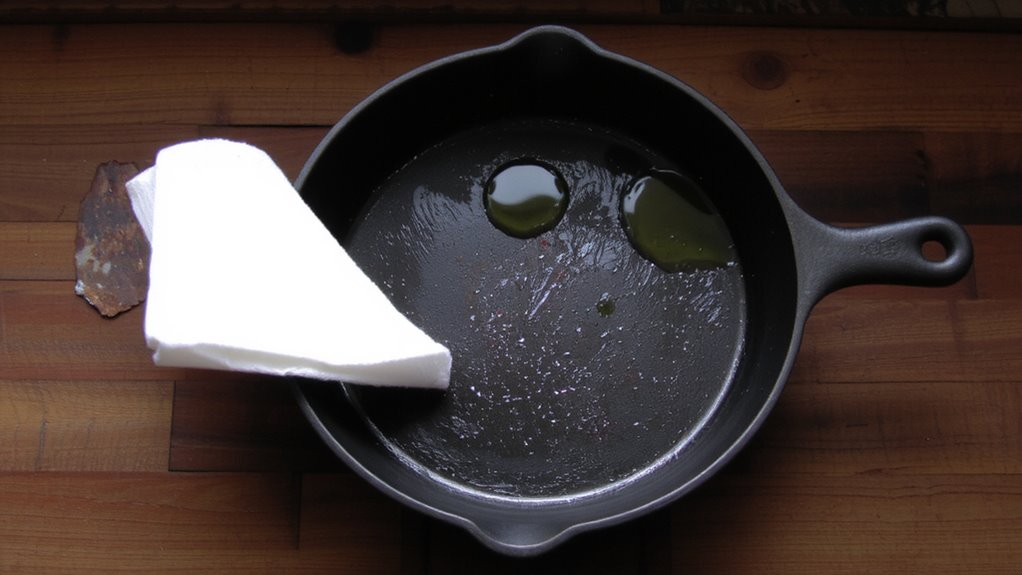
While it might seem rugged enough to handle neglect, your cast iron skillet actually demands thoughtful upkeep to perform at its best over time. You rely on its superior heat retention to sear steaks evenly or bake cornbread with consistent browning, but without care, that advantage fades. Thermal shocks from rapid temperature changes can warp or crack it, undermining both durability and cooking performance. Rust creeps in when moisture lingers, degrading the surface and compromising efficiency. Properly maintained, your skillet responds predictably to heat, holds it longer than most metals, and delivers reliable results whether you’re frying over a campfire or slow-roasting in a Dutch oven. It’s not just tradition-this is functional resilience. Neglect it, and you lose more than seasoning; you lose the skillet’s ability to perform under real cooking demands. Treat it right, and it’ll outlast decades of backyard BBQs and stovetop meals.
How to Season Cast Iron for a Non-Stick Finish
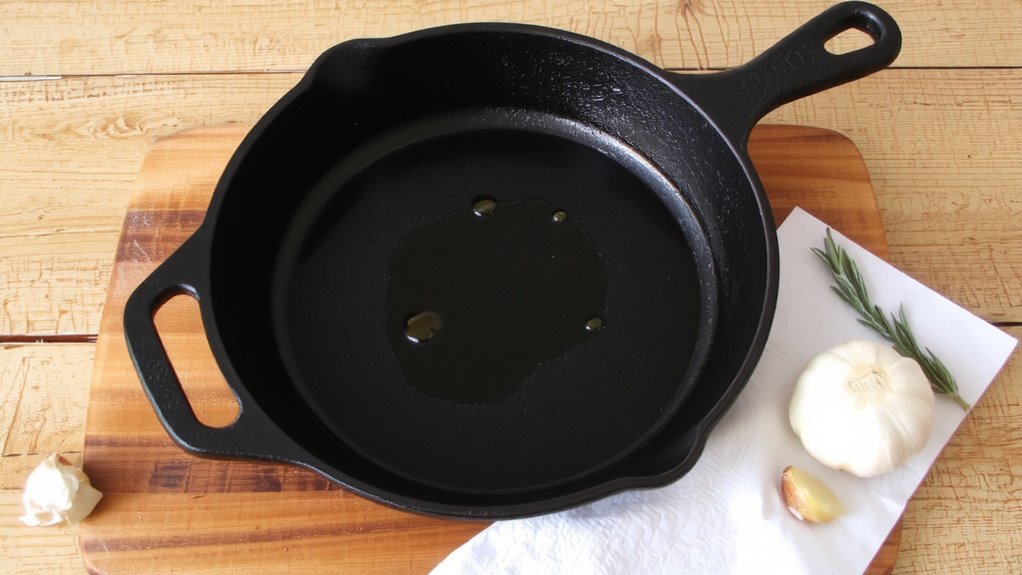
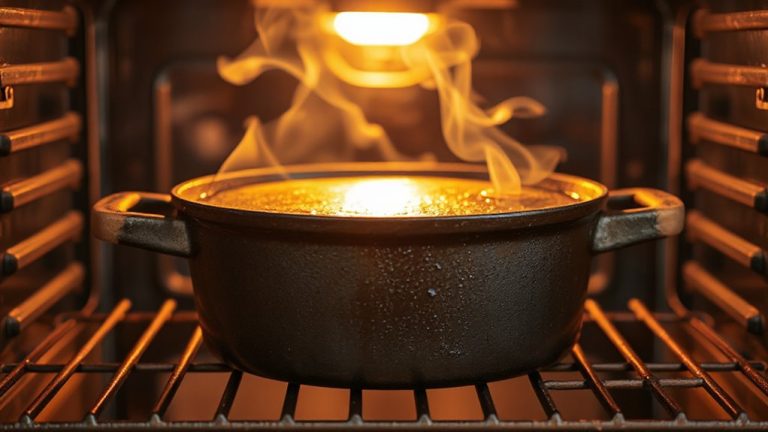
A well-seasoned cast iron skillet isn’t just a cooking tool-it’s the foundation of reliable, non-stick performance over flame or coals. To build that performance, you’ve got to pick the right oil types-flaxseed offers a hard, durable polymerized layer, though it can flake if overused. Grapeseed and sunflower oils are great too, balancing smoke point and stability. Avoid butter or olive oil-they burn too easily. Apply a thin coat, wipe off the excess, and use consistent heating methods. Oven seasoning at 375–450°F guarantees even curing; stovetop works but gives uneven results. Repeat 3–5 layers, cooling between each. Proper seasoning seals the pores, blocks rust, and improves with use. It’s not a one-time fix-it’s ongoing maintenance that elevates outdoor cooking. Your skillet should develop a dark, glassy finish that repels food, not sticks to it. With the right oil types and careful heating methods, your cast iron earns its keep every cookout.
How to Clean Cast Iron Without Ruining It
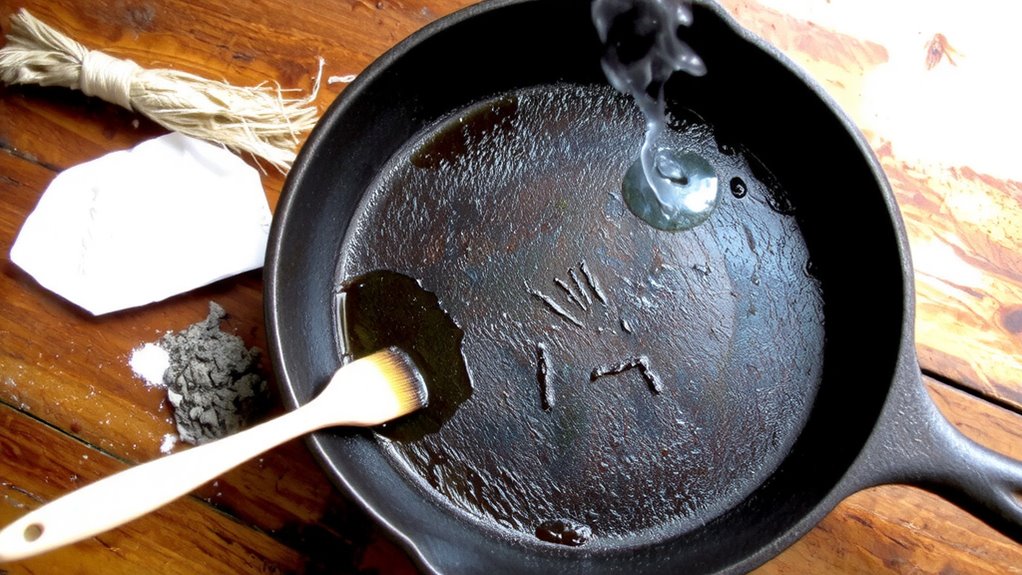
The key to preserving your cast iron’s seasoned surface lies in cleaning it the right way-because scrubbing too hard or using the wrong tools can strip away that hard-earned non-stick layer. Use gentle scrubbing techniques with a brush or chainmail scraper only when necessary; most residues lift with hot water and light agitation. Avoid soap unless absolutely needed-modern mild detergents won’t destroy seasoning, but overuse isn’t worth the risk. After washing, immediate drying methods are essential: never air-dry. Instead, towel-dry thoroughly, then heat the pan on the stove for 3–5 minutes to guarantee all moisture evaporates. Proper maintenance ensures your outdoor griddles perform reliably under high-heat cooking conditions.
Store Cast Iron to Prevent Rust and Damage
Your cast iron’s longevity depends as much on how you store it as how you clean it-leaving it exposed to moisture or stacking pans without protection invites rust and surface damage. For proper storage, always make certain your cookware is completely dry to avoid moisture buildup, which accelerates corrosion. Store it in a dry, well-ventilated spot-never in damp cabinets or near sinks. If stacking skillets, place a paper towel or cloth between them to prevent scratches and allow airflow. Avoid sealing cast iron in plastic, which traps humidity. Some cooks use oiled towels inside pans for light protection, but only if stored in climate-controlled areas. Hanging pans is ideal: it saves space, supports air circulation, and reduces contact points where rust could form. Proper storage isn’t complicated, but it’s critical. Treat it right, and your cast iron will perform reliably for decades.
Fix Sticking and Rust Fast
Even if you’ve let your cast iron sit too long in a damp corner or struggled with food sticking after a cook, don’t write it off-sticking and rust are fixable issues, not the end of its life. Start by scrubbing off loose rust with steel wool or a stiff brush, then rinse and dry thoroughly. For stubborn spots, use a vinegar soak, but don’t leave it too long-overexposure damages the metal. Removing rust completely guarantees a clean base for reseasoning. If you’re dealing with stickiness, it’s usually from excess oil buildup; strip it with kosher salt and an onion, or bake the pan upside down to burn off gunk. Fixing stickiness restores non-stick performance. After cleanup, re-season with a thin layer of flaxseed or vegetable oil and bake at 375°F for an hour. Do this two to three times, and your pan will recover beautifully.
On a final note
You’ve built a strong foundation with your cast iron, and now it’s yours to maintain. Proper seasoning locks in non-stick performance, while gentle cleaning preserves the patina. Stored correctly, it resists rust and lasts generations. Unlike flimsier cookware, cast iron excels outdoors-retaining heat evenly over open flames, searing impeccably, and enduring heavy use. With minimal care, it outperforms most modern alternatives, proving that durability and function still matter in serious cooking.