Why Fresh Tarragon Is Essential for French-Inspired BBQ Sauces
You get a brighter, more complex flavor when you use fresh French tarragon in your French-inspired BBQ sauces because it’s rich in aromatic estragole oils that dried or Russian varieties simply lack. Its lively anise-licorice notes cut through smoke and sweetness, balancing rich meats and caramelized elements. Heat dulls its nuance, so adding it at the end preserves its bright finish-something dried tarragon can’t deliver. Keep using it this way, and you’ll discover even more ways it elevates grilled dishes.
Notable Insights
- French tarragon contains high levels of estragole, delivering a refined anise flavor essential to French-inspired sauces.
- It withstands cooking better than other varieties, maintaining complexity when paired with smoky, sweet BBQ elements.
- Fresh tarragon provides bright, bittersweet notes that cut through richness and prevent cloying sweetness in sauces.
- Dried tarragon loses most volatile oils and is often from the less flavorful Russian variety, making it inferior for nuanced sauces.
- Adding fresh tarragon at the end preserves its aromatic oils and ensures a vibrant, herbal finish.
Why French Tarragon Makes Better BBQ Sauce
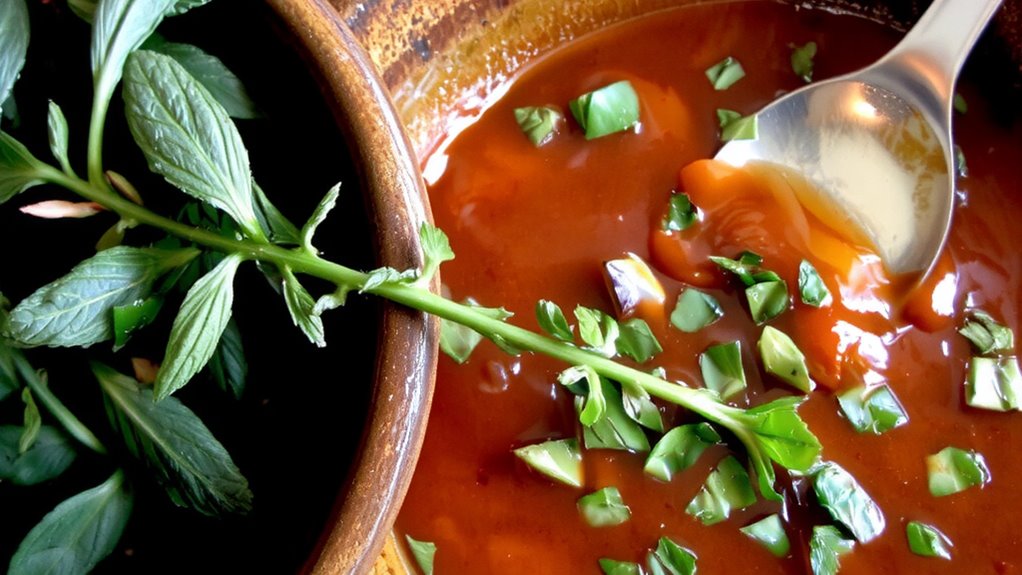
While some might overlook herbs in favor of bold spices and smoke, if you’re aiming for depth and sophistication in your BBQ sauce, French tarragon is a game-changer. This essential herb brings a refined anise flavor that enhances complexity without overpowering-thanks to aromatic estragole oils found only in the true French variety. Unlike its bland Russian cousin, French tarragon stands up beautifully in cooking, making it a staple in French cooking for good reason. You’ll recognize its role in Béarnaise sauce, a classic in classical French cuisine that balances richness just like a great BBQ sauce should. For best results, stir in fresh tarragon at the end; prolonged heat dulls its bright, bittersweet notes. Propagated by cuttings to preserve flavor consistency, this herb delivers reliable aromatic depth. When you want nuanced, restaurant-quality results, fresh tarragon isn’t just an accent-it’s essential.
How Tarragon Balances Smoke and Sweetness
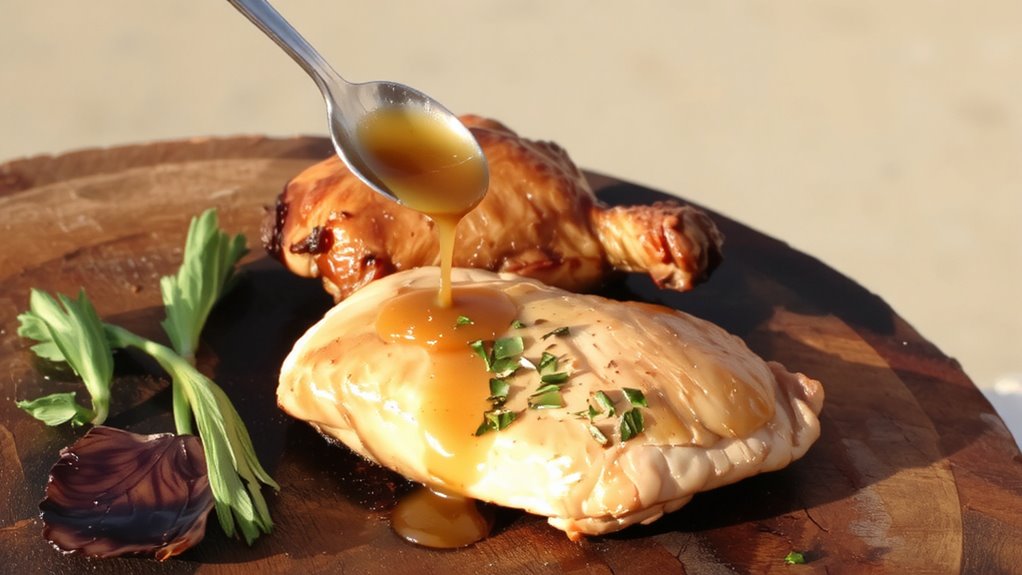
Because your BBQ sauce needs more than just smoke and sugar to stand out, fresh tarragon plays a crucial role in harmonizing bold flavors without tipping into heaviness. You’ll find that fresh tarragon, especially the French variety, brings a distinct flavor-slightly sweet with hints of anise or licorice-that cuts through rich, smoky elements. Tarragon pairs beautifully with caramelized onions or honey, adding herbal complexity that prevents the sauce from becoming cloying. When used fresh, its aromatic oils remain vibrant, tempering smoke while brightening the finish. The essential oils, like estragole, are fat-soluble, so they infuse seamlessly into cream sauces or buttery bases, enhancing mouthfeel without greasiness. That’s why the French variety, with its higher concentration of active compounds, outperforms others. Used fresh, it elevates your sauce from simple to sophisticated.
How Heat Changes Tarragon’s Flavor
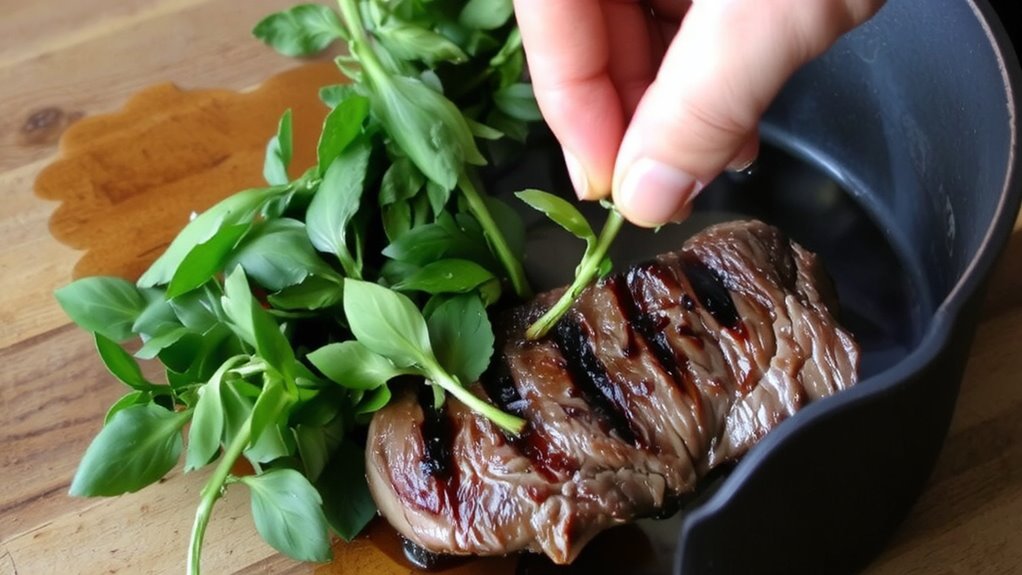
Fresh tarragon’s bright, anise-tinged character can elevate your French-inspired BBQ sauce, but only if you manage the heat wisely. When you’re cooking tarragon, especially fresh tarragon, the heat changes can quickly dull its delicate profile. Its volatile compounds, like estragole, break down under prolonged heat, fading those vibrant licorice and mint notes you want. That anise-like flavor doesn’t survive long simmers-it turns flat or even bitter. Still, cooking tarragon in fat-based liquids helps release its fat-soluble flavors more effectively, integrating them smoothly into your sauce. Yet even then, extended exposure risks degrading quality. For best results, add fresh tarragon in the last 15 minutes of cooking. This gentle warming preserves its grassy, slightly peppery edge without sacrificing aroma. Overcooking undermines its nuance, so treat it with care.
Fresh Vs. Dried Tarragon in BBQ Sauce
If you’re aiming for an authentic French twist in your BBQ sauce, opting for fresh tarragon makes a noticeable difference compared to the dried version. Fresh tarragon, particularly French tarragon, boasts a vibrant, anise-like flavor with delicate mint and vanilla undertones, thanks to its high concentration of essential oils and estragole-the compound behind its signature licorice note. In fresh vs. dried comparisons, dried tarragon often falls short, losing up to 70% of its volatile oils during processing, resulting in a flatter, sometimes bitter profile. Much of what’s sold as dried tarragon comes from the less aromatic Russian variety, which can turn harsh when cooked. In BBQ sauces, especially those with butter or oil bases, fresh tarragon’s fat-soluble aromas integrate smoothly when added in the final 15 minutes. Dried tarragon, more concentrated but less nuanced, risks overpowering the dish if used carelessly.
What to Serve With Tarragon BBQ Sauce
You’ve taken care to use fresh tarragon in your BBQ sauce, preserving its delicate anise and vanilla notes that dried versions rarely deliver, so now it’s time to choose pairings that let its refined character shine. Tarragon BBQ sauce works beautifully with grilled chicken, enhancing the meat’s natural flavor without overwhelming it. It’s equally at home drizzled over grilled salmon, where its herbal sharpness cuts through the fish’s richness. Seafood dishes like grilled shrimp and scallops respond well to the sauce’s buttery, lemon-friendly profile, especially when brushed on during the final minutes of grilling. Pork tenderloin absorbs the sauce’s slightly peppery depth, making it a sophisticated match. Roasted vegetables-think carrots, mushrooms, and leeks-gain an elegant lift when finished with a touch of tarragon BBQ sauce, their caramelized edges balancing its herbal complexity. Each pairing lets the sauce’s French-inspired finesse elevate your outdoor cooking.
Easy French-Style Tarragon BBQ Sauce Recipe
While many backyard cooks reach for smoky or sweet sauces when firing up the grill, a French-style tarragon BBQ sauce offers a more refined alternative that bridges the gap between outdoor cooking and classic technique. You’ll want to start with a base of Dijon mustard, white wine vinegar, minced garlic, and shallots, then blend in softened butter for richness-this is your tarragon butter foundation. Always use fresh tarragon, preferably French tarragon, as dried or Russian varieties lack the aromatic depth from estragole that defines the fresh herb’s appeal. Stir in 1–2 tablespoons of finely chopped tarragon per cup of sauce during the last 10–15 minutes of cooking to preserve its delicate flavor. This sauce shines when brushed over grilled chicken, where its bittersweet brightness cuts through fat and elevates the dish with herbaceous elegance.
How to Store Fresh Tarragon for Later Use
For best freshness, wrap your fresh tarragon in a damp paper towel and place it in a loosely sealed plastic bag before storing it in the refrigerator, where it’ll stay vibrant for 3–5 days. If you need to store fresh tarragon longer, avoid drying tarragon in sunlight or heat, which degrades its essential oils-instead, air-dry it in a cool, dark place and keep it in an airtight container. For a week or longer of peak flavor, you can let the stems sit in a vase of water on the counter, but for true longevity, freeze tarragon leaves. Spread them on a tray, freeze until solid, then transfer to a zip-top bag. This method outperforms storing fresh or dried versions at room temperature, preserving more of tarragon’s delicate, anise-like essence vital for French-inspired sauces.
On a final note
You’ll find fresh tarragon elevates French-inspired BBQ sauces by lending a subtle anise-like clarity that dried versions rarely match. Its volatile oils degrade with heat, so adding it late preserves nuance. The herb cuts through smoky richness, balancing sweet or tangy elements with aromatic precision. For outdoor cooking, where bold flavors dominate, tarragon’s sophistication offers refinement without fuss-making it not just useful, but essential for layered, balanced sauces worth repeating.