Building a Safe and Effective Cooking Fire in the Backcountry
Choose a legal, flat spot at least 15 feet from tents and trees, preferably on bare soil or rock. Always use an existing fire ring if available to reduce impact. Gather dry tinder, kindling, and small hardwood logs-keep your fire compact, about camp stove size, for efficient cooking. Burn responsibly, control flames, and never leave it unattended. Fully extinguish with water, stir ashes, and check that everything’s cold. You’ll learn smarter techniques that save time and protect the wild.
Notable Insights
- Choose a legal, safe fire site at least 15 feet from tents and trees, on bare soil or rock.
- Reuse an existing fire ring to minimize environmental impact and contain flames effectively.
- Gather dry tinder, kindling, and small hardwood fuel wood to ensure efficient, clean burning.
- Build a small, controlled fire using a lean-to or pyramid structure for cooking efficiency.
- Fully extinguish the fire with water, stir ashes, and scatter cold debris 200 feet from water.
Choose a Safe and Legal Spot for Your Cooking Fire
While you might be keen to get cooking, picking the right spot for your fire matters just as much as building it well. Site selection isn’t just about convenience-it’s a vital safety and environmental step. You should always check local fire regulations before striking a match, as many backcountry areas have seasonal bans or restrictions based on fuel moisture and weather. Choose a spot at least 15 feet from tents, trees, and overhanging branches, ideally on bare soil, rock, or gravel. Avoid dry grass and leaf litter, which can ignite easily. A flat, sheltered location reduces both wildfire risk and cooking frustration. Evaluating terrain and wind patterns helps maintain control and efficiency. Good site selection limits impact and aligns with Leave No Trace principles. Following fire regulations protects ecosystems and keeps you on the right side of the law-critical for responsible outdoor cooking.
Use an Existing Fire Ring When Possible
A well-placed fire ring already built by past visitors isn’t just convenient-it’s your best bet for minimizing environmental impact. Using an existing ring shows respect for the land and aligns with solid fire safety practices. You avoid damaging new ground and reduce the spread of invasive species often introduced by digging or moving soil. These rings are usually sited in safer, more stable areas, decreasing risks of accidental spread.
| Benefit | Reason |
|---|---|
| Lower environmental impact | No new ground disturbance |
| Improved fire safety | Stable, contained structure |
| Faster setup | No need to build from scratch |
| Leave No Trace compliance | Reusing existing resources |
Sticking to established rings means you’re cooking responsibly-protecting nature while ensuring your fire stays under control. It’s smart, ethical, and effective. Enhancing your outdoor experience with thoughtful gear choices can also make a difference, such as adding backyard accessories to your next trip for increased comfort and functionality.
Collect Tinder, Kindling, and Fuel for a Cooking Fire
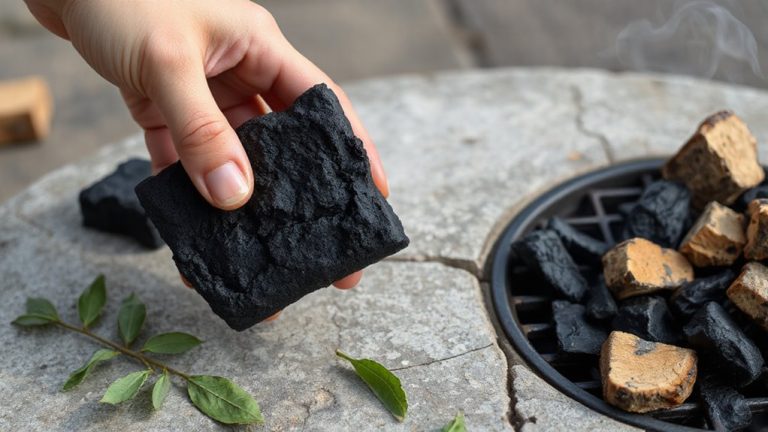
Tinder, kindling, and fuel aren’t just materials-they’re the foundation of a reliable cooking fire. You’ll need dry tinder like birch bark or dry grass to catch the first spark, then small sticks as kindling to sustain early flames. For fuel, gather thumb- to wrist-thick wood that burns steadily. Matching your materials to fire types-like a teepee for quick ignition or a log cabin for longer cooking-makes a big difference. Efficient burn techniques, such as laying wood to allow airflow or using the top-down method, improve heat control and reduce smoke. Hardwoods like maple or oak last longer and provide consistent heat, ideal for simmering. Softwoods ignite fast but burn quick, so use them for kindling. Always collect dead, downed wood to minimize environmental impact. Smart selection and layering guarantee your fire stays manageable, efficient, and ready for precise backcountry cooking.
Build a Small, Controlled Cooking Fire
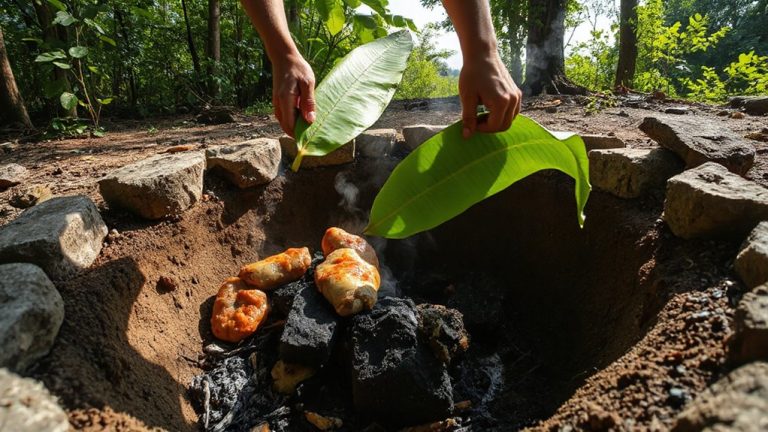
Once you’ve gathered your materials, focusing on size and structure becomes key to building a fire that’s both effective and easy to manage. Start with a compact base-no larger than a camp stove-using lean-tos or small pyramids of kindling over tinder. This design supports quick ignition while limiting unnecessary flame spread, enhancing fire safety. Keep fuel wood thin and close at hand; larger logs overwhelm small fires and hinder heat control. A smaller fire burns hotter where needed yet stays contained, reducing risk and conserving resources. It’s easier to add wood than to tame a blaze, so build gradually. You’ll maintain steady temperatures ideal for cooking without scorching food. This approach balances efficiency with responsibility, minimizing environmental impact. Remember, a well-structured, modest fire offers reliability and precision-crucial when cooking in remote conditions. Focus on control, not size.
Cook Safely Over Open Flame
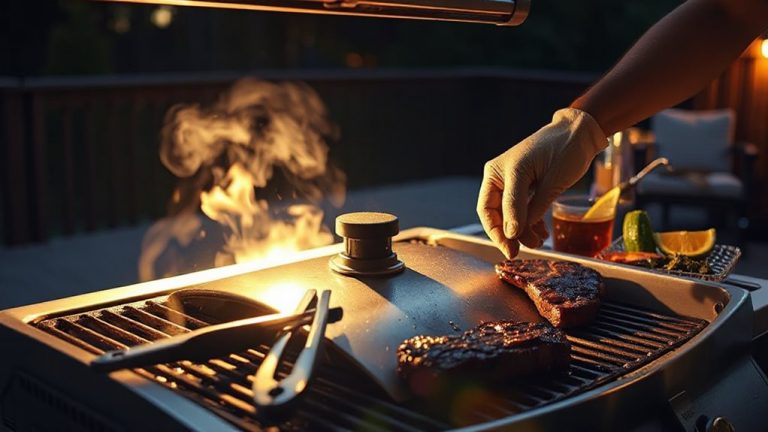
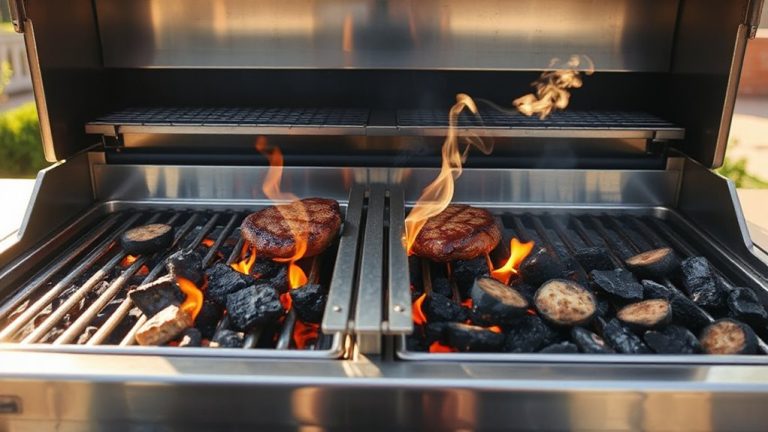
While flames may seem predictable, cooking over an open fire demands constant attention and smart technique if you want to avoid burnt meals or unsafe conditions. You’ll need effective flame control-adjusting fuel and airflow keeps temperatures steady and prevents flare-ups. Use a grill grate or sturdy pot supports to maintain consistent distance from the heat source. Never leave food unattended; shifting logs or sudden bursts of flame can ruin a meal in seconds. For food safety, guarantee meats reach proper internal temperatures, especially in the backcountry where medical help is distant. Avoid charring food excessively, as burned portions may carry harmful compounds. Keep raw and cooked items separate, using clean utensils. Position your cookware carefully to balance heat distribution and minimize risk. With practice, you’ll develop rhythm in managing both flame control and food safety-two essentials for a successful, responsible outdoor cooking experience. Different bushcraft campfire styles offer unique advantages for controlling heat and optimizing cooking efficiency in the wild.
Extinguish Your Cooking Fire Completely
If you’ve cooked outdoors, you know how easy it is to underestimate the lingering danger of a seemingly dying fire, but leaving even a small campfire unattended without thorough extinguishing can lead to serious consequences. Always smother flames completely using water or dirt-never just let them die down. Once flames are out, stir ashes thoroughly to expose any hidden embers. You’d be surprised how hot coals can stay beneath the surface long after the fire looks dead. Use a stick or tool to mix the remains, ensuring everything is cool to the touch.
| Method | Effectiveness |
|---|---|
| Water | High |
| Dirt | Moderate |
| Sand | Low-Moderate |
| Stirring | Critical |
Stirring combined with water offers the most reliable approach. Always double-check before walking away.
Clean Up and Leave No Trace
After cooking, your responsibility in the backcountry isn’t finished-it extends to how well you restore the site. Proper ash disposal is essential: scatter cold ashes widely, at least 200 feet from water sources, to avoid concentrating nutrients or leaving visible traces. Never bury hot coals-they can smolder and ignite roots. If you used a fire ring or rock setup, dismantle it and return stones to their original places. Minimize site impact by avoiding permanent modifications like carving wood or building large structures. Pack out all trash, food scraps, and leftover tinder; even biodegradable waste attracts animals and disrupts ecosystems. Wipe greasy cookware with dirt or sand before rinsing to prevent soap runoff. Finally, inspect the area for missed litter or disturbances. A well-cleaned site blends back into nature, showing no sign of use. Your actions today preserve wilderness for others tomorrow. Clean, responsible fires reflect respect-for nature and fellow travelers.
On a final note
You’ve chosen a legal spot, used an existing ring when possible, and built a small, efficient fire with proper tinder, kindling, and fuel. Cooking over steady flames gives reliable heat, but control matters-too big risks safety and waste. Always extinguish completely, ensuring ashes are cold. Cleaning up leaves nature undisturbed. This method proves effective, safe, and responsible, balancing practicality with environmental respect in backcountry cooking.