Using Acidic Finishes Like Vinegar Spritz to Brighten Heavy, Smoked Meat Flavors
You’re using a vinegar spritz to cut through the richness of smoked meat, and it works like a palate reset-light acidity lifts heavy smoke and fat, sharpening flavors without masking them. Mist every 45 minutes after the pellicle forms, using apple cider or rice vinegar for balance. Too much or too soon ruins bark, but done right, it enhances moisture and smoke adherence. Keep the spray fine and consistent. You’ll find even richer meats stay clean and flavorful from first bite to last. There’s more to optimizing that balance than just timing and vinegar choice.
Notable Insights
- Vinegar spritz cuts through the richness of smoked meats, enhancing flavor balance without altering the core taste.
- Acidity from spritzing resets the palate, making smoky and fatty flavors feel cleaner and more defined.
- Apply a light mist every 45–60 minutes after the pellicle forms to preserve bark and retain moisture.
- Apple cider vinegar works well for pork; red wine vinegar complements beef; use balsamic sparingly for sweetness.
- Avoid over-spraying or misting too early/late to prevent soggy bark and disrupted cook times.
Why Vinegar Spritz Balances Smoky, Fatty Meats
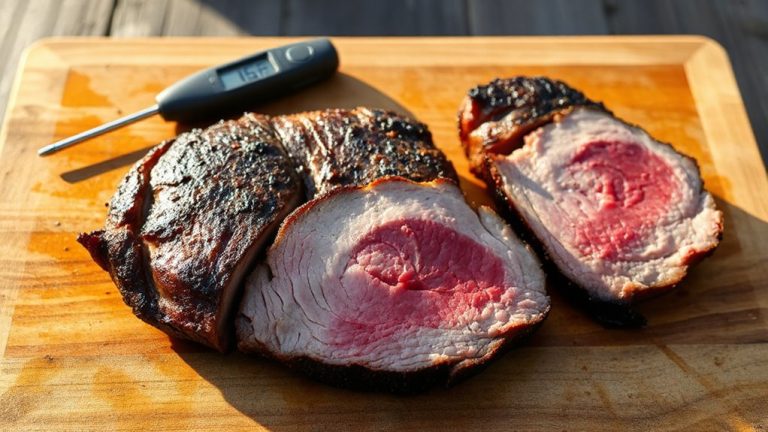
Ever wonder why your smoked brisket sometimes feels heavy on the palate, despite a perfect smoke ring and tender crumb? You’re likely missing a key component: acidity contrast. Fatty, smoky meats benefit greatly from a measured vinegar spritz during smoking. The mild tang cuts through richness, offering a noticeable flavor lift without altering the meat’s core character. Apple cider or white vinegar, lightly misted every few hours, doesn’t just prevent dryness-it recalibrates the sensory balance. You’ll observe how the sharpness tempers heaviness, making each bite feel cleaner and more complete. This isn’t about sourness dominating; it’s about subtle enhancement. Many pitmasters confirm this technique improves overall palatability, especially with long cooks. Applied correctly, the spritz works quietly but effectively. You get deeper flavor dimension, not just smoke and fat. It’s a small step with measurable impact-one you’ll taste in the final slice. Choosing the right product matters, and selecting among the best spritz for brisket can elevate your results.
How Vinegar Enhances Smoke Flavor (Without Taking Over)
Why does smoke flavor sometimes fall flat, even when the rub is balanced and the fire’s steady? It’s because richness and smoke can overwhelm your taste perception, muting the very flavors you worked hard to develop. That’s where vinegar comes in-not to replace smoke, but to sharpen it. A light spritz introduces flavor contrast, cutting through fat and char to revive your palate. You’re not adding tanginess; you’re resetting how your tongue reads the meat. This subtle acidity doesn’t dominate-it clarifies, making the smokiness more distinct instead of buried under heaviness. Think of it like a palate cleanser between bites, but applied during the cook. The result? Smoke flavors that read cleaner and more defined, not diluted. Vinegar enhances depth by balancing intensity, letting the true character of the wood and meat shine without overpowering. It’s precision seasoning, not a cover-up.
Best Vinegars for Spritzing Brisket, Ribs, and Pulled Pork
A well-chosen vinegar can make a noticeable difference in how your brisket, ribs, or pulled pork develop flavor and texture during the smoke. You’ll want acidity that cuts richness without overpowering-apple cider vinegar is a go-to for its balanced tang and fruity notes. For something more nuanced, consider a mild rice wine vinegar; its subtle sweetness complements pork without aggressive sharpness. White vinegar works in a pinch but lacks complexity. Red wine vinegar adds depth, especially on beef, while balsamic-used sparingly-brings a touch of sweetness and viscosity. A drizzle of grape must vinegar can elevate the spritz with earthy, almost tannic character, though its intensity demands light application. Each vinegar alters moisture retention and surface tack, influencing bark formation. Your choice shapes both chemistry and taste, so pick based on smoke time, meat type, and desired finish.
When to Spritz: During the Smoke vs. At the End
While spritzing throughout the smoke can help regulate surface temperature and promote bark development, timing your sprays makes a meaningful difference in both texture and flavor absorption. You’ll want to start spritzing after the first 2–3 hours, once the surface has set and formed a tacky pellicle-this supports better mid smoke hydration without washing away essential spices. Spraying every 45 to 60 minutes from that point adds moisture that cools the exterior, slowing overcooking and aiding smoke adherence. This regular misting also encourages flavor layering, as each application subtly infuses the meat while preventing dryness. Waiting until the end limits effectiveness; surface temps are often too high, and the bark may absorb moisture unevenly or soften prematurely. For ideal balance of texture and taste, consistent spritzing during the middle phase outperforms last-minute applications. Your meat stays juicier, with a more complex, developed profile.
DIY Vinegar Spritz Recipes Pitmasters Actually Use
Since you’re aiming for that deep, smoky flavor without sacrificing moisture, your spritz shouldn’t just be an afterthought-it’s a chance to build complexity. Pitmasters rely on homemade blends to enhance bark texture and add subtle tang, and with smart flavor customization, you can match the spritz to your meat profile. These aren’t one-size-fits-all-each blend responds to wood type, rub ingredients, and cook time. Below are tried-and-true formulas used in competition pits:
| Base | Add-Ins | Best For |
|---|---|---|
| Apple cider vinegar | Water, honey, hot sauce | Pork shoulder |
| White vinegar | Lemon juice, Worcestershire | Brisket |
| Red wine vinegar | Garlic, thyme, black pepper | Ribs |
| Malt vinegar | Brown sugar, mustard powder | Beef plate |
Balance acidity with a touch of sweetness, and you’ll elevate moisture and taste in one go.
Mistakes That Wreck Your Vinegar Spritz
You’ve mixed up a batch of vinegar spritz, tailored to your meat and wood combo, but even a well-designed blend can backfire if basic missteps go unchecked. Poor spritz timing is one of the worst offenders-applying too early or too late disrupts bark development and stalls cook times. You want to spritz only after the surface has set, usually 2–3 hours in, to preserve texture without sacrificing moisture. Over-spraying is another issue; your spray technique should be light and even, not drenching. Too much liquid cools the meat, extending cook time and risking a soggy crust. Use a fine-mist sprayer and stand close for control. Skipping test sprays on a spare piece of meat first can also lead to disappointment. Consistency matters-shake the bottle often to prevent ingredient separation. Master these details, and your spritz won’t just add brightness-it’ll enhance the entire smoke.
On a final note
You’ll find vinegar spritzing sharpens heavy meats without dulling smoke depth. It cuts fat, lifts flavor, and keeps bark crisp when used mid-smoke. Apple cider and white vinegar work best-mild yet effective. Over-spritzing risks cooling the cooker or weakening texture. Timing and balance matter. Used correctly, it enhances, not overpowers. This isn’t a fix-all, but a precise tool for pitmasters seeking brightness amid richness.