Using Grape Seed Oil to Season a Cast Iron Griddle Without Flaking
You can prevent seasoning flakes by using grape seed oil-it polymerizes into a tough, durable layer thanks to its high polyunsaturated fat content. Heat your griddle slightly, apply a thin coat of oil, and wipe off any excess to avoid stickiness. Bake at 450°F for one hour, letting it cool slowly. This high smoke point oil outperforms others in heat resistance and adhesion. Keep the surface well-maintained with light re-oiling after use, and you’ll discover even better results with consistent care.
Notable Insights
- Thoroughly clean and dry the griddle before seasoning to ensure no residue interferes with oil adhesion.
- Apply a thin, even layer of grape seed oil using a lint-free cloth to prevent sticky or flaky buildup.
- Wipe off all excess oil after application, as pooling leads to uneven polymerization and flaking.
- Bake the griddle upside down at 450°F for one hour to achieve full polymerization without oil pooling.
- Perform multiple seasoning rounds and maintain with post-use oiling to build a durable, flake-resistant layer.
Use Grape Seed Oil to Stop Seasoning Flakes
While many oils can work for seasoning a cast iron griddle, grape seed oil stands out when you’re dealing with flaking layers because of its ability to polymerize into a strong, durable surface. You’ll notice less flaking over time because this oil binds tightly to the metal when heated properly. Once you hit its high smoke point, around 420°F, the oil smoke signals polymerization is underway-this is where the magic happens. Unlike lower-smoke-point oils that can gum up or peel, grape seed oil creates a resilient layer that enhances heat retention across the surface. That means fewer hot spots and more even cooking, especially essential when searing meats or making pancakes outdoors. You’ll find the seasoning builds smoothly with each use, resisting wear better than flaxseed or vegetable oil in practical tests. For consistent performance and long-term protection, grape seed oil is a smart, reliable choice-especially when you want a stable cooking surface that won’t chip or degrade under high-heat conditions.
Clean Your Griddle for Grape Seed Oil Seasoning
You’ve tackled the flaking issue with grape seed oil’s strong polymerization, and now it’s time to prep your griddle properly before applying that first layer. Effective griddle cleaning is essential-any leftover debris or grease will interfere with adhesion. For best surface prep, start with a cool griddle and scrub using a bamboo brush or chainmail scrubber. Avoid soap if possible; it can strip cast iron’s natural oils. Rinse with hot water and dry immediately to prevent rust. Then, give it a final wipe with a lint-free cloth. A well-prepared surface guarantees the grape seed oil bonds evenly and cures into a slick, durable finish. Choosing the best cast iron cookware ensures optimal heat retention and seasoning development for superior grilling results.
| Step | Purpose |
|---|---|
| Scrub surface | Remove carbonized residue |
| Rinse with water | Clear loosened debris |
| Dry thoroughly | Prevent oxidation |
| Final wipe | Smooth texture for oil application |
Season Cast Iron With Grape Seed Oil: Step by Step
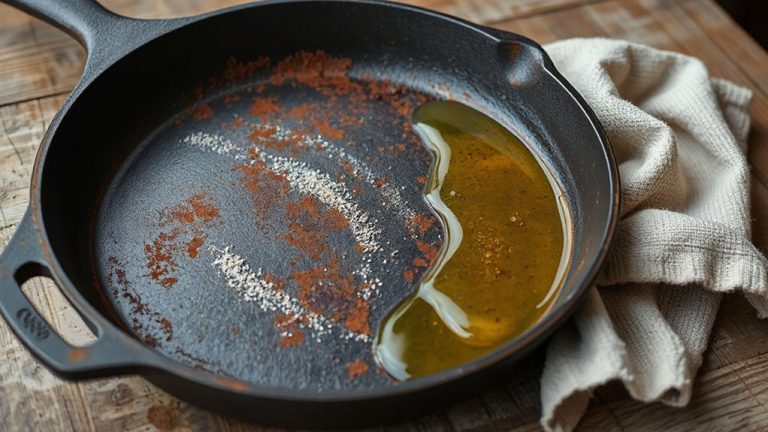
Since grape seed oil has a high smoke point and excellent polymerization properties, it’s a smart choice for building a durable seasoning layer on your cast iron griddle. You’ll appreciate its oil composition-it’s rich in polyunsaturated fats, which enhance bonding to the metal surface. Start by warming the griddle slightly to help the oil spread evenly. Apply a thin layer using a lint-free cloth, making sure you’re not leaving pools or streaks. Wipe off excess-it’s essential to avoid sticky residue. The heat stability of grape seed oil guarantees it can withstand high temps without breaking down, which means fewer chances of flaking later. This stability supports consistent, even seasoning over time. Your griddle will develop a natural non-stick surface with each use, especially when paired with proper maintenance after cooking. It’s a reliable method backed by both chemistry and practical performance.
Bake for a Flawless Seasoned Finish
After applying a thin, even coat of grape seed oil, it’s time to transform that layer into a durable seasoning through baking-this is where the real magic happens. Place your griddle upside down in the oven to prevent pooling, then set the oven temperature to 450°F (232°C), just above grape seed oil’s smoke point. Bake for one hour, allowing the oil to polymerize and bond tightly to the metal. During this time, your kitchen might get smoky-open a window or turn on the vent. After an hour, turn off the heat and let the griddle go through a slow cooling process inside the oven. This gradual drop in temperature helps lock in the seasoning, reducing the chance of cracking or flaking. Multiple rounds of baking yield deeper, more resilient layers-ideal for consistent outdoor cooking performance where high, even heat is essential.
Keep Your Grape Seed Oil Seasoning Strong
Regularly maintaining your grape seed oil seasoning guarantees a slick, non-stick cooking surface that holds up remarkably well under the intense demands of outdoor cooking. You benefit from grape seed oil’s exceptional oil stability, which resists breaking down when exposed to fluctuating temperatures common on grills and open flames. Its high smoke point guarantees superior heat resistance, preventing carbonization during searing or prolonged use. After each cook, wipe the surface clean and apply a thin coat of oil, then gently reheat to reinforce the polymerized layer. This routine preserves the seasoning’s integrity over time, reducing the risk of degradation. Unlike oils with lower smoke points, grape seed oil’s chemical structure supports a more durable, even finish. While it demands consistent care, its long-term performance makes it a reliable choice for frequent outdoor use. Proper maintenance guarantees lasting protection and consistent cooking results. For high-heat applications like grilling, consider oils with a high smoke point.
Fix Peeling, Sticking, or Patchy Seasoning
Even with careful upkeep, you might notice your grape seed oil seasoning starting to peel, stick, or appear uneven-especially after heavy use on the grill or exposure to fluctuating outdoor temperatures. Don’t worry; this is fixable. Start by stripping the griddle with high-heat burn-off or manual scrubbing, then re-season using thin, even layers of grape seed oil. Its high smoke point and excellent oil absorption help build a durable, non-stick surface over time. Be certain to heat the griddle slowly to maximize heat retention and polymerization, allowing the oil to bond effectively. Uneven heating or thick oil applications often cause patchiness, so always wipe off excess. Repeat 2–3 times for reliability. A properly restored seasoning boosts performance, improving both cooking consistency and maintenance longevity, especially under demanding outdoor conditions where temperature control is less predictable. This method guarantees your griddle stays resilient, non-reactive, and ready for serious BBQ work.
On a final note
You’ve seen how grape seed oil’s high smoke point and thin application prevent flaking better than heavier oils. It bonds tightly to cast iron, creating a slick, durable layer ideal for searing and outdoor cooking. With proper maintenance-regular use, gentle cleaning, and occasional re-seasoning-your griddle stays nonstick and rust-free. Though results depend on technique and heat control, this method outperforms traditional fats in performance and longevity.