How to Adapt Heat Management for Grilling on Public Park Grills
You should always inspect public grills for rust, gas leaks, or blocked burners before starting. Set up two-zone cooking by piling coals on one side, giving you control over searing and slower cooking. Use the hand test and flame height to judge heat since thermometers aren’t always handy. When flames flare, move food to the cooler zone and close the lid. Bring key tools like a spray bottle and grill lifter-they make managing unpredictable heat much easier. You’ll find even unreliable grills can deliver great results with the right approach.
Notable Insights
- Inspect public grills for rust, gas leaks, and damaged parts before use to ensure safe and effective heat management.
- Set up a two-zone fire by concentrating coals on one side for searing and leaving space for indirect cooking.
- Use the hand test and flame observation to estimate grill temperature when a thermometer is unavailable.
- Control flare-ups by moving food to the cooler zone and closing the lid to reduce oxygen to flames.
- Keep a spray bottle and grate lifter handy to manage heat spikes and reposition coals as needed.
Check the Grill and Set Up Two Zones
While it might seem simple, properly checking your grill before firing it up can make or break your cooking session, especially in public parks where equipment varies in condition. A thorough grill inspection guarantees grates aren’t rusted or cracked and that burners, if gas-powered, are clear and functional. Always perform a safety check-look for gas leaks, loose knobs, or warped parts that could compromise control. Public grills often see heavy use, so assuming they’re ready leads to problems. Once cleared, set up two zones: one hot, one cooler. This dual-zone setup gives you flexibility, letting you sear and then gently cook without burning. Even without precise tools, managing space mimics professional heat control. You’ll adapt better to unpredictable gear, turning a questionable grill into a workable kitchen. Proper prep means fewer surprises and better results. For safer cleaning after cooking, choose a durable best grill brush that won’t leave bristles behind.
Control the Flame Without a Thermometer
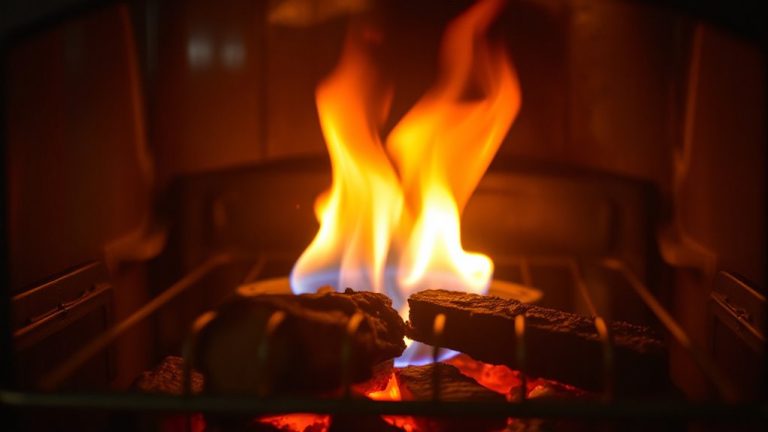
You’ve checked the grill and set up your two cooking zones, so now it’s time to manage the heat without relying on a thermometer. Instead, you’ll need to rely on observable cues like flame height and airflow adjustment. High, licking flames mean searing heat-perfect for steaks but risky for delicate items. Lower the flame height by partially closing the grill’s vents to reduce oxygen flow. Airflow adjustment is key: open vents increase combustion, while closed ones starve the fire, cooling the grill. Test heat by holding your hand six inches above the grates-five seconds means low heat, two means high. Charcoal grills respond slowly, so make small adjustments and wait. On public grills, where parts may be rusty or uneven, mastering airflow and watching flame behavior gives you consistent control. It’s less precise than a thermometer but more reliable than guesswork. With practice, you’ll read the fire like an expert. Models with adjustable dampers offer superior heat management control for consistent results across various cooking conditions.
Use Two-Zone Grilling to Prevent Burnt Food
Since flare-ups and hot spots are common on public park grills-especially those with uneven surfaces or accumulated grease-setting up a two-zone fire gives you far better control over cooking outcomes. You’ll pile coals on one side, leaving the other empty, creating both direct and indirect cooking zones. This setup lets you sear meats over high heat and then move them to the cooler side for slower, more even cooking. Indirect cooking prevents burning, especially for thicker cuts like chicken breasts or burgers that need time to cook through without charring. Achieving temperature balance is key-too much heat on one side leads to inconsistent results. Most public grills lack precise controls, so this method compensates by offering flexibility. You can also use the cool zone as a safety area when grease ignites. Two-zone grilling isn’t just smart; it’s essential for reliable performance on unpredictable equipment.
Change Tactics When the Heat Flares or Fades
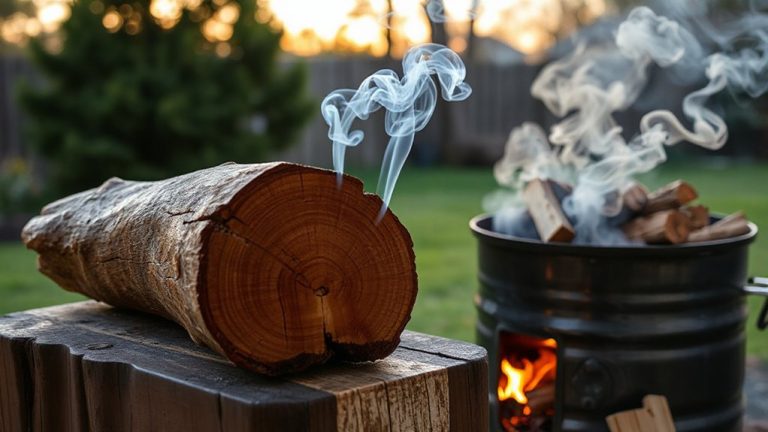
What do you do when flames suddenly roar up, threatening to char your burgers beyond repair-or worse, when the coals dim unexpectedly, leaving your chicken half-cooked? You adapt. When heat flares, move food to the cooler side immediately and lid the grill to suffocate flames-this helps you adjust timing and prevents burning. If the fire fades, spread coals evenly or add a few fresh ones to revive the heat. You’ll need to monitor smoke closely; thin, blue smoke means clean, consistent heat, while thick, white smoke signals incomplete combustion or damp fuel-both affect cooking efficiency. Public grills vary in condition, so responsiveness is key. Always keep a close eye on temperature shifts, and be ready to shift food or stoke coals. Flexibility guarantees safer, more even results, even with unreliable equipment. A well-designed charcoal grill smoker can offer better heat retention and control, making it easier to manage flare-ups and temperature drops in outdoor settings.
Bring These Tools for Better Heat Control
How often have you struggled with uneven heat on a public grill, only to find one side scorching while the other barely warms your food? You can take control by bringing the right tools for better heat management. Smart charcoal selection makes a noticeable difference-opt for lump charcoal for quick, intense heat or briquettes for steady, long-lasting burns. Adjusting grill height lets you fine-tune cooking temperature without fuss. Use a reliable grill grate lifter to safely reposition coals and create zones. Tongs with a bottle opener add convenience, while a spray bottle manages flare-ups. A sturdy glove guarantees safe handling.
| Tool | Purpose | Heat Impact |
|---|---|---|
| Grill grate lifter | Adjust coal layout | Controls hot spots |
| Spray bottle | Douse flare-ups | Prevents charring |
| Instant-read thermometer | Monitor food temp | Guarantees doneness |
| Tongs with opener | Flip & access drinks | Reduces delays |
| Heat-resistant glove | Handle hot components | Enables safe adjustments |
On a final note
You’ve learned how to assess public grills, create two heat zones, and manage unpredictable flames without tools. These strategies work because they prioritize control and adaptability, key for consistent results on shared equipment. While lack of precision thermometers is a limitation, observing flame behavior and adjusting placement delivers reliable cooking. With the right tools and mindset, even public grills can produce well-seared, evenly cooked meals-proving smart technique often outweighs ideal conditions.