Predicting Burn Rate Decay in Charcoal Beds Using Timelapse Camera Analysis
You can predict charcoal burnout by using a timelapse camera to track flame color shifts and ash spread every 30–60 seconds, revealing burn rate decay before heat drops affect cooking. This method turns visual cues-like dulling ember glow and shrinking coal beds-into measurable data, improving fuel efficiency and safety. When paired with basic image analysis, it helps you time fuel additions accurately, while machine learning could refine predictions further, especially if you follow how these patterns evolve over multiple sessions.
Notable Insights
- Timelapse imaging captures progressive changes in flame color and ash formation to monitor charcoal burn rate decay.
- Consistent image intervals and stable lighting enable accurate visual tracking of thermal decay in charcoal beds.
- Pixel thresholding techniques quantify charcoal bed shrinkage by isolating active fuel from ash and grates in images.
- Thermal and visual data from timelapse videos train machine learning models to predict imminent burnout events.
- Predictive models use ash coverage and flame intensity patterns to anticipate heat loss and optimize fuel management.
Why Predicting Charcoal Burnout Improves Safety and Fuel Efficiency
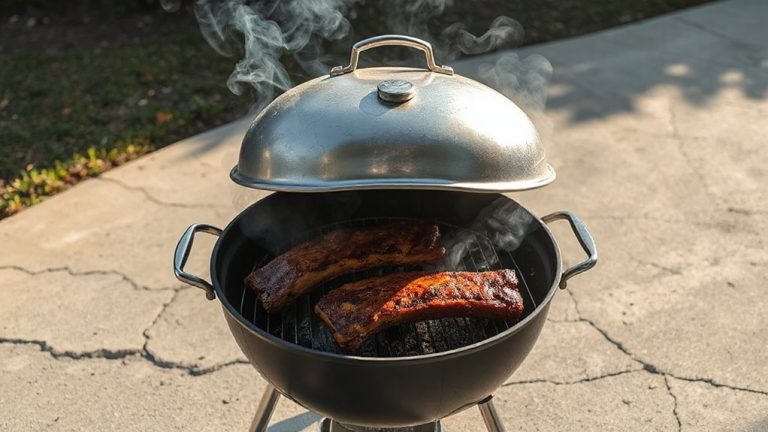
Every few backyard cookouts inevitably include at least one moment where the fire dies too soon or flares unexpectedly-scenarios that could be avoided with better control over charcoal burnout. You’re likely familiar with how unpredictable fire dynamics can make grilling frustrating or even hazardous. When you don’t anticipate burn rate decay, your coals lose heat retention too quickly, forcing you to add more fuel mid-cook-wasting resources and risking uneven cooking. Predicting burnout lets you manage airflow, charcoal layout, and cooking time more effectively. You maintain steady temperatures longer, reducing flare-ups caused by sudden oxygen surges. This isn’t just about convenience; it’s about improving safety by minimizing unpredictable flame spikes and maximizing fuel efficiency. With better prediction, you get consistent performance, use less charcoal over time, and enhance control-turning guesswork into reliable, science-backed outdoor cooking. Choosing the right fuel source makes a significant difference in burn consistency, and selecting the best charcoal for smoking can enhance both temperature stability and flavor development.
How Timelapse Imaging Tracks Charcoal Burn Rate Decay
How do you actually see charcoal losing heat over time, when the changes are often too subtle to notice minute by minute? You rely on timelapse imaging to reveal what your eyes can’t catch. By capturing frames at consistent intervals, the system shows gradual shifts in flame color-from bright orange to dull red-indicating cooling embers. You’ll also observe changes in ash texture, as fine, powdery layers form over once-exposed coals, signaling burnout progression. These visual markers, when analyzed together, give you a reliable timeline of thermal decay. Timelapse doesn’t just record; it transforms subtle shifts into measurable data. You can anticipate heat drops before they affect cooking, adjusting airflow or fuel placement proactively. It’s not just about monitoring-it’s about predicting. For backyard chefs and pitmasters alike, understanding this decay means better sear, more even smoke, and fewer ruined batches. You’re not guessing anymore; you’re seeing the burn, frame by frame.
Building a Low-Cost Timelapse Setup for Combustion Monitoring
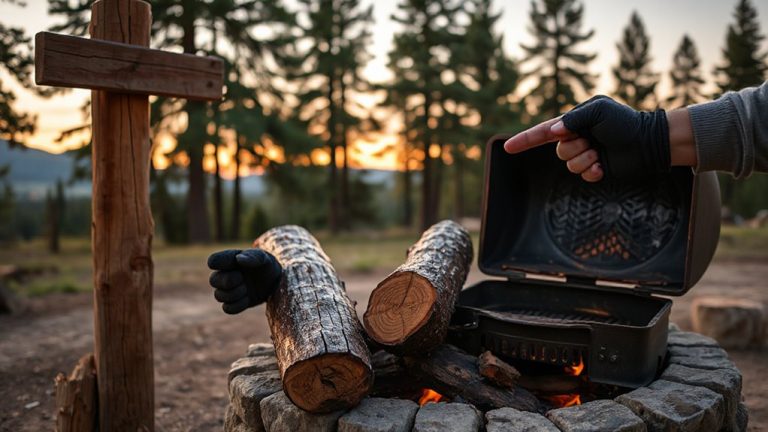
You’ve seen how timelapse imaging exposes the slow cooldown of a charcoal bed, turning faint visual shifts into actionable insights. Now, you can build a reliable setup without breaking the bank. Start with a used DSLR or even a weatherproof trail camera-it’ll handle the heat and run timelapses autonomously. Mount it securely on a tripod angled down for full bed visibility. Camera calibration is essential: set manual focus, white balance, and exposure to avoid flicker and skewed data. Use a timer or intervalometer to capture frames every 30–60 seconds. For lighting consistency, shoot in shaded or controlled environments to minimize sun shifts, or add fixed-position LED lights. Avoid auto-brightness; it distorts thermal patterns over time. A microSD card and portable battery pack keep it running for hours. This simple rig delivers consistent, measurable results-perfect for serious backyard scientists and competitive pitmasters alike.
How Image Analysis Tracks Charcoal Bed Shrinkage
While the timelapse setup captures the gradual cooling of a charcoal bed, it’s only through image analysis that you can quantify the physical changes occurring over time. You’ll use thermal imaging to distinguish active combustion zones from cooled regions, helping identify where burn rate decay accelerates. By applying pixel thresholding, you convert grayscale or color variance into measurable surface area loss, isolating charcoal mass from ash or grates. This method lets you track shrinkage with surprising accuracy, even under variable lighting. Though thermal imaging adds depth, pixel thresholding remains cost-effective and sufficient for most DIY setups. When calibrated properly, these tools reveal how fuel density and airflow influence bed contraction. For serious backyard cooks, this data isn’t just academic-it helps optimize reload timing and heat management. Ultimately, image analysis turns passive footage into actionable insight, making it easier to replicate ideal burn conditions across cooks.
Predicting Burnout Using ML and Visual Patterns
What if you could anticipate exactly when your charcoal bed will falter, not by guesswork but by pattern recognition? With machine learning analyzing timelapse footage, you can. Subtle shifts in flame intensity and ash distribution become reliable predictors of burnout. As coals degrade, flame intensity drops unevenly, often spiking in isolated zones before collapsing. ML models detect these inconsistencies faster than the eye can. Meanwhile, expanding ash coverage signals diminishing fuel-algorithms weigh this against heat retention to forecast decay. You’re not reacting; you’re staying ahead. These visual patterns, once overlooked, now form a predictive framework. For backyard BBQs or consistent searing, this means fewer surprises. The system isn’t perfect-initial setup matters, and lighting variance can skew results-but trained models adapt. Ultimately, pairing ML with visual cues transforms guesswork into precision, making sustained heat more achievable than ever.
Using Timelapse Data in Cooking and Industrial Combustion
How do you capture the full life cycle of a charcoal burn without standing there for hours? You use timelapse data. It lets you track charcoal oxidation and heat distribution in real cooking or industrial settings, revealing patterns missed by the naked eye. Whether managing a backyard smoker or a kiln, visual data helps you optimize fuel use and consistency. You’ll see how heat spreads and where flare-ups occur, letting you adjust airflow or fuel placement proactively.
| Stage | Observation |
|---|---|
| Ignition | Rapid glow expansion |
| Peak burn | Uniform brightness |
| Oxidation decline | Flickering, patchy zones |
| Heat distribution | Uneven dimming spots |
| Burnout | Dark regions dominate |
You’re not just watching fire-you’re diagnosing it. Timelapse turns passive observation into actionable insight, improving control over both flavor and efficiency.
Limitations and Future Improvements in Camera-Based Tracking
Can a camera truly capture the nuances of a charcoal burn when smoke obscures the bed or lighting shifts unpredictably? You’re limited by camera resolution, which affects how well you can detect small changes in glow or bed collapse. Even high-definition sensors struggle when environmental interference-like wind-blown ash or sudden shadows-distorts the image. These inconsistencies make automated tracking tricky, especially in open-air setups where conditions aren’t controlled. You might find that frame-to-frame analysis loses accuracy during peak burn phases, when smoke is thickest. While infrared filters help, they don’t eliminate noise. Future improvements could include adaptive algorithms that adjust for lighting drift or dual-spectrum imaging to cut through smoke. Higher-resolution sensors paired with real-time calibration would reduce errors. Ultimately, combining camera data with thermal probes might give you a more reliable prediction of burn rate decay in real-world BBQ or industrial use.
On a final note
You can now predict charcoal burnout accurately using timelapse imaging and machine learning, enhancing both safety and fuel efficiency. By tracking bed shrinkage and thermal patterns visually, you gain real-time insights into combustion decay. This low-cost method suits backyard BBQ and industrial setups alike, offering measurable control over burn rates. While lighting changes and camera stability pose challenges, consistent calibration improves reliability. With refinement, visual tracking becomes a practical, data-driven tool for mastering combustion timing and optimizing outdoor cooking performance.