Why Toasted Buns Add a Final Flavor Layer That Complements Smoked Meats
You’re adding more than crunch when you toast your bun for a smoked meat sandwich-it’s about flavor synergy. The caramelized exterior from toasting brings a subtle sweetness that mirrors the meat’s smoky char, while a crisp texture holds up against juicy brisket or pork. Brioche or potato rolls work best, toasting evenly without drying out. Whether grilled, skillet-seared, or oven-baked, a well-toasted bun enhances moisture resistance and mouthfeel. There’s a method behind balancing heat and fat-keep going, and you’ll see how to perfect it every time.
Notable Insights
- Toasting triggers the Maillard reaction, creating caramelized notes that mirror the smoky depth of the meat.
- A slightly crisp, golden bun adds a sweet, warm flavor layer that balances savory and smoky elements.
- The contrast of textures enhances overall bite satisfaction and elevates the sensory experience.
- Properly toasted buns resist moisture, maintaining structure without dulling the meat’s rich juiciness.
- Buttery, toasted exteriors transform the bun into a flavor-active component rather than a passive vessel.
How Toasting Makes Smoked Meat Sandwiches Better
You’ve likely noticed how a toasted bun can transform a simple smoked meat sandwich into something more satisfying. Toasting introduces a vital bun texture-crisp on the outside, yet sturdy enough to hold juicy, tender meat without collapsing. That slight crunch enhances each bite, offering structural integrity and sensory variety. More than texture, it creates a distinct flavor contrast: the caramelized exterior of the bun adds a subtle sweetness and depth that complements the smoky, savory richness of the meat. This interplay isn’t accidental; it’s a deliberate layering of taste and mouthfeel that elevates the entire sandwich. In barbecue tradition, where slow cooking builds complexity, finishing with a toasted bun guarantees balance. It’s not just about warmth-it’s about contrast, harmony, and the thoughtful integration of elements that turn good into memorable. Proper toasting, even with simple tools, delivers consistent, worthwhile improvement.
Best Buns for Smoked Meat (And Why to Toast Them)
A well-toasted bun does more than add crunch-it sets the stage for the entire smoked meat experience, starting with the right choice of bread. You want buns that balance softness with structural integrity, like brioche or potato rolls, which hold up to juicy brisket without collapsing. Their slightly sweet flavor pairing enhances smoky, savory meats without overpowering them. Toasting improves bun texture, creating a crisp exterior that resists sogginess while preserving a tender interior. This contrast isn’t just satisfying-it extends the sandwich’s eatability, especially when served warm off the smoker. Avoid overly dense or dry buns; they hinder flavor pairing and make chewing laborious. Kaiser or onion rolls work too, but watch their toasting time to prevent burning. Ultimately, your bun choice affects moisture retention, mouthfeel, and overall harmony. A well-chosen, properly toasted bun doesn’t just carry the meat-it elevates it.
Why Toasted Buns Boost Smoky Flavor
Though the smokiness in a great barbecue sandwich often gets credited to the meat alone, the toasting process actually plays a quiet but essential role in amplifying those deep, wood-infused flavors. When you toast a bun, the Maillard reaction develops rich, caramelized notes that echo the char on smoked meats, layering complexity into every bite. This creates a subtle flavor contrast-warm sweetness against savory smoke-that elevates the entire sandwich. Toasting also delivers key texture enhancement: the exterior firms up just enough to resist sogginess, while the inside stays tender. That contrast isn’t just pleasing-it guarantees each bite holds up under juicy, saucy meats. You’re not just preventing structural collapse; you’re balancing mouthfeel and taste. Even a light toast adds depth, making the bun an active flavor contributor rather than just a carrier. Properly toasted, it completes the harmony of the dish. Choosing the right smoke wood for chicken can further align the meat’s smokiness with the bun’s toasted richness, enhancing the overall flavor profile.
Toasting Methods: Grill, Skillet, or Oven?
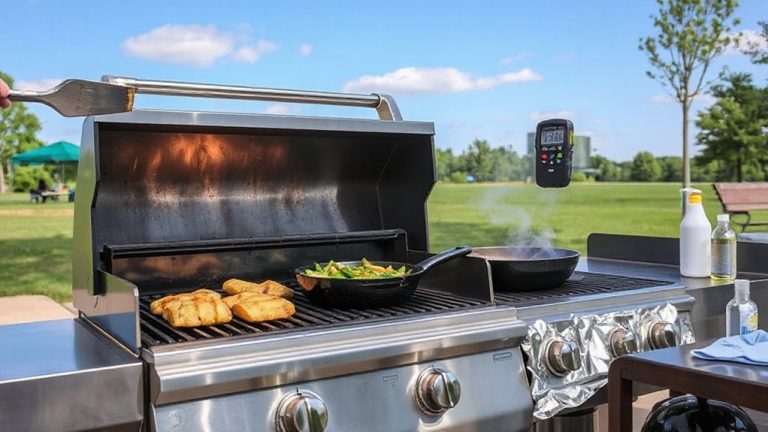
When it comes to toasting buns for a barbecue sandwich, the method you choose can subtly influence both flavor and texture, with each option-grill, skillet, or oven-bringing distinct advantages depending on your setup and priorities. Grilling gives a smoky depth and char, especially if you brush the cut side with butter just after placing it on the grates; here, butter temperature matters-melted but not browned guarantees even coating without burning. A skillet offers precision, letting you control heat and toasting duration closely, ideal when juggling multiple components. The oven works best for large batches, delivering consistent results, though it lacks direct char. While the grill aligns best with outdoor cooking’s spirit, the skillet provides reliability, and the oven excels in volume. Each method suits different scenarios, but attention to butter temperature and toasting duration guarantees ideal browning and texture every time.
Mistakes That Ruin Your Toasted Bun
You’ve picked your toasting method-whether grill, skillet, or oven-and now attention shifts to what can go wrong even with the right equipment and intent. Heat too high? You’ll end up with burnt buns-charred outside, yet still soft within, ruining texture and taste. Even skilled cooks misjudge timing, especially over open flame, where hotspots blacken the crust before warmth penetrates. Using stale bread compounds the problem; it toasts too quickly, turning brittle and ash-dry instead of achieving that ideal crisp-yet-chewy balance. Butter helps, but can’t rescue poor starting material. Always check bread freshness first-springy, not cracked. Monitor heat closely, and never walk away; bun-toasting demands attention. Under-toasting risks sogginess from juicy meats, while overdoing it creates bitterness that conflicts with smoky flavors. Precision beats guesswork: medium heat, light fat, steady contact. Avoid these mistakes, and your bun won’t just hold up-it’ll enhance.
When to Toast for Maximum Impact
Since timing affects both texture and flavor integration, toasting your bun just before assembling the burger delivers the best results-crisp on the outside, tender within, and warm enough to enhance the meat’s aroma without softening under steam too soon. You need timing precision: too early, and the bun cools or absorbs moisture; too late, and you rush the build, risking imbalance. Heat control matters just as much-medium heat preserves structure while promoting Maillard browning without scorching. A cast-iron grill or heated plancha gives even contact, but you must monitor closely. Gas grills offer consistent output, while charcoal demands closer attention yet adds subtle depth. For smoked meats, which cool slightly post-smoke, the bun’s warmth bridges the temperature gap, aligning textures. Proper execution elevates the bite-timing precision and heat control aren’t just technique, they’re essential mechanics in crafting a balanced, flavorful experience from first bite to last.
How to Keep Toasted Buns From Getting Soggy
A perfectly toasted bun can elevate your burger, but all that care goes to waste if it turns soggy under hot meat and juicy fixings. To maintain texture, focus on bun moisture control-toast the cut sides until crisp, creating a barrier that resists dampness. Lightly buttering the interior before toasting adds flavor and further seals the surface. Timing matters just as much; avoid assembling too early. Let the smoked meat rest and cool slightly before placing it on the bun-this reduces steam transfer that softens the bread. Smart sandwich assembly timing guarantees the bun stays crisp longer. For outdoor cooking, where elements and delays are common, pre-toasting and delayed assembly are essential. A well-timed build keeps structure intact, letting each bite deliver crunch, smoke, and juiciness in harmony. Great BBQ isn’t just about the meat-it’s how every layer performs.
On a final note
You’ve seen how toasted buns elevate smoked meat sandwiches by adding texture and flavor depth. The right toast enhances the meat’s smokiness without overpowering it. Brioche or potato buns work best, holding up to juices when properly seared. Whether using a grill, skillet, or oven, timing and heat control are essential. Toast too early and the bun sags; too late and it burns. Done right, toasting isn’t just finishing-it’s refining.