Warped Charcoal Grill Grates: Fix or Replace? Grate-by-Grate Guide
You can fix mildly warped grates from thermal cycling if they’re made of thick cast iron or stainless steel, but thin or porcelain-coated grates often can’t be safely straightened. Let the grate cool completely, then gently tap high points with a rubber mallet on a flat surface-excessive force risks cracking. Prevention works better than repair: slow preheating and cooling reduces stress. For severe warping, replacement usually makes more sense. There’s a smarter way to handle long-term grate care.
Notable Insights
- Allow warped grates to cool completely before attempting correction to avoid thermal shock and further damage.
- Use a rubber mallet to gently tap high points on a flat surface, minimizing risk of cracking or weakening the metal.
- Focus on minor warps only, as severely deformed grates are unlikely to be fully restored and may need replacement.
- Apply even pressure during straightening, working gradually to realign the grate without inducing additional stress.
- Assess material thickness and type-thicker cast iron or stainless steel grates respond better to correction than thin steel.
Can a Warped Grill Grate Be Fixed?
Why do some grill grates warp over time, and can they actually be fixed once they do? You’re likely facing issues tied to grate material and repeated expansion stress. Most charcoal grill grates are made of cast iron, stainless steel, or porcelain-coated steel, each responding differently to high heat. Over time, uneven heating and cooling create expansion stress that overwhelms the metal’s structural integrity, leading to warping. Thin or low-grade materials warp easier. Once warped, your grate loses even contact with the charcoal, causing hot spots. Can you fix it? Minor bends might be flattened with careful leverage, but success depends on the grate’s thickness and composition. However, severely distorted grates usually can’t be restored to original performance. Replacement often makes more sense, especially if the grate material lacks durability. Prevention-using consistent heat and avoiding thermal shocks-matters more than repair.
Why Grill Grates Warp (And How Heat Causes It)
Gr jaws don’t warp overnight-it’s the result of repeated exposure to intense heat and improper handling over time. Every time you fire up your charcoal unit, the metal expands due to thermal expansion, stretching slightly as temperatures rise. When you shut it down quickly or leave it to cool in the open air, the uneven contraction stresses the structure. Do this enough, and you’re pushing the grate past its limits. That’s where material fatigue kicks in-the metal weakens from constant expansion and contraction, losing its ability to hold shape. Cheaper grates with thinner steel or inconsistent alloys warp faster because they can’t handle repeated cycles. Even high-quality cast iron or stainless steel can succumb if abused. Proper preheating and gradual cooling reduce strain, but if you’re constantly dumping coals or hosing down a hot grate, you’re speeding up the breakdown. Heat’s essential, but respect its power-or your grate pays the price. Upgrading to better materials like Top Grill Grates can significantly improve durability and heat retention.
How to Straighten a Warped Grill Grate
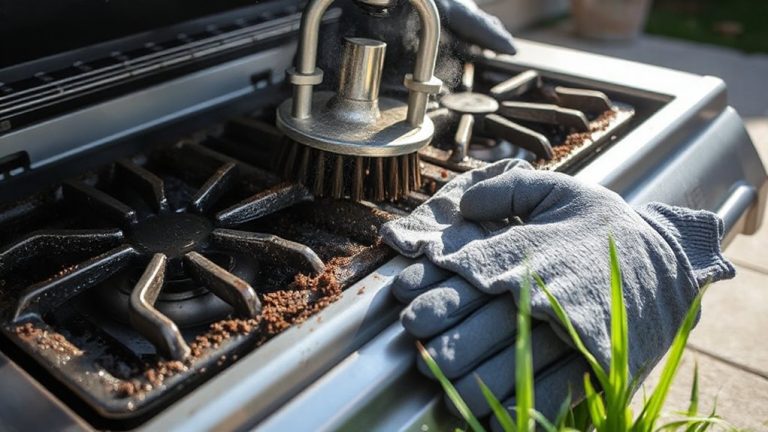
If you’ve noticed your grate no longer lies flat across the fire bowl, don’t assume replacement is the only fix-many warped grates can be carefully restored with the right approach. Start by removing the grate and letting it cool completely. Depending on your grill grate materials-cast iron, stainless steel, or porcelain-coated steel-the degree of warping and method of correction varies. Gently place the grate on a flat, sturdy surface and use a rubber mallet to tap high points back into alignment. Avoid excessive force, as it may weaken the metal. Before attempting straightening, verify your grate cleaning methods didn’t contribute to damage; abrasive tools or thermal shocks shorten lifespan. While not all warps are fully reversible, this technique often improves performance. Proper care and realistic expectations make restoration worthwhile for many charcoal grillers.
How to Prevent Grill Grate Warping
A well-maintained grate performs better and lasts longer, especially when you take steps to avoid warping in the first place-something that builds directly on the repair methods already discussed. You can substantially reduce warping by focusing on material selection and grate thickness. Cast iron resists deformation better than thinner steel, but it’s prone to rust if not seasoned. Stainless steel offers durability and corrosion resistance, though cheaper versions may still warp under intense heat. Thicker grates-those over 5/16 inch-handle thermal cycling far better, maintaining structural integrity. Avoid rapid temperature shifts; let your grill cool gradually instead of hosing it down while hot. Preheating slowly also helps distribute heat evenly, reducing stress points. Proper cleaning and consistent seasoning, especially on iron grates, add another layer of protection. With smart choices in build and care, you’ll extend your grate’s life and cooking performance.
When to Replace Warped Grill Grates
Some warped grates can be flattened and salvaged, but there comes a point when replacement isn’t just advisable-it’s necessary for safety and cooking performance. You’ve probably noticed uneven heat distribution or food sticking more than usual-these are key replacement signs. When warping causes significant gaps or instability, flare-ups and inconsistent searing become unavoidable. Beyond performance, severely distorted grates compromise structural integrity, raising safety concerns during use. To maximize grate longevity, routine inspection is essential. Look for deep rust, cracked welds, or warping that prevents proper placement on support bars. If seasoning no longer improves non-stick performance or cleaning fails to restore surface quality, it’s time to reflect on new grates. While maintenance extends life, persistent damage diminishes efficiency. Replacing grates at the right moment guarantees better cooking control, even temperatures, and long-term grill reliability-critical factors in serious outdoor cooking.
On a final note
You can often fix a warped grill grate, but success depends on the material and severity. Thicker cast iron or stainless steel withstands thermal cycling better, while thinner grates warp more easily. Straightening may work temporarily, but repeated stress compromises integrity. Prevention-like gradual heating and avoiding drastic temperature shifts-matters most. In many cases, replacing a warped grate guarantees even cooking and long-term reliability, especially with frequent, high-heat use.