Creating an Efficient Workflow Between Grill, Refrigerator, and Sink Stations
You’ll cook faster and cleaner by arranging your grill, fridge, and sink into a triangle with each side 4 to 9 feet long. Keep meat cold until cooking to stay safe and flavorful, using pre-chilled prep containers. Stock each station with essentials-tongs, spatula, soap, and cloths-so nothing’s out of reach. Sync prep with preheating, then clean nearby with a close, durable sink. This setup cuts downtime, reduces risk, and maximizes performance every time you fire up the grill. There’s more to get right in how each element supports the next.
Notable Insights
- Arrange the grill, fridge, and sink in a triangle layout with each leg 4 to 9 feet apart for efficient movement.
- Keep perishable foods chilled below 40°F until cooking to ensure safety and preserve flavor.
- Place heat-resistant stainless steel counters near the grill for durable, easy-to-clean prep space.
- Equip the grill station with essential tools like tongs and spatulas stored in a caddy or wall rack.
- Position the sink within 2 to 3 feet of the grill to enable quick cleanup and reduce cross-contamination.
Design Your Grill-Fridge-Sink Triangle for Faster Cooking
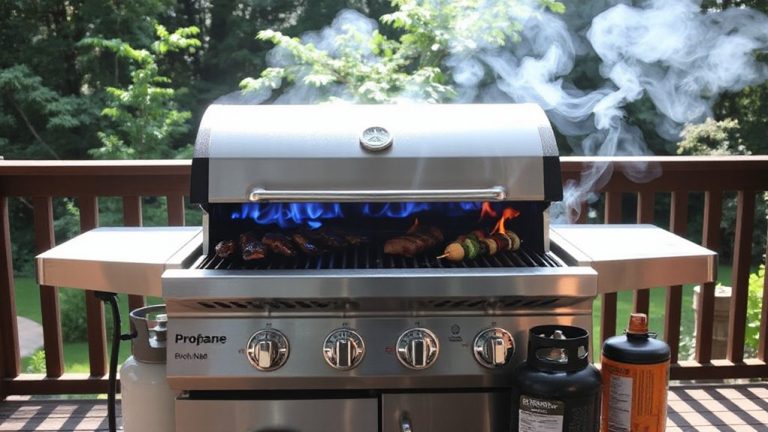
While many backyard cooks overlook workspace layout, getting the grill, fridge, and sink positioned in a functional triangle can seriously cut down on wasted steps during peak cooking. Proper grill placement-neither too close to the house nor isolated at the yard’s edge-ensures accessibility while maintaining safety. You’ll want each leg of the triangle between 4 and 9 feet long; any longer disrupts workflow symmetry, forcing unnecessary walking. A well-balanced setup lets you prep at the sink, grab ingredients from the fridge, and move directly to the grill without backtracking. Materials matter, too: stainless steel counters near the grill resist heat and grease, easing cleanup. This setup isn’t just about convenience-it’s about consistency. With smart spacing and deliberate positioning, you reduce fatigue, avoid cross-contamination risks, and streamline shifts between tasks. When every station flows naturally into the next, your outdoor kitchen works as hard as you do-making grilling less chore, more craft.
Keep Meat and Veggies Cold Until They Hit the Grill
You’ve arranged your grill, fridge, and sink into a smooth-working triangle, so now make the most of that setup by controlling temperatures until the moment food hits the grates. Keeping meat and veggies cold until cooking is essential for both flavor and food safety. Use cold storage strategically-store proteins at or below 40°F and pull them only when searing begins. Bacteria multiply rapidly between 40°F and 140°F, so minimizing time in that danger zone is critical. Pre-chill plates and prep containers to maintain low surface temps during transfer. Dense veggies like potatoes can stay cool longer, but softer items like tomatoes and leafy greens warm quickly, so stage them last. Even in short bursts, ambient heat compromises freshness. Your efficient triangle only works if temperature control is prioritized. Smart cold storage isn’t just habit-it’s the backbone of safe, high-quality outdoor cooking.
Stock Each Station With Tools You’Ll Actually Use
A well-stocked station cuts wasted motion and keeps the cook moving forward. At the grill, keep essential grill tools-tongs, spatula, brush-within arm’s reach so you’re not fumbling mid-sear. Choose sturdy, heat-resistant tools with long handles for safety and control. Store them in a caddy or wall-mounted rack to prevent loss and contamination. At the sink, stock sink supplies like biodegradable soap, a dedicated brush, and clean cloths to maintain hygiene without slowing workflow. Don’t overfill either station; only include items you’ll actually use to avoid clutter. A cluttered space impedes efficiency and increases cooking stress. Thoughtful organization improves performance: fewer steps mean better sears and safer handling. When each station holds exactly what’s needed, the process feels seamless. Efficient outdoor cooking isn’t about having more-it’s about using what you have, right where you need it. The right BBQ tools for grilling success can make a significant difference in maintaining consistency and control throughout the cooking process.
Time Grilling to Cut Prep and Cleanup Time
Positioning your tools within easy reach sets the stage, but how you manage the clock while grilling has just as much impact on your efficiency. You’ll save time by syncing prep with grill temperature, ensuring the fire’s ready when ingredients are. Preheat thoroughly-waiting mid-cook wastes minutes and breaks your cooking rhythm. Start with high heat for searing, then shift to medium for even finishing. This method cuts down total cook time and prevents overhandling. Marinate in advance, but bring meats to room temperature before placing them on the grill; cold cuts disrupt heat consistency. Use a meat thermometer to avoid guesswork-accurate timing reduces errors and rework. A reliable best meat thermometer can make the difference between perfectly cooked meat and overdone results. Batch similar items together to maintain a steady cooking rhythm, minimizing idle periods. Proper timing means you’re not rushing or repeating steps, which streamlines everything from prep to plating.
Clean up Faster With a Sink-To-Grill Routine
While grilling often dominates the outdoor cooking experience, the cleanup phase can quickly undermine your efficiency if not planned ahead. You can save time and effort by designing your outdoor kitchen with smart sink proximity and seamless grill access. A sink placed within two to three feet of the grill lets you rinse tools and ingredients without walking across the patio. This routine minimizes cross-contamination and keeps surfaces cleaner during use. After grilling, immediate wipe-downs with warm, soapy water prevent grease buildup, maintaining performance and appearance. Stainless steel sinks near the cooking zone support quick cleanup, especially when paired with a reliable water source and drainage. You’ll notice fewer delays and less clutter when workflow moves logically from refrigeration to grill and back to the sink. With this sink-to-grill routine, efficiency isn’t just possible-it’s practical and sustainable for regular outdoor cooking. Adding a dash of Best Louisiana Hot Sauce Picks can elevate your grilled dishes while maintaining a streamlined post-cook cleanup.
On a final note
You’ll cook smarter by refining your grill-fridge-sink workflow. Positioning these stations within quick reach cuts steps and preserves food safety. Keeping perishables chilled until cooking guarantees freshness, while pre-stocking each zone with essential tools speeds up prep. Timing your grilling reduces idle cleanup, and rinsing tools immediately after use prevents buildup. A streamlined routine boosts efficiency, making outdoor cooking both practical and enjoyable without wasted motion.