Contrasting Propane and Butane for Gas Grill Flavor Nuances in Summer BBQs
You’ll find propane delivers a hotter, more consistent flame-ideal for proper searing and developing rich crusts during summer BBQs. Butane burns clean, but its lower heat and occasional flicker can limit caramelization. While both fuels leave no residue, propane’s stability and performance in varying conditions give it an edge. Flavor differences are subtle, often overshadowed by seasoning and technique. You’re likely to notice better control and results with propane, especially at high temps-what you choose could shape your cook’s outcome more than you think.
Notable Insights
- Propane delivers a clean, consistent blue flame, promoting complete combustion and minimal flavor impact during summer grilling.
- Butane burns cleanly with high efficiency, potentially reducing off-flavors from incomplete ignition compared to other fuels.
- Both propane and butane leave no residue when burned, ensuring no direct flavor contamination from fuel byproducts.
- Flavor differences between propane and butane are subtle, often undetectable compared to the influence of seasoning and meat quality.
- Propane offers superior heat control and flame stability, supporting precise searing and consistent cooking essential for summer BBQs.
Propane vs Butane: How Fuel Affects BBQ Flavor
While both propane and butane power your grill with clean, efficient flames, they don’t burn quite the same-which can subtly influence your BBQ’s flavor and performance. You’ll notice propane typically produces a more consistent blue flame color, signaling complete combustion and high fuel purity. Butane, though similar, can burn slightly cooler and may yield a flickering blue-yellow flame under certain conditions, hinting at minor fluctuations in combustion efficiency. This variation might affect heat distribution, potentially influencing how evenly your food cooks and develops flavor. Since fuel purity impacts ignition and consistency, contaminants-though rare in consumer-grade tanks-could alter performance. For most backyard cooks, the flavor difference isn’t drastic, but the precision of propane’s burn gives it a slight edge in control. Both fuels leave no residue, but propane’s stable combustion means fewer variables when chasing that ideal sear and smoky depth.
Propane’s High Heat and Searing Power
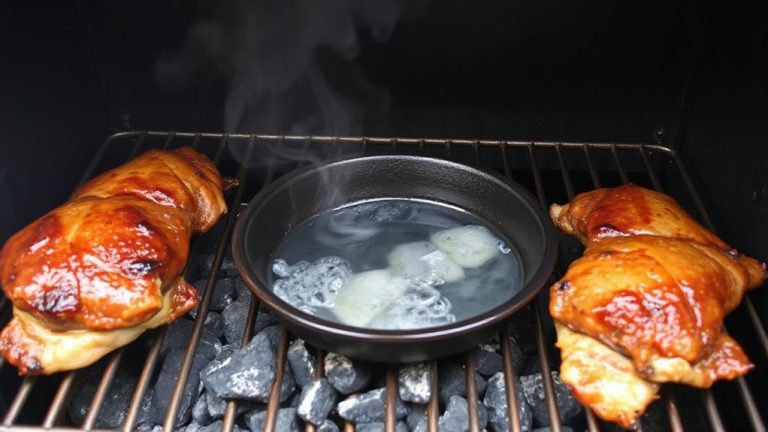
You’ll find propane’s real strength on the grill isn’t just in steady ignition or clean burn-it’s in how quickly and intensely it delivers heat. Propane reaches high temperatures fast, often exceeding 600°F, making it ideal for searing steaks or locking in juices on chicken skin. This rapid heat response gives you superior searing performance, creating that desirable Maillard reaction crust without overcooking the interior. You also gain better temperature precision, especially with modern regulators and multi-burner setups, letting you control zones for direct and indirect cooking. While butane burns cleanly, it can’t match propane’s thermal output, particularly in larger grills or cooler weather. Propane-powered grills consistently deliver the high, steady heat needed for reliable results. For backyard chefs prioritizing control and browning power, propane’s heat intensity and responsive adjustments make it the practical choice for serious summer BBQs. According to expert evaluations, top-performing models in the best gas grills roundup excel when paired with propane’s high heat.
Butane’s Clean Burn: Better Taste or Just Hype?
Could the secret to better BBQ flavor really lie in the type of gas you burn? You’ve probably heard butane delivers a cleaner flame, and there’s truth to that-its combustion efficiency is higher than propane’s, meaning more complete burning with fewer residual byproducts. That efficiency might contribute to flavor purity, reducing the chance of off-tastes from incomplete ignition. But does that translate to noticeably better-tasting food? Not always. While butane burns cleanly, the difference in taste is subtle, if detectable at all, under typical grilling conditions. Your seasoning, meat quality, and technique still play far bigger roles. Plus, butane’s lower vapor pressure can affect performance in cooler temps, limiting its reliability. So while the clean burn sounds appealing, it’s not a game-changer for flavor. It’s a marginal benefit-real, but minor-making butane’s superior taste claims more nuanced than revolutionary.
Real-World Grilling: Heat Control and Consistency
When you’re managing the heat on your grill, small adjustments can make a noticeable difference in searing, caramelization, and overall cooking control, and that’s where propane typically pulls ahead. Propane delivers better flame stability across temperature ranges, giving you reliable performance whether you’re searing steaks or gently warming delicate fish. Its ignition precision means the burners light quickly and consistently, reducing flare-ups and wasted fuel. Butane, while functional, often struggles with even heat distribution and can flicker under variable pressure, especially in larger grills. For everyday grilling where timing and temperature matter, propane’s predictable behavior makes it the practical choice. You’ll spend less time fiddling with knobs and more time cooking. If you value control and steady output, propane’s superior engineering in flame stability and ignition precision gives you a clear edge during real-world use.
Cold Weather Grilling: Propane vs Butane
Although both propane and butane can fuel a grill, their performance diverges sharply in cold weather due to differences in vaporization points. You’ll find propane works reliably below freezing because it vaporizes at -44°F, while butane struggles below 31°F, often failing in winter conditions. That means if you’re grilling in chilly months, propane offers better fuel efficiency and consistent heat output. Butane may start fine on a mild day but loses pressure quickly as temperatures drop, leading to weak flames and uneven cooking. Tank insulation helps preserve butane’s performance slightly, but it won’t overcome its inherent limitations. Propane tanks, though heavier, maintain pressure better in the cold with minimal intervention. So when winter rolls around, relying on butane means risking stalled cookouts. For dependable operation outdoors year-round, propane’s physical properties simply make it more practical, especially when ambient temperatures fall.
Which Is Best: Propane or Butane for Your BBQ?
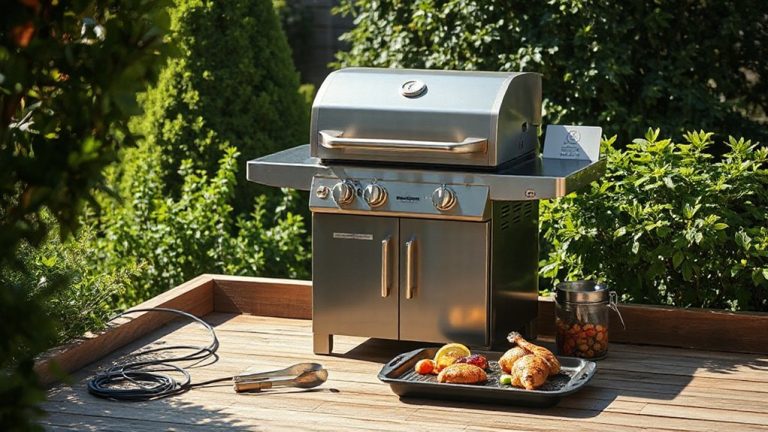
So, which fuel really wins for your BBQ-propane or butane? For most grilling situations, propane edges out butane thanks to better fuel efficiency and broader temperature adaptability. You’ll get consistent flame control and stronger performance, especially during longer cook sessions. Butane heats up quickly and burns cleanly, but it struggles in fluctuating outdoor temperatures, making it less reliable overall. When you factor in a cost comparison, propane tanks are more widely available and often cheaper to refill, adding to long-term savings. While butane canisters are compact and lightweight, their limited shelf life and lower vapor pressure reduce practicality. Propane’s proven track record, superior energy output, and ease of use make it the smarter choice for serious summer BBQs. Unless you’re backpacking or need portability, propane delivers better value, efficiency, and grilling precision. For optimal performance, consider pairing your propane tank with a high-quality propane regulator to ensure steady gas flow and precise temperature control.
On a final note
You’ll find propane delivers higher, more consistent heat, ideal for searing and reliable performance, especially in cooler weather. Butane burns cleanly but lacks the power for intense grilling. While some claim it enhances flavor, no evidence supports this over proper technique. Propane’s availability, pressure stability, and efficiency make it the practical choice for most outdoor cooks who value control and performance season after season.