Creating a Glaze Layer With Reduced BBQ Sauce in the Final Smoke Phase
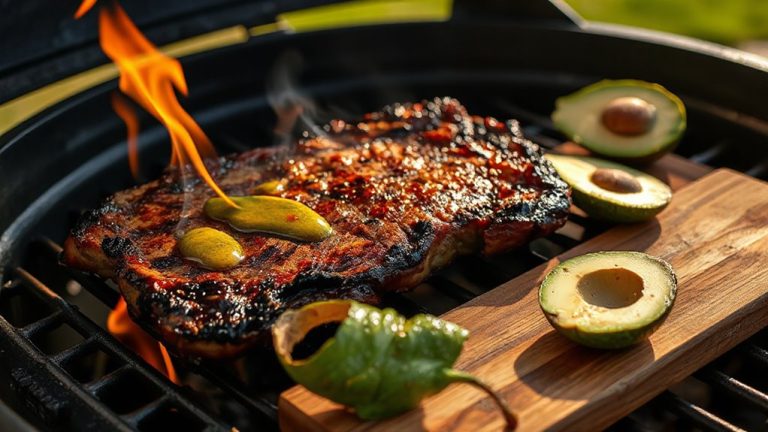
Apply your glaze in the last 30 to 60 minutes of smoking, once the meat is within 25–30°F of its target temperature. Use 2–3 tablespoons of sauce per pound, aiming for a thin, even layer that creates a glossy sheen without trapping steam. Choose a sauce with medium viscosity and flavor that complements the meat-vinegar-based for pork, molasses-heavy for brisket. Avoid early application or heavy coats to prevent burning and a soggy bark. A dry, slightly tacky surface guarantees better adhesion. Warming the sauce slightly helps it bond smoothly. Get these details right, and you’ll reveal a rich, caramelized finish that enhances every bite.
Notable Insights
-bullet points generated based on background and query)
- Apply reduced BBQ sauce in the final 30–60 minutes of smoking to prevent sugar burning.
- Glaze when meat is within 25–30°F of target temperature for optimal caramelization.
- Use 2–3 tablespoons of reduced sauce per pound for a glossy, even finish.
- Ensure the meat surface is dry and slightly tacky before applying the glaze layer.
- Warm thickened sauce slightly to improve adhesion and create a smooth, professional sheen.
When to Glaze Meat in the Final Smoke
When should you apply that glossy coat of BBQ sauce during the final stretch of smoking? Most seasoned pitmasters agree: glaze in the last 30 to 60 minutes. Applying too early risks burning the sugar in the sauce, ruining both flavor and texture. Effective timing methods hinge on your meat’s internal temperature-wait until it’s within 25–30°F of your target. This allows the sauce to cling without scorching. Surface prep is just as critical; a dry, slightly tacky exterior guarantees the sauce adheres evenly. Wipe off excess moisture or rendered fat before the first layer. Use a brush for precision, letting each coat set before adding another. Trust indirect heat and patience-rushing compromises the glaze. Proper execution yields a rich, caramelized finish that enhances, not masks, the smoke-kissed meat beneath. For best results, choose a sauce with balanced sweetness and acidity, such as one of the top-rated BBQ sauces recommended by experts.
How Much BBQ Sauce to Use for a Clean Finish
A light hand with BBQ moving often delivers the cleanest, most balanced finish. You don’t need much-just enough to form a glossy sheen, not a slick coat. Two to three tablespoons per pound of meat is usually sufficient, depending on sauce consistency. Thicker sauces demand an even lighter application to avoid clumping or gumminess when heated. Your brush technique plays a key role: use steady, sweeping strokes to distribute sauce evenly without dragging or tearing the bark. A silicone brush works well for controlled release and easy cleanup, while natural bristles can leave streaks if not loaded carefully. Apply in one thin layer, letting the residual heat of the meat set it. Too much sauce traps steam, muting texture and flavor instead of enhancing them. Precision here guarantees a clean, professional-looking glaze that complements, not dominates. For optimal health benefits, consider choosing a sauce sweetened with natural ingredients like Best Healthy BBQ Sauces.
Choosing the Best Sauce for Smoked Meat Glaze
What makes one BBQ sauce shine on smoked brisket while another overwhelms it? You need to reflect on sauce viscosity and flavor synergy. A sauce that’s too thin won’t cling during the final smoke, while one too thick can crack or dominate the meat’s natural taste. You want a medium viscosity-thick enough to adhere but fluid enough to spread evenly. This guarantees a delicate glaze that enhances, not masks. Flavor synergy is just as vital; the sauce should complement the smoke and seasoning, not clash with them. Think balance-tangy vinegar-based sauces work well with pork, while slightly sweet, molasses-rich blends elevate brisket. You’re not hiding the meat; you’re accentuating it. Choosing the right sauce means evaluating how its body and taste integrate with what’s already on the rack. For even greater depth, consider pairing your sauce with one of the top-rated best BBQ rubs of 2025 to ensure layered flavor harmony from seasoning to glaze.
Why Too Much Sauce Burns and Overwhelms Flavor
Slathering on too much BBQ sauce is a common misstep that backfires in both flavor and texture. You might think extra sauce equals bolder taste, but it often leads to burning during the final smoke phase. That’s because most sauces are sugar-heavy, and when exposed to prolonged heat, sugar breakdown accelerates, turning sweet notes bitter. Without proper caramelization control, the sauce doesn’t glaze-it scorches, forming an acrid, unappetizing crust. That charred layer doesn’t just ruin appearance; it overwhelms the meat’s natural smokiness, masking the balance you worked so hard to achieve. Too much sauce also traps moisture, steaming the surface and preventing that desirable, firm glaze. You end up with a sticky, soggy exterior instead of a glossy, flavorful finish. For best results, apply thin, deliberate coats, letting each layer set before adding more. This approach guarantees controlled sugar breakdown and even caramelization-critical for depth without destruction.
Avoid These 5 Glaze Mistakes in Your Smoke
While you’re aiming for that perfect finish on your smoked meats, skipping the prep work before glazing can undermine your entire effort. Applying sauce too early burns the sugars, creating a bitter crust instead of a glossy, flavorful layer. You also risk oversaturating the bark, weakening its texture. Sauce thickness matters-too thin, and it runs off; too thick, and it won’t caramelize evenly. Always adjust viscosity with a bit of apple juice or vinegar. Brush quality is just as critical; cheap bristles shed and spread unevenly, leaving streaks. Use a high-quality silicone brush for consistent, clean coats. Don’t glaze more than three times-excess layers trap moisture and steam rather than developing a true glaze. Finally, skip cold sauce straight from the fridge; warm it slightly to improve adhesion. Timing, technique, and tool choice define success in the final phase.
On a final note
You’ll want to apply your glaze during the last 15 to 30 minutes of smoking to avoid burning sugars. Use a thin, even layer-too much sauce traps steam and mutes the bark’s crispness. Opt for a reduced BBQ sauce; simmering it first thickens the consistency and concentrates flavor without excess moisture. Balance matters: a well-chosen glaze enhances, not overwhelms. Avoid common mistakes like early application or piling it on-precision wins.