Dealing With Smoke Points: Choosing the Right Oil for High-Heat Outdoor Searing
You’ll want an oil with a smoke point above 400°F to sear effectively outdoors. Avocado oil, at 520°F, stands out for its stability, neutral flavor, and resistance to breakdown under intense heat. Skip olive oil-it smokes too early-and avoid pouring oil directly on grates to prevent flare-ups. Applying a thin coat to the meat guarantees better browning and crust development. Choosing wisely makes all the difference when high heat is involved, and there’s more to get right for perfect results every time.
Notable Insights
- Choose oils with a high smoke point-like avocado oil (520°F)-to prevent burning during high-heat searing.
- Avoid low smoke point oils such as extra virgin olive oil, which degrade and create off-flavors when overheated.
- Apply oil to the meat, not the grill grates, to control coating and reduce dangerous flare-ups.
- Use refined oils (e.g., canola, grapeseed, peanut) for better heat stability and cleaner flavor at high temperatures.
- Never reuse old or previously heated oil, as it lowers smoke point and increases harmful compound formation.
Why Smoke Point Matters for Searing
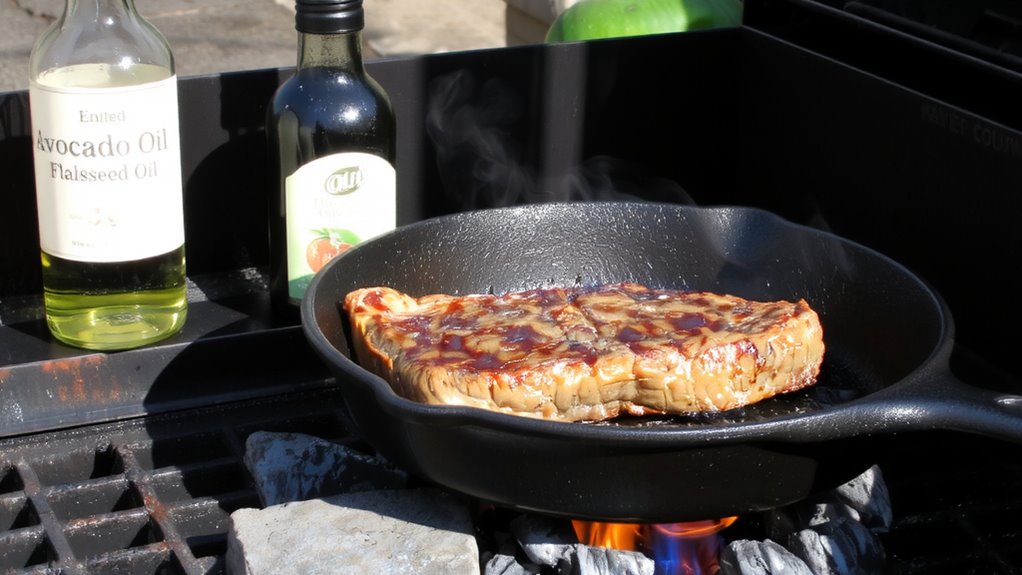
When you’re firing up the grill for a high-heat sear, the oil you choose can make or break the moment-especially since exceeding an oil’s smoke point doesn’t just create acrid smoke, it degrades the oil’s structure and can leave your steak coated in bitter, burnt flavors. Oil degradation begins once the temperature threshold is crossed, triggering molecular breakdown that compromises both health and taste. You’re not just risking smoke; you’re inviting flavor oxidation, which alters the oil’s chemistry and produces off-notes that overpower your food. This is critical during searing, where intense heat demands stability. Using an oil with a low smoke point undermines the Maillard reaction, robbing your meat of that rich, complex crust. You need an oil that withstands thermal stress without deteriorating. Ignoring smoke points isn’t just careless-it’s a direct hit to quality, affecting aroma, flavor, and even nutritional value. Choose wisely, because performance matters when the flame’s high and the steak’s on the line. For best results, consider oils like avocado or refined safflower oil, both known for high-heat performance and ideal for achieving a flawless sear thanks to their elevated smoke points.
Best Oils for Searing and Grilling
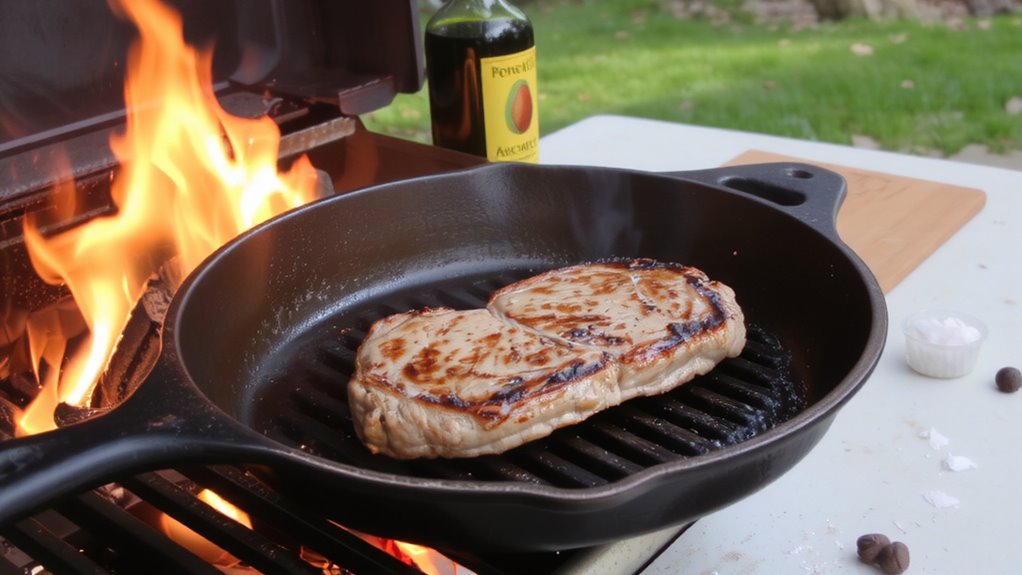
You’ve got your grill fired up and the steak seasoned, but the oil sitting on your counter might not survive the first sear. For high-heat outdoor cooking, choose oils with high smoke stability-like avocado, refined canola, or grapeseed. These stand up to intense flames without breaking down or producing acrid smoke. Avocado oil, with a smoke point around 520°F, offers excellent smoke stability and near-perfect flavor neutrality, so it won’t interfere with your seasoning or char. Refined peanut oil works well too, balancing heat resistance and subtle depth. While olive oil gets praise, most versions-even “light”-lack the smoke stability needed for true searing. Flavor neutrality matters if you’re aiming to highlight the meat, not the fat. Opt for refined over unrefined oils; they’re processed to remove impurities that lower smoke points. Your sear depends on both specs and smart selection. Best Oils for Grilling can vary by use, but top picks consistently feature high smoke points and minimal flavor interference.
Don’t Burn Your Sear: 5 Oil Mistakes to Avoid
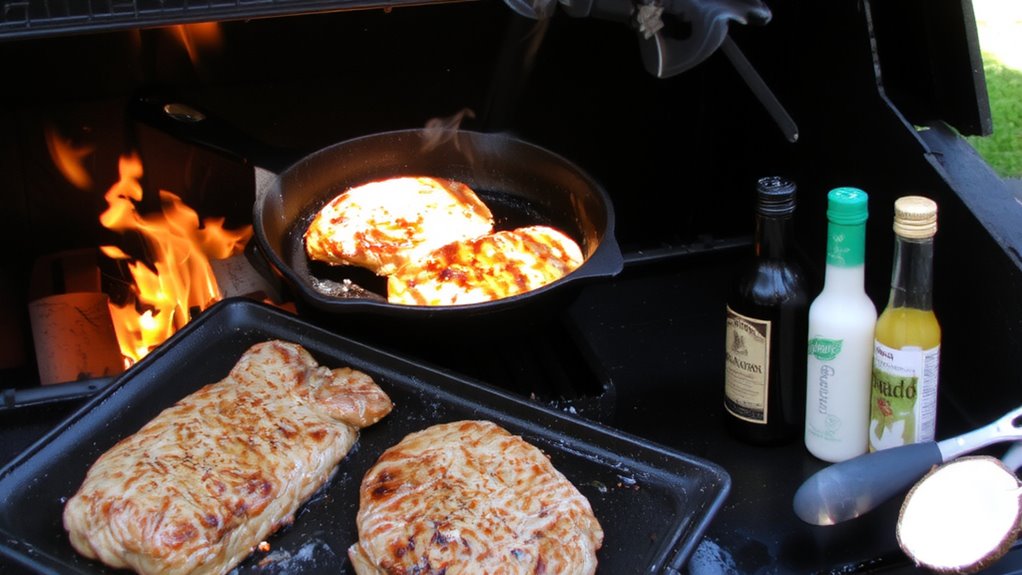
What makes your sear go from restaurant-quality to bitter and charred in seconds? Using the wrong oil or misapplying it. First, don’t pick an oil with low smoke point-once it smokes, you’re dealing with flavor degradation and off tastes. Second, dumping oil on a screaming-hot grill causes flare-ups; apply it to the meat, not the grates. Third, ignoring oil viscosity means uneven coating-thicker oils cling better but can pool if overused. Fourth, reusing old or heated oil risks harmful compounds and weak sears. Finally, assuming all “high-heat” oils perform equally is a myth-test performance under real grilling conditions. You need stability, clean flavor, and proper lubrication. Avoid these mistakes, and you’ll maintain control over heat and browning, ensuring your sear stays crisp, deep, and free from unwanted bitterness caused by breakdown. Precision matters. For searing steak in a cast-iron skillet, choosing oils with high smoke points like avocado or refined safflower oil makes a critical difference-best oils for searing deliver consistent results without breaking down.
How Oil Affects Crust Formation and Taste
A crisp, caramelized crust isn’t just the mark of a well-seared steak-it’s the direct result of how oil interacts with heat, protein, and surface moisture. The right oil promotes consistent heat transfer, kickstarting the Maillard reaction-where amino acids and sugars transform under high heat to create deep flavor development. Without sufficient smoke point or proper fat distribution, you risk steaming instead of searing.
| Oil Type | Smoke Point (°F) | Maillard Effect |
|---|---|---|
| Avocado | 520 | Excellent |
| Grapeseed | 420 | Good |
| Canola | 400 | Moderate |
| Olive (refined) | 465 | Good |
| Coconut (refined) | 450 | Moderate |
Higher smoke points mean faster surface browning and better crust integrity. You’re not just preventing burn-you’re building complexity. A stable oil sustains the conditions needed for rich, savory flavors to emerge steadily and evenly across the surface.
How to Apply Oil for Maximum Sear
Now that you understand how oil choice influences crust development and flavor through the Maillard reaction, the next step is applying that oil effectively to achieve the best sear. You’ll want to oil the meat, not the grill-this gives you better control over surface moisture and oil temperature. Pat your protein dry before applying a thin, even coat of oil; excess water promotes steaming instead of searing. Use an oil with a high smoke point-like avocado or grapeseed-since outdoor grills easily exceed 500°F. Let the oil heat just until it shimmers, signaling it’s ready for contact. If the oil smokes heavily, it’s past ideal temperature and may burn, compromising flavor. Proper application guarantees rapid browning, a crisp crust, and minimal sticking. This method’s proven in real grilling scenarios, where precision and timing matter most.
On a final note
You’ve got better control when you pick oils with high smoke points like avocado or refined peanut oil-they withstand searing heat without breaking down. Avoiding smoke means avoiding bitter flavors and unsafe flare-ups. Proper oil choice and application boost crust development and flavor. It’s not just about heat; it’s about stability, taste, and technique. Master this, and your grilled results turn consistently excellent.