The Essential Role of Spices and Herbs in Crafting Unforgettable Barbecue Dishes Through Layered Flavors
Your BBQ’s success hinges on fresh spices-oxidized ones deliver flat, weak flavor no smoke can fix. You need vibrant rubs, brines, or marinades to build depth and lock in juices. Regional blends like Texas chili-pepper mixes or Carolina’s coarse rubs layer heat, sweetness, and earthiness with intention. Smoke alters herbs; hardy thyme survives, while delicate notes fade. Balance each element carefully-sweetness caramelizes, acidity lifts, heat excites. Master this, and you’ll uncover even more ways to elevate your cook.
Notable Insights
- Fresh, properly stored spices retain essential oils and deliver robust, aromatic flavors crucial for impactful barbecue.
- Spice blends act as the flavor foundation, with regional profiles like Texas or Kansas City offering distinct heat, sweetness, and earthiness.
- Layered flavor is achieved by combining rubs, brines, and marinades that penetrate meat and enhance texture and taste.
- Balancing heat, sweetness, acidity, and earthiness in spice mixes creates complex, harmonious barbecue with depth.
- Smoke level and wood type interact with herbs, preserving or diminishing their flavor based on intensity and herb hardiness.
Why Spices Decide Your BBQ’s Success
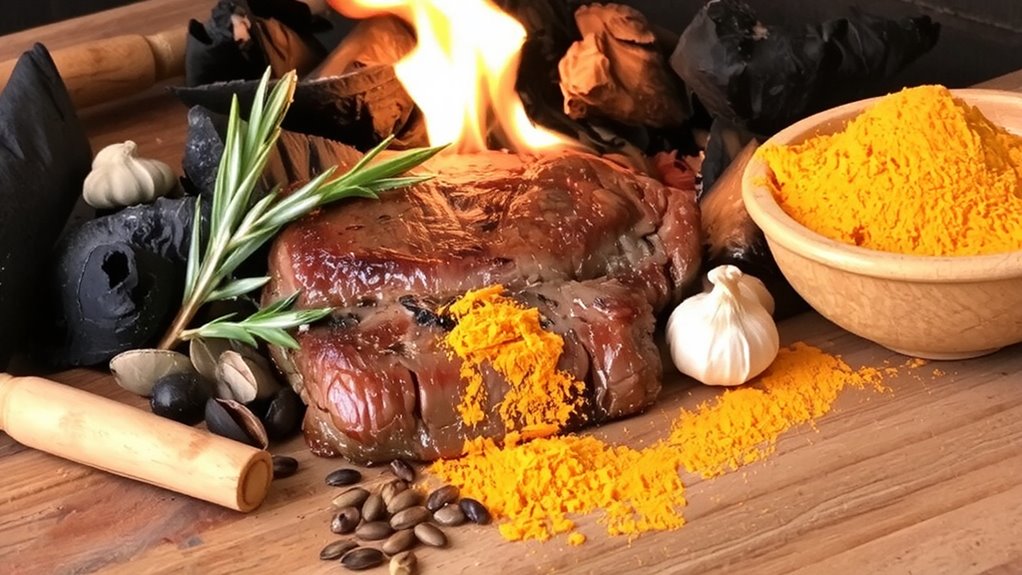
While the grill does the heavy lifting, it’s your choice of spices that ultimately makes or breaks the flavor of your BBQ. You need to understand how spice oxidation degrades potency over time-older spices lose vibrancy, dulling your final dish. Fresh, properly stored spices deliver stronger aromatics and more reliable results. Beyond freshness, it’s the flavor synergy between components like paprika, garlic, and cumin that builds complexity. When paired thoughtfully, these spices amplify one another, creating depth that salt and smoke alone can’t achieve. You’re not just adding taste; you’re engineering a sensory balance. A poorly balanced blend overwhelms, masking the meat instead of enhancing it. Mastery means recognizing how each ingredient contributes to the whole. Your spice mix isn’t an afterthought-it’s the blueprint. Get it right, and your BBQ doesn’t just satisfy; it resonates. For consistent results, consider starting with trusted formulations from the best grilling seasonings on the market.
Use Rubs, Brines, and Marinades to Build Flavor
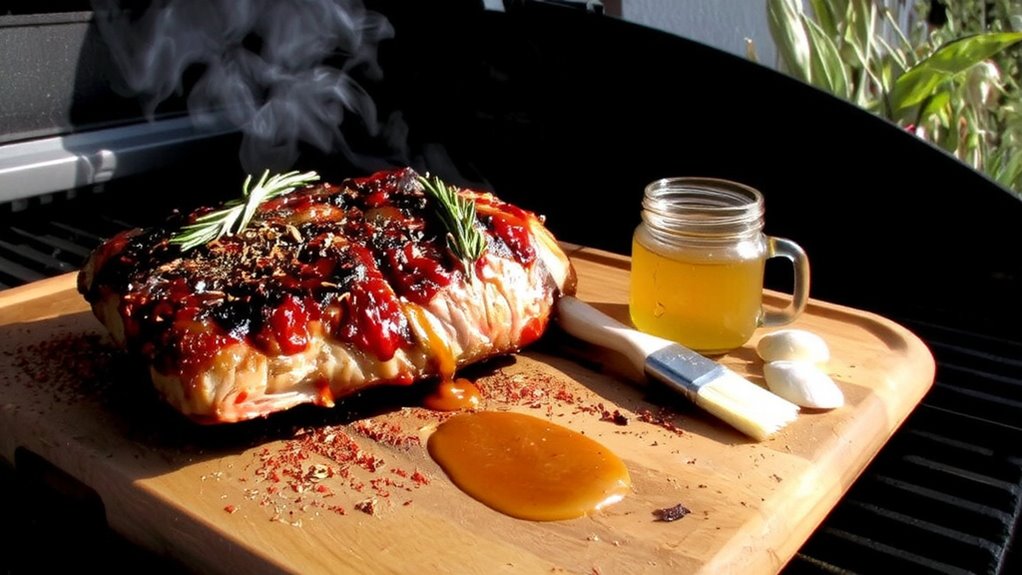
Because flavor doesn’t just come from fire and time, how you prep your meat with rubs, brines, and marinades shapes the final outcome more than most realize. These methods drive spice infusion and guarantee deep flavor penetration, transforming ordinary cuts into standout dishes. Rubs create a savory crust while sealing in juices, brines use salt to tenderize and hydrate, and marinades deliver acidity for texture and depth. Choosing the right best BBQ rubs can make a significant difference in achieving balanced, bold flavors that enhance your meat without overpowering it.
| Method | Best For | Time Required |
|---|---|---|
| Rubs | Pork, Chicken | 1–24 hours |
| Brines | Turkey, Ham | 8–24 hours |
| Marinades | Steaks, Skewers | 2–12 hours |
You’ll notice better spice infusion when ingredients cling well and penetrate evenly. For maximum flavor penetration, always let meat rest after treatment. Each method has strengths, so match it to your cut and cooking style. Skip the shortcuts-proper prep earns big flavor dividends.
5 Winning Rubs for Regional BBQ Styles
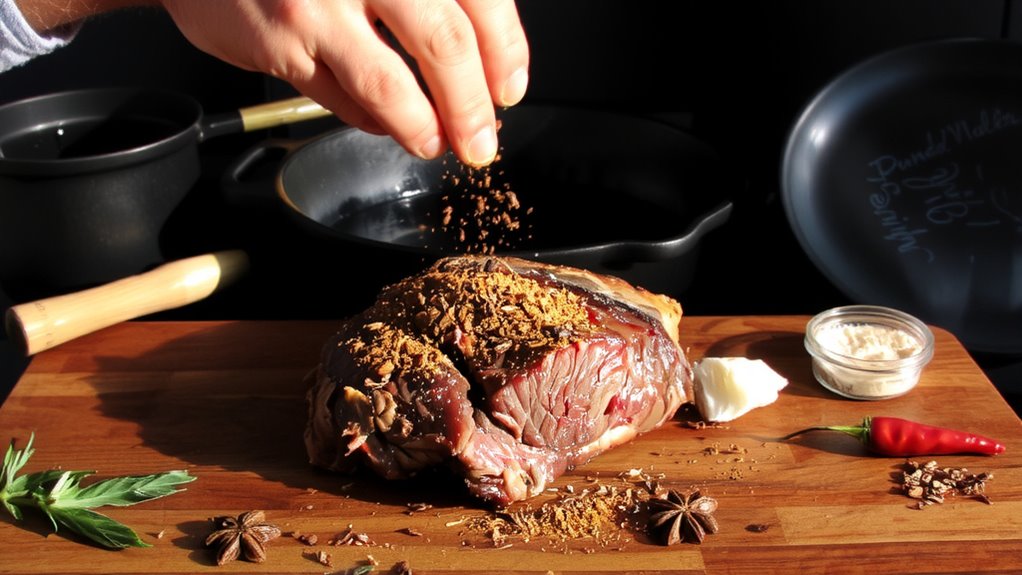
When you dive into regional barbecue, the rubs you choose aren’t just about flavor-they’re a direct link to tradition, climate, and local taste preferences. Take Texas: your rub likely hinges on chili powder and black pepper, reflecting Mexican influences and the spice origins rooted in sun-baked farmland. In contrast, a Carolina mix leans heavily into coarse salt, brown sugar, and crushed red pepper, honoring regional traditions shaped by German and African techniques. Kansas City blends often layer paprika, garlic, and a touch of cayenne, delivering complexity suited to slow-smoked ribs. Each region’s blend balances heat, sweetness, and earthiness not by accident, but through generations of refinement. You’re not just seasoning meat-you’re continuing a legacy. Understanding spice origins helps you tailor rubs authentically, ensuring your barbecue doesn’t just taste good, but tells a story grounded in place and history. For those seeking top-tier blends, exploring the best BBQ rubs can elevate your regional interpretations with expertly balanced formulations.
How Smoke Changes Herb Flavor in BBQ
If you’ve ever noticed how dried rosemary tastes sharper and more resinous after hours in a smoker, you’ve sensed the transformative effect of smoke on herbs. Smoke intensity plays a vital role-mild smoke preserves delicate herbal notes, while heavy smoke can overwhelm or even burn them, causing flavor degradation. You’ll find that hardy herbs like thyme and oregano hold up better under prolonged exposure, their essential oils slowly releasing into the meat. More fragile herbs, such as basil or cilantro, often don’t survive the process intact. You’re not just adding flavor-you’re altering it chemically. The synergy between wood type, temperature, and herb placement affects the final taste. When applied correctly, smoked herbs deepen complexity without losing identity. But overdo it, and you’ll mask the very nuances you’re trying to highlight. Control is key.
Balance Heat, Sweet, and Earthiness in Every Bite
Although heat, sweetness, and earthiness each bring something distinct to barbecue, it’s how they interact that defines the quality of every bite. You need heat from chili flakes or cayenne to excite the palate, but too much overwhelms-moderation is key. Sweetness, often from brown sugar or honey in rubs, supports caramelization control, ensuring a rich, flavorful crust without burning. Earthiness, delivered by smoked paprika, cumin, or herbs like thyme, grounds the profile, offering depth. But none of this works without acidity balance-think apple cider vinegar or citrus-to cut through richness and refresh the taste buds. When layering spices, consider how each element evolves over low, slow heat. A well-balanced rub doesn’t just taste good at the start; it develops complexity, ensuring every bite has harmony. Mastering this balance elevates your barbecue from tasty to unforgettable.
On a final note
You’ve seen how spices shape BBQ success through rubs, brines, and smoke. Layering flavors builds depth, balancing heat, sweetness, and earthiness for complexity. Regional rubs prove how tradition guides taste, while smoking transforms herbs subtly but decisively. Your control over these elements directly influences quality. Practical, informed seasoning isn’t just preparation-it’s essential technique. Done well, it elevates meat from simple grilled fare to memorable, expert-level barbecue worth repeating.