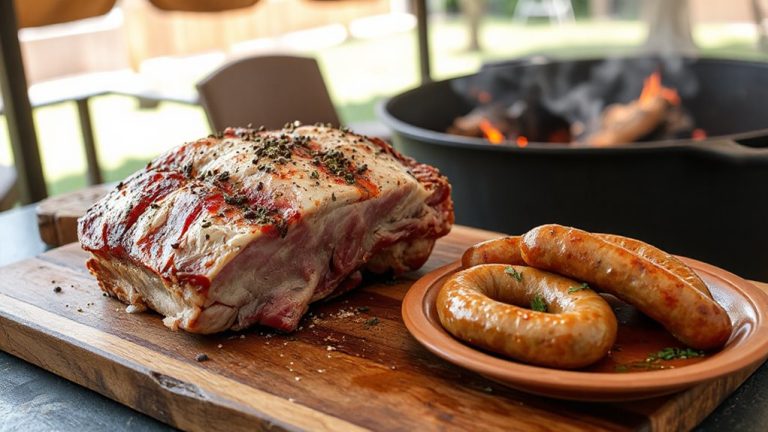
Creating a Flavorful Deglaze Sauce Right in the Same Pan After Cooking Meats
You’ve just seared your meat, and now those browned bits in the pan are gold. Deglaze with wine or broth to lift the fond, using a wooden spoon to scrape up every bit of flavor. Simmer briefly to concentrate the sauce, then add aromatics like garlic or thyme for depth. The result? A rich, restaurant-quality sauce in minutes-no waste, all taste. Choose quality liquids and control heat to avoid bitterness, and you’ll see how a simple pan trick becomes a flavor powerhouse. There’s more to mastering this move than meets the eye.
Notable Insights
- Remove cooked meat and pour in a liquid like wine or broth to sizzle and lift caramelized fond from the pan.
- Use medium heat to deglaze gently, scraping the pan bottom with a wooden spoon to release flavorful browned bits.
- Choose deglazing liquids that match the dish-dry wine for richness or broth for depth and salt control.
- Add aromatics like garlic, shallots, or herbs after deglazing to build complexity in the sauce base.
- Simmer briefly to reduce and thicken the sauce, adjusting consistency and seasoning to taste before serving.
What Is Deglazing and Why It Transforms Your Dishes
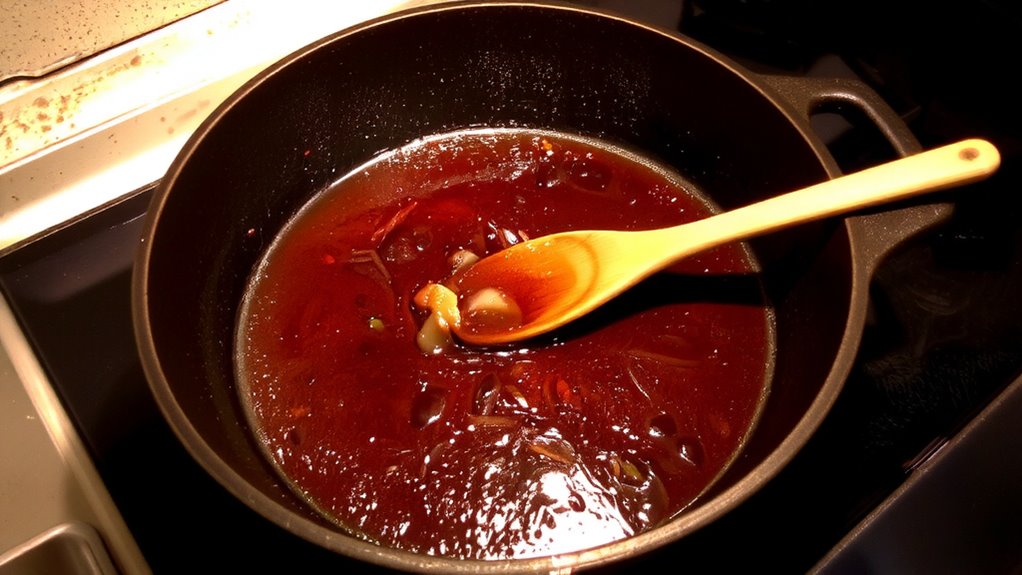
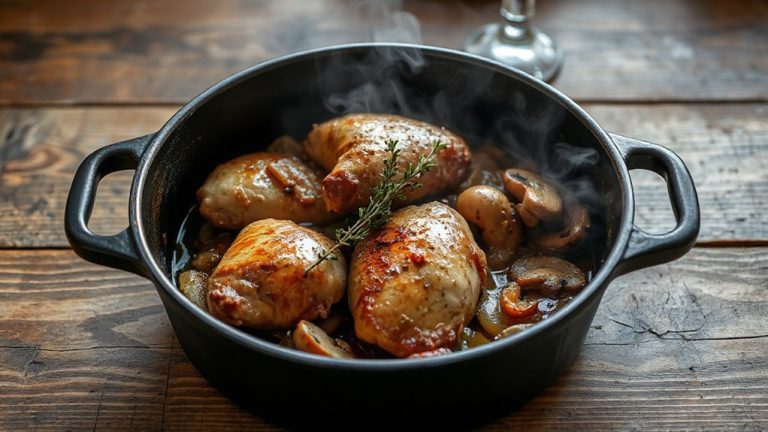
That sizzle when liquid hits the hot pan after searing meat? That’s deglazing in action. You’re not just cleaning the pan-you’re accessing deep, caramelized bits stuck to the surface, using them to build rich flavor. This process, called pan residue utilization, transforms leftover fond into a savory sauce base. By scraping up those browned proteins and fats, you achieve serious flavor enhancement without extra ingredients. It’s efficient, practical, and maximizes taste from one pan. Whether you’re cooking indoors or adapting techniques for outdoor setups, deglazing bridges the gap between searing and saucing. It turns what might be waste into depth, adding complexity to meats, gravies, or pan sauces. The technique is simple but impactful-proof that smart chemistry and observation elevate everyday cooking. Done right, deglazing doesn’t just recover flavor-it concentrates and refines it, making your finished dish more cohesive and satisfying.
Pick the Best Liquid to Deglaze Your Pan
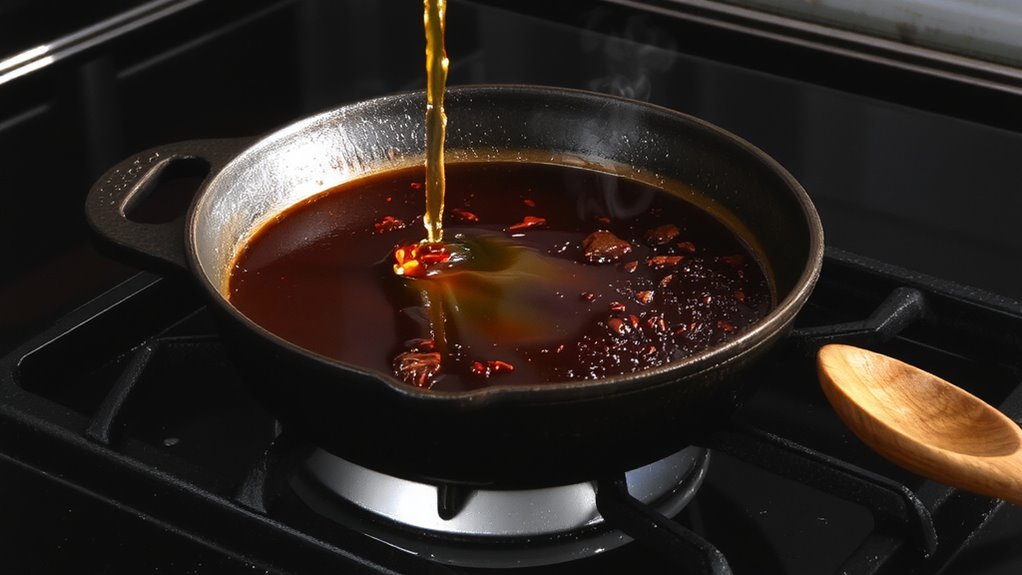
You’ve just seared your meat to a deep, flavorful crust, and now the pan holds a layer of rich, caramelized fond-the foundation of a great sauce. Choosing the right liquid to lift those flavorful bits matters. Your wine selection should mirror the dish’s profile-dry reds like Cabernet enhance beef, while crisp whites like Sauvignon Blanc brighten chicken or fish. Avoid cooking wines; they’re overly salty and lack depth. A good broth choice-beef, chicken, or vegetable-adds body and richness, especially when deglazing without alcohol. Opt for low-sodium versions so you control the salt. Combining wine and broth can balance acidity with savoriness. The key is pairing the liquid to the protein and seasoning wisely, ensuring the sauce complements, not overwhelms. Your final pour impacts complexity-choose thoughtfully.
How to Deglaze a Pan in 5 Easy Steps
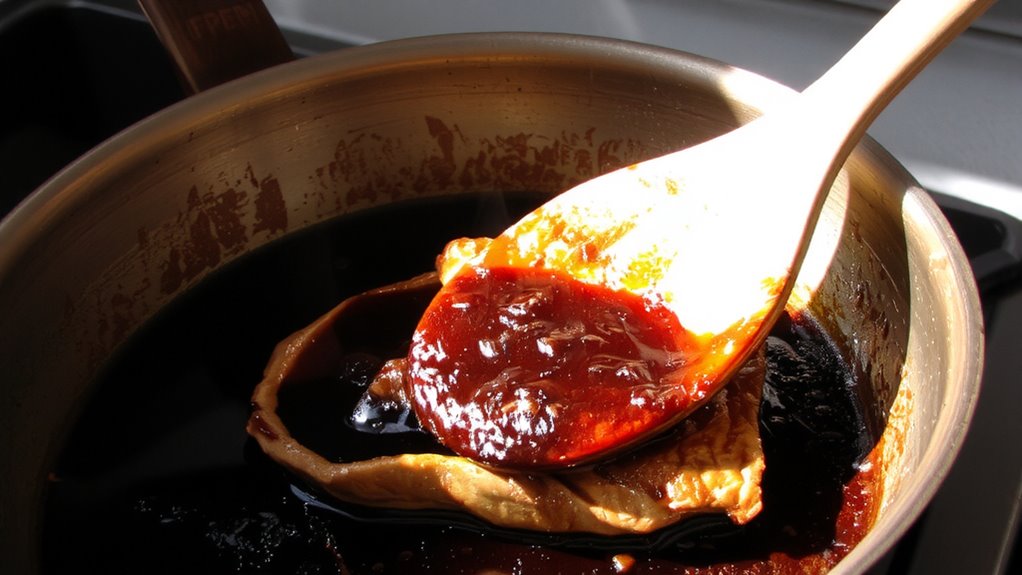
A well-executed deglaze turns leftover pan bits into a restaurant-quality sauce with minimal effort. First, remove the cooked meat and set it aside-this guarantees pan safety while you work. Keep the heat at medium; proper heat control prevents burning the fond. Next, pour in your chosen liquid-stock, wine, or vinegar-about ½ to 1 cup depending on pan size. The liquid should sizzle gently, not violently boil. Use a wooden spoon to scrape up the browned bits, incorporating all that rich flavor. Continue simmering until the liquid reduces slightly and begins to thicken, about 3–5 minutes. Maintain steady heat control to avoid scorching. Finally, strain if desired, or swirl in a knob of butter for shine and body. With attention to timing and temperature, deglazing becomes a reliable move in any home cook’s routine.
Add Aromatics After Deglazing for Depth
Once the fond has dissolved into the simmering liquid and the base of your sauce starts to thicken, it’s the ideal moment to introduce aromatics for a deeper flavor profile. You’ll want to reach for garlic, shallots, or onions-they build complexity quickly when sautéed in the enriched pan. Fresh herbs like thyme or rosemary add nuance, but be mindful of herb pairing; robust meats like beef stand up to earthy notes, while delicate poultry suits milder herbs. A pinch of red pepper flakes or smoked paprika can enhance spice balance without overpowering. Don’t rush this step-cooking aromatics too long dulls their brightness, but too little leaves them raw and sharp. Stir constantly, letting flavors meld for just 1–2 minutes. This brief window transforms your deglaze from simple to sophisticated, layering depth and aroma without complicating the process.
Make a Restaurant-Quality Sauce in Minutes
What if achieving a restaurant-quality sauce didn’t require hours of reduction or a brigade of kitchen staff? You can build a rich, complex sauce in minutes using a simple, quick technique right in the pan you just cooked your meat in. After sautéing, those browned bits left behind are gold-packed with flavor enhancement. Add wine, stock, or vinegar, scrape the fond loose, then let it bubble briefly. The result? A silky, deeply flavored sauce without extra pans or prep. This method leverages residual heat and natural caramelization, transforming leftovers into luxury. It’s fast, efficient, and impresses instantly. No need for elaborate tools or time-consuming steps-just smart, immediate use of what’s already in your pan. With practice, you’ll see how this quick technique elevates weeknight dinners to something far more refined. It’s not magic-it’s smart cooking, grounded in real kitchen science.
Fix Common Deglazing Mistakes Fast
Why does your deglazed sauce sometimes turn out flat, broken, or overly acidic? It’s usually because the fond burned, the liquid was too cold, or you didn’t balance the acidity. If you smell bitterness, immediately stop the heat-don’t scrap it yet. You can rescue burnt fond by carefully pouring off the top layer, leaving the worst char behind, then deglaze with a splash of wine or broth and strain. For broken sauces, whisk in a pat of cold butter off-heat to re-emulsify fats. An overly sharp taste? Stir in a pinch of sugar or a knob of cold butter to round it out. Adjust sauce thickness by simmering to reduce or adding a touch of stock to loosen. Always taste as you go-small corrections beat starting over. A well-balanced pan sauce should cling, not pool, with depth, not heat.
On a final note
You’ve accessed a simple yet powerful technique that elevates everyday meals. Deglazing harnesses fond-the flavorful browned bits left after searing meat-to build rich, complex sauces quickly. Using the right liquid and aromatics, you extract deep umami without extra pans or ingredients. When done correctly, it performs like professional finishing, transforming pan drippings into glossy, restaurant-quality results. Avoid common missteps, like insufficient scraping or wrong heat levels, and you’ll consistently produce savory, balanced sauces worth savoring.