Maintaining Consistent Distance Between Food and Flame When Stick Roasting
Keep your food 4–6 inches above the blue flame’s tip, where radiant heat delivers even searing without flare-ups. Adjust the stick up or down as the fire shifts, maintaining that sweet spot for steady cooking. Rotate frequently-every 10 to 30 seconds depending on the food-to guarantee uniform browning. Use a dry, hardwood stick 4–5 feet long for control and safety. Test heat by hovering your hand; 2–3 seconds means it’s searing hot. You’ll master fire alignment and more with practice.
Notable Insights
- Position food just above the blue cone of the flame for steady, even heat without flare-ups.
- Adjust stick height as flames change-raise during surges, lower when fire dims.
- Use a 4–5 foot hardwood stick to maintain safe, consistent distance from the fire.
- Rotate food frequently to ensure even cooking and prevent hotspots from uneven exposure.
- Test heat levels periodically by holding your hand above the flame for 2–5 seconds to gauge optimal distance.
Find the Flame’s Sweet Spot for Even Cooking
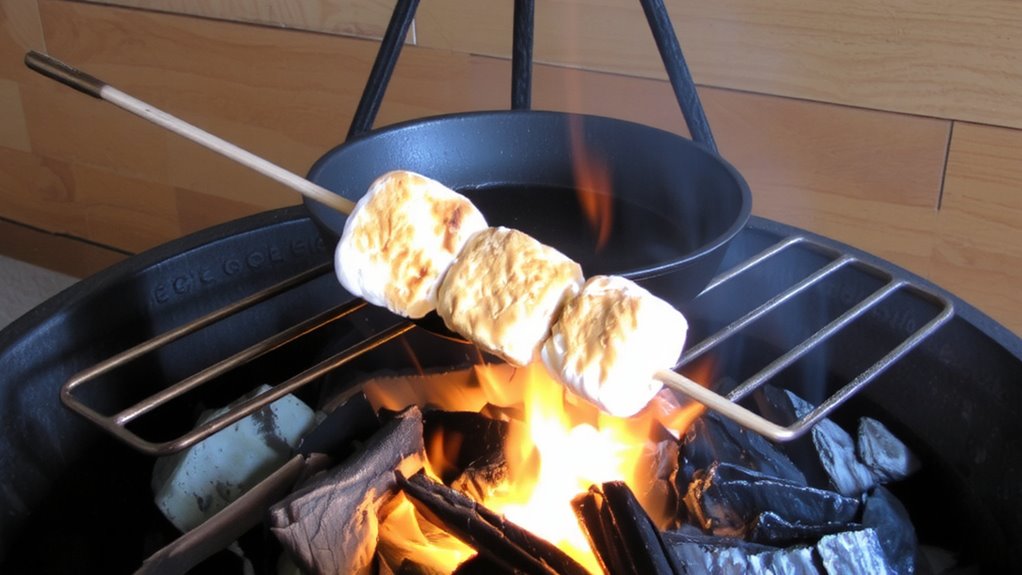
While every outdoor cook knows that flames vary in intensity from base to tip, you’ll get the best results when you position your stick right in the flame’s sweet spot-typically hovering just above the visible blue cone where heat is steady and radiant. This ideal cooking zone offers consistent searing without scorching, letting fat render and proteins caramelize evenly. Maintaining proper flame height is essential; too low and your food won’t cook efficiently, too high and you risk charred exteriors with raw centers. You’ll notice drips ignite when the stick’s too close, a sign the heat overwhelms the cooking zone. For ideal stick roasting, aim for a golden-brown crust with minimal flare-ups. That balance-controlled exposure and radiant warmth-is what delivers predictable results. Mastering this spot isn’t luck; it’s technique. Keep your food steady in that narrow band just above the blue, and you’ll achieve repeatable doneness every time.
Adjust for Changing Fire Heat
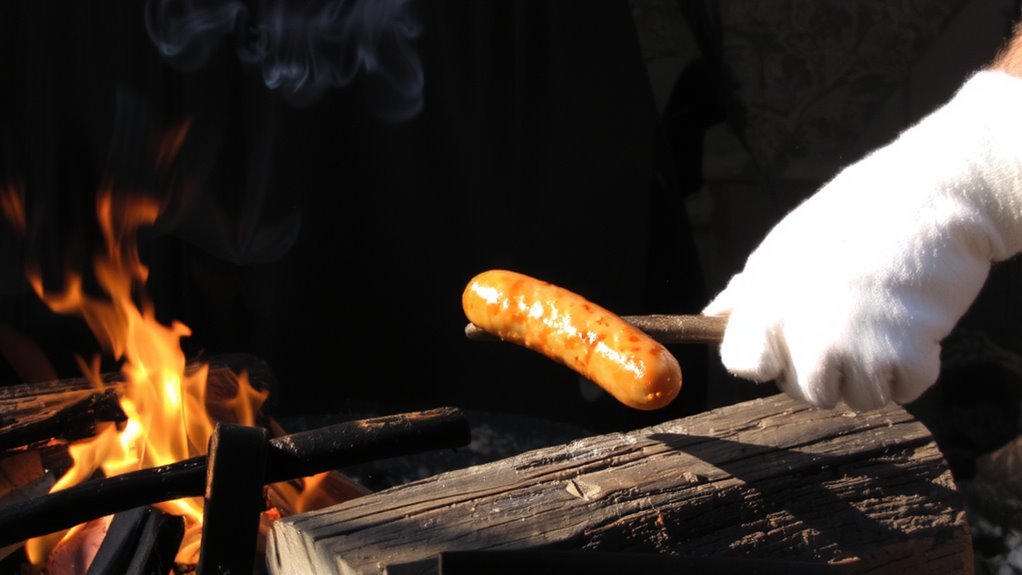
As the fire shifts and settles over time, you’ll need to keep a close eye on your stick’s position to maintain that ideal cooking zone, since even a well-tuned flame can fluctuate with changes in fuel, airflow, or ash buildup. Fire intensity varies naturally, so relying on a fixed distance won’t cut it. You’ll have to lean in or pull back slightly, depending on the moment’s heat management needs. If the flames surge, moving your stick just a few inches higher prevents scorching while preserving cook time. When the fire dims, inching closer keeps things progressing without cold spots. Good heat management isn’t about control alone-it’s about responsiveness. Seasoned roasters learn to read flame height and glow intensity, adjusting in real time. This constant calibration guarantees your food stays in the sweet spot, no matter how uneven the burn. Adapting to changing conditions is where skill really shows.
Rotate for Even, No-Burn Roasting
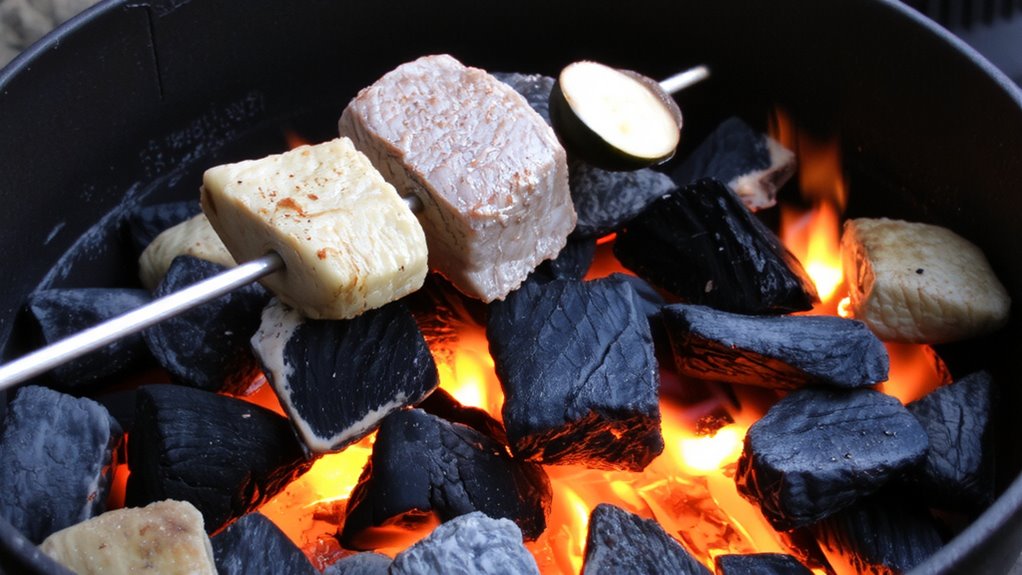
Often, the key to perfect stick roasting isn’t just where you hold your food over the flame, but how consistently you turn it. Without consistent turning, even the best-placed food can end up charred on one side and raw on the other. Think of spit rotation in professional kitchens-this same principle applies outdoors, just on a smaller scale. Gentle, steady movement exposes all sides evenly, promoting uniform cooking while avoiding hot spots from flickering flames.
| Food Type | Rotation Frequency |
|---|---|
| Marshmallows | Every 10–15 seconds |
| Hot dogs | Every 20–30 seconds |
| Vegetable skewers | Every 30 seconds |
This kind of disciplined spit rotation enhances texture and doneness without flare-up damage. Consistent turning isn’t just habit-it’s technique. Master it, and you’ll rarely face burnt exteriors or cold centers again.
Use a Long, Sturdy Stick to Stay in Control
A reliable stick makes all the difference when roasting over an open flame, and your best bet is a long, sturdy one that keeps you at a safe distance without sacrificing control. You need stick stability to avoid sudden slips or wobbles that could send food tumbling into the coals. A hardwood stick around four to five feet long offers ideal leverage, minimizing the need to lean in while maintaining precise fire positioning. Thicker branches resist warping and splitting under heat, ensuring consistent performance throughout cooking. Avoid green wood, as trapped moisture can cause unpredictable cracking. Instead, choose dry, straight sticks with a firm grip-your control depends on it. With proper stick stability, you can adjust height and angle smoothly, keeping food at the best distance. Good fire positioning isn’t just about safety; it’s about control, consistency, and ultimately, better results every time you roast.
Feel the Heat Safely Before You Start
Before plunging into the roasting process, it’s smart to gauge the fire’s intensity with your hands-just don’t get too close. Hold your palm above the flames, not inside them, to judge the heat intensity without risk. You’re testing for warmth, not pain. If you can only hold your hand there for 2–3 seconds, the fire is hot-ideal for searing but requires careful monitoring. A 4–5 second threshold means moderate heat, better for even cooking. This simple check helps establish your safety distance, keeping you far enough to avoid burns yet close enough to maintain control. Consistent heat detection prevents underheating or scorching. It’s not just practical-it’s foundational. Seasoned roasters rely on this quick assessment to align stick position with flame behavior. It bridges intuition and technique, turning guesswork into repeatable results. Always recheck as flames shift-fires aren’t static, and neither should your awareness be.
Roast Perfectly Every Time Over Open Flame
While mastering open-flame roasting takes practice, you’ll find that maintaining a consistent distance between food and fire makes all the difference in achieving even, reliable results. Positioning your food too close leads to charring; too far, and it cooks unevenly. A stable setup is key, especially when using tools like a cast iron skillet over coals-its heat retention evens out fluctuations, giving you more control. For delicate items like fish or vegetables, a foil wrap protects against flare-ups and prevents overcooking, while still allowing smoky flavor to penetrate. You’ll notice that adjusting height manually on a stick roast setup demands attention, but combining it with heat-stable cookware improves consistency. Cast iron paired with a secure foil wrap offers a practical edge, simplifying temperature management. With attention to placement and the right materials, you can roast perfectly every time over open flame-predictable, flavorful, and efficient without unnecessary complexity.
On a final note
You’ve got the tools to roast food evenly over an open flame by now. Staying in control means finding the sweet spot, adjusting for heat shifts, and rotating often. A long, sturdy stick keeps you safe and precise. By feeling the heat first, you avoid surprises. These methods aren’t just practical-they’re proven. Master them, and you’ll get consistent results every time, turning outdoor cooking into reliable, satisfying performance.