Adjusting Altitude Compensation When Grilling Above 5,000 Feet With Standard Propane
Your propane grill struggles above 5,000 feet because thin air lowers oxygen and fuel pressure, causing yellow flames and soot. Standard regulators can’t compensate, so you’ll need to tweak the air shutter for more airflow and align burners properly. Preheat longer-5 to 10 minutes extra-to counter slow ignition. Blended propane works better than pure, improving vapor pressure and flame control. A tight lid seal and windbreak help hold heat. You’ll find smarter setups make high-altitude grilling far more reliable.
Notable Insights
- Standard regulators fail above 5,000 feet; use high-altitude propane mix for stable vapor pressure.
- Adjust air shutter to increase airflow and restore blue flames disrupted by thin air.
- Preheat grill 5–10 minutes longer to compensate for slower combustion at elevation.
- Ensure tight lid seal and use windbreaks to reduce heat loss in low-density air.
- Clean and align burners regularly to maintain proper gas flow and air-fuel balance.
Why Your Propane Grill Struggles at High Altitude
Ever wonder why your propane grill doesn’t perform the same way up in the mountains as it does at sea level? At higher elevations, the air’s thinner, and that directly impacts your grill’s efficiency. Propane relies on vapor pressure to feed the burner, but as atmospheric pressure drops, so does the fuel’s ability to maintain consistent vapor pressure. This imbalance disrupts proper fuel delivery. You also get more rapid fuel expansion, which can cause uneven flow and lower combustion temperatures. Simply put, your grill gets less oxygen and struggles to sustain a steady flame. Most standard regulators aren’t designed for these conditions, so performance dips noticeably above 5,000 feet. While the design works fine at sea level, high-altitude environments expose its limitations. Recognizing this helps you make smarter adjustments-before you ruin dinner.
Spot the Signs of Poor Combustion Above 5,000 Feet
When you’re grilling above 5,000 feet, the drop in atmospheric pressure doesn’t just affect how your propane flows-it also alters combustion efficiency, and the signs are often easy to spot if you know what to look for. You’ll likely notice yellow flames instead of the steady blue ones typical at lower elevations. That color change isn’t just cosmetic; it indicates incomplete combustion caused by insufficient oxygen mixing. Alongside yellow flames, watch for soot buildup on your grill grates or burner components-another telltale sign of inefficient burning. This residue doesn’t just affect flavor; it can clog ports and increase flare-ups. Both symptoms point to an unbalanced air-to-fuel ratio worsened by thin air at altitude. Recognizing these early helps prevent long-term damage and guarantees cleaner, safer grilling. Ignoring them means reduced heat output, wasted fuel, and inconsistent cooking results. Stay vigilant, especially if you’re used to sea-level performance-high-elevation grilling demands sharper attention to combustion quality.
Fix Weak Flames With Burner and Air Shutter Tweaks
Yellow flames and soot buildup aren’t just warning signs-they’re signals your grill’s air-to-fuel mix is off, and one of the most noticeable outcomes is weak, inconsistent flames that struggle to maintain proper cooking temperatures. At high altitudes, this issue worsens because thinner air disrupts the ideal propane combustion process. You can fix this by adjusting the air shutter near the burner tube-sliding it slightly open increases airflow and helps restore a steady blue flame. Proper burner alignment also matters; misaligned burners restrict gas flow and disrupt the air mixture, leading to uneven heating. Check that each burner sits securely in place and aligned with the gas ports. These tweaks fine-tune oxygen delivery, improving flame strength and cooking performance. While not all grills respond the same, most benefit from minor adjustments. Regular maintenance guarantees these components function efficiently, especially in high-elevation environments where every bit of efficiency counts.
Preheat Smarter at High Altitude
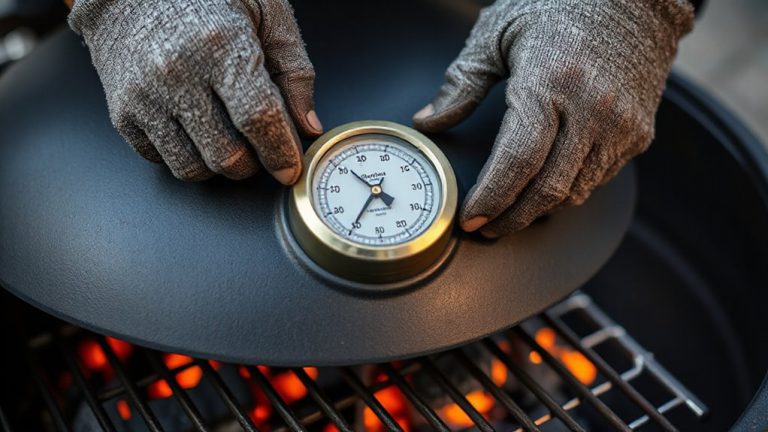
Since heat dissipates faster and air pressure drops markedly at higher elevations, you’ll need to adjust your preheating routine to account for the thinner atmosphere that affects both ignition and temperature stability. At high altitudes, longer preheating times-typically 5 to 10 minutes more than at sea level-are essential to achieve target grill temperatures. The reduced oxygen content slows combustion, so burners produce less intense heat, requiring extended warm-up to compensate. This also impacts thermal retention; thinner air allows heat to escape more readily from grilling surfaces and sidewalls, making it harder to maintain consistent cooking zones. You’ll notice your grill takes longer to stabilize, especially in windy or cooler mountain conditions. While standard propane systems can still perform, their operational efficiency diminishes without adjustments. To guarantee reliable results, always allow extra preheat time and monitor surface temperatures with a reliable thermometer-don’t rely solely on manufacturer estimates, which assume lower elevations.
Keep Heat In: Lid Tricks for Mountain Grilling
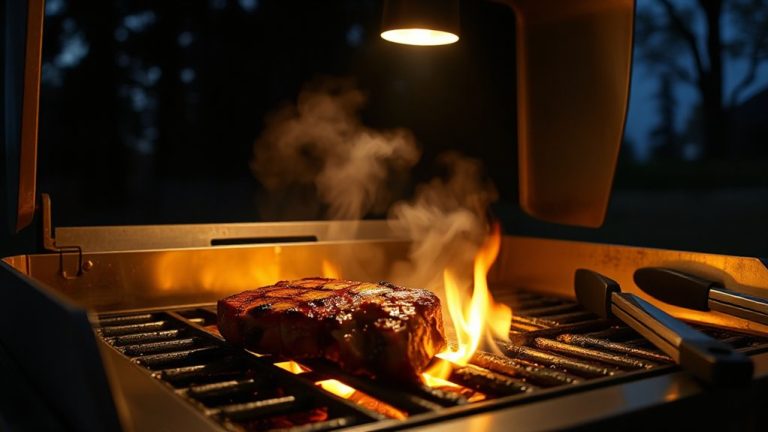
How often do you lift the lid to check on your steak, only to lose a surge of heat that’s hard to regain at 7,000 feet? At high altitudes, heat retention becomes critical since thinner air cools your grill faster. Every peek slows cooking and wastes fuel. A tight lid sealing makes a real difference-inspect the gasket regularly for cracks or warping to guarantee a snug fit. Even minor gaps let heat escape, undermining temperature stability. For best results, limit lid opening; trust your thermometer instead of your eyes. Consider a glass lid or one with a clear window-it helps monitor food without breaking the seal. Solid hinges and latch mechanisms also improve lid sealing over time. In mountain grilling, consistent heat retention isn’t optional-it’s essential for even cooking and avoiding underdone centers. Master the lid, and you master high-elevation grilling.
Use Blended Propane for Better High-Altitude Grilling
Though standard propane works fine at lower elevations, you’ll likely notice it struggles to maintain consistent heat once you’re grilling above 5,000 feet. That’s where a blended fuel comes in handy. A propane mix-typically blended with butane or other hydrocarbons-burns more efficiently in thin mountain air, delivering steadier flame control and better vapor pressure. Unlike pure propane, which can underperform in cold, low-pressure environments, this blended fuel adapts to high-altitude conditions more effectively. Grill manufacturers and fuel experts often recommend a specific propane mix formulated for elevations over 5,000 feet. You’ll see improved ignition, fewer flameouts, and more predictable cooking times. While blended fuel tanks may be harder to find or slightly more expensive, the performance gains make them a smart upgrade. For frequent high-altitude grillers, making the switch isn’t just convenient-it’s a practical step toward better BBQ results when the air gets thin.
7 Pro Moves for Faster, Safer Grilling at Altitude
When you’re grilling above 5,000 feet, the thinner air doesn’t just affect your fuel-it changes how heat transfers, how food cooks, and how carefully you need to manage every step of the process. Cold starts are more common, so preheating longer guarantees consistent ignition and better flame control. Wind gusts disrupt temperature stability, making windbreaks and shielded grill placements essential for steady performance. Use a two-zone fire setup to manage uneven cooking and avoid flare-ups caused by delayed heat response. Invest in a reliable thermometer-doneness cues like color or springiness become unreliable at altitude. Trim excess fat to reduce flare risks, and adjust cook times since water boils faster but heat penetration slows. Always keep a lid on tight seals and valves-low pressure increases vapor loss. These pro habits don’t just speed things up-they help you grill safer and more predictably in thin-air environments where mistakes cost more.
On a final note
You’ll notice standard propane struggles above 5,000 feet due to thinner air and reduced oxygen. Weak flames, uneven heat, and longer cook times aren’t just annoyances-they signal inefficient combustion. Tweak air shutters, clean burners, and consider blended fuel for better performance. Preheating longer and keeping the lid closed traps precious heat. These fixes aren’t optional; they’re essential for safety and results. Smart adjustments turn finicky grilling into reliable, high-altitude success.