Adjusting Cooking Time Based on Wind Conditions Affecting Fire Intensity
You’ll need to adjust cooking times as wind increases fire intensity by boosting oxygen flow and raising temperatures. Even a 6–10 mph breeze means reducing cook time by 10% to avoid overcooking. Stronger gusts amplify heat further, so use a fire shield to stabilize flames and an anemometer to track wind speed. Combine real-time monitoring with strategic fuel choice-charcoal holds steady, while wood reacts faster. Mastering these shifts guarantees control, and there’s more to optimizing your setup just ahead.
Notable Insights
- Wind increases fire intensity by boosting oxygen supply, requiring shorter cooking times to prevent overcooking.
- Reduce cook time by 10% in 6–10 mph winds and up to 25% in winds over 16 mph.
- Monitor flame height and flare-ups closely, as wind can double heat output unexpectedly.
- Use a thermometer to track real-time temperature changes when adjusting for wind-driven fire intensity.
- Rotate food frequently in high winds to ensure even cooking despite shifting hotspots.
How Wind Speed Changes Fire Temperature
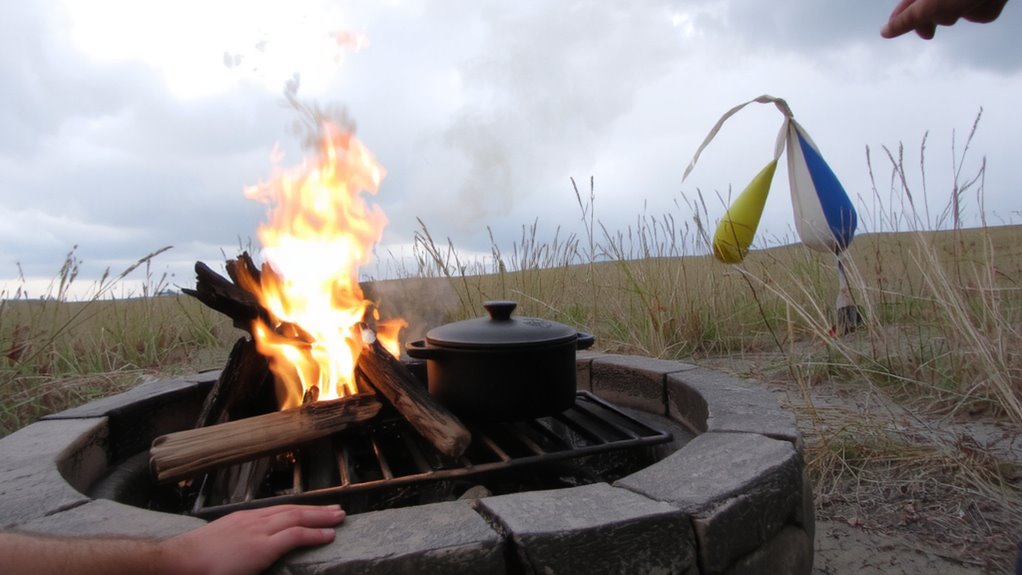
While wind might seem like a minor factor in outdoor cooking, it actually plays a critical role in shaping fire temperature, and understanding this relationship can make or break your BBQ results. You’re dealing with altered fire dynamics the moment wind increases-airflow feeds oxygen to flames, boosting combustion and raising temperatures unpredictably. This shifts heat transfer across your cooking surface, often creating hotspots that sear one part of meat while leaving another undercooked. Light breezes might only nudge the fire, but even moderate gusts can double flame height and intensify radiant heat. Without shielding, your setup loses thermal consistency, making temperature control harder. You’ll notice flare-ups spike when fat drips into amplified flames. Monitoring wind speed helps you anticipate these changes. Using a windbreak or repositioning your grill restores balance. Mastering this interplay means better control, more even cooking, and consistently reliable results on any given day.
Adjust Cooking Time When Wind Picks Up
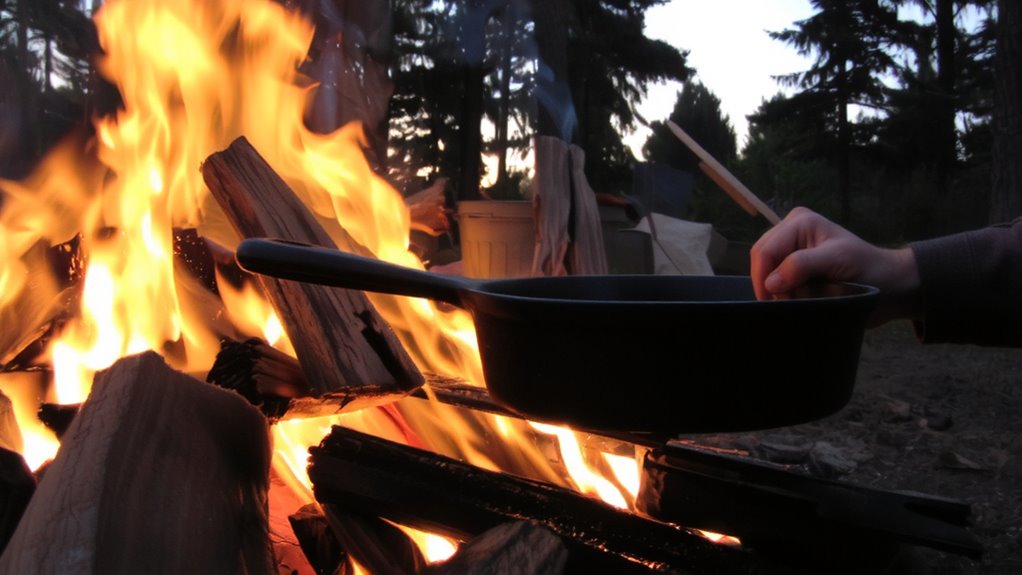
When wind picks up, you’ll need to adjust your cooking time because stronger airflow increases combustion and raises fire temperature, often leading to faster searing on the exterior while the interior lags behind. To manage this, you must adjust timing and monitor intensity closely to prevent overcooked outsides and undercooked centers. Sudden gusts can spike heat output, so consistent observation is key. Use the following guide to estimate adjustments:
| Wind Speed (mph) | Adjustment Needed |
|---|---|
| 0–5 | Standard cook time |
| 6–10 | Reduce by 10% |
| 11–15 | Reduce by 15–20% |
| 16–20 | Reduce by 25%, monitor intensity |
| 20+ | Adjust timing immediately, rotate food frequently |
You’ll find that even experienced pitmasters rely on real-time feedback rather than fixed schedules. Always keep a close eye on flame behavior and food coloration to guarantee peak results.
Block Gusts With These Fire Shields
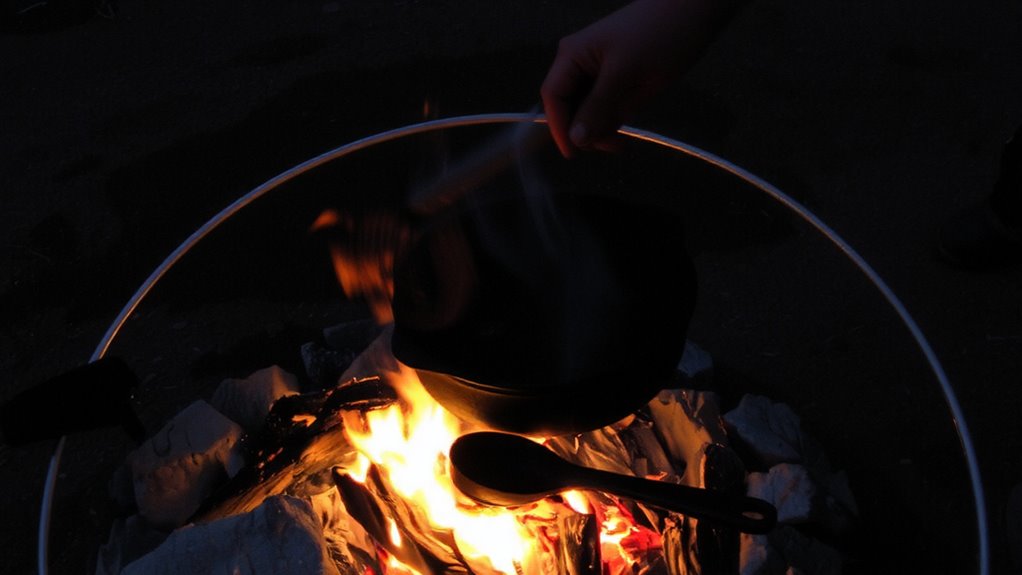
To keep your cook steady amid shifting winds, a well-designed fire shield isn’t just helpful-it’s essential. Fire shielding works by creating a barrier that minimizes airflow disruptions, allowing for more consistent heat. You’ll want durable materials like stainless steel or cast iron, which withstand high temps without warping. Effective wind deflection means positioning the shield slightly off the ground to avoid oxygen starvation while still blocking gusts. Adjustable models offer flexibility, letting you modify coverage based on wind direction. Some shields double as reflectors, boosting thermal efficiency. Still, overly enclosing the fire can hinder combustion, so balance is key. Look for portable designs if you’re camping; they’re lighter and easier to store. With proper fire shielding, you maintain better control over flame behavior and cooking outcomes-especially when gusts threaten to flare or smother your fire. It’s a small investment that pays off in precision and consistency.
Track Wind and Flame With These Tools
Though you can often judge wind direction by feel or sight, relying on instinct alone won’t give you the precision needed for consistent cooking over an open flame. That’s where proper wind monitoring comes in-tools like portable anemometers or even simple wind socks provide real-time data on speed and direction, helping you anticipate shifts before they disrupt your cook. For fire tracking, infrared thermometers and flame cams let you monitor temperature gradients and flame behavior, so you can adjust fuel or airflow proactively. These tools aren’t overkill; they’re essential for mastering outdoor cooking in variable conditions. A quality anemometer, for instance, typically measures winds up to 60 mph with ±5% accuracy, making it reliable in most environments. When paired with consistent fire tracking, you gain control, reducing guesswork and improving results. Investing in durable, weather-resistant models pays off in reliability, especially during long smokes or high-wind grilling sessions.
Keep Cooking Steady in Light Wind
Even with a gentle breeze, your cooking conditions can shift faster than you think, so it’s wise to treat light wind as a variable force rather than a stable one. You’ll want to monitor how your chosen fuel type reacts-charcoal holds heat longer, while wood responds more quickly to airflow changes. Light wind may slightly boost combustion, but it can also cool the cooking surface unevenly. To maintain consistent heat retention, position your fire setup so the breeze hits from the side rather than head-on. Adjust the venting or airflow controls on your grill or pit to stabilize temperature. Don’t rely solely on visual flame cues; use a reliable thermometer to track cooking chamber heat. With steady fuel management and attention to wind direction, you’ll keep cooking outcomes predictable, even when the wind seems harmless.
On a final note
You’ll need to adjust cooking times when wind changes fire intensity, since even moderate gusts can spike temperatures or smother flames. Blocking wind with a shield stabilizes heat, while tools like thermometers and anemometers help track real-time conditions. Light wind is manageable with careful monitoring, but unpredictable shifts demand constant attention. Overall, mastering wind’s impact improves control, yielding more consistent, evenly cooked results on the grill or over open fire.