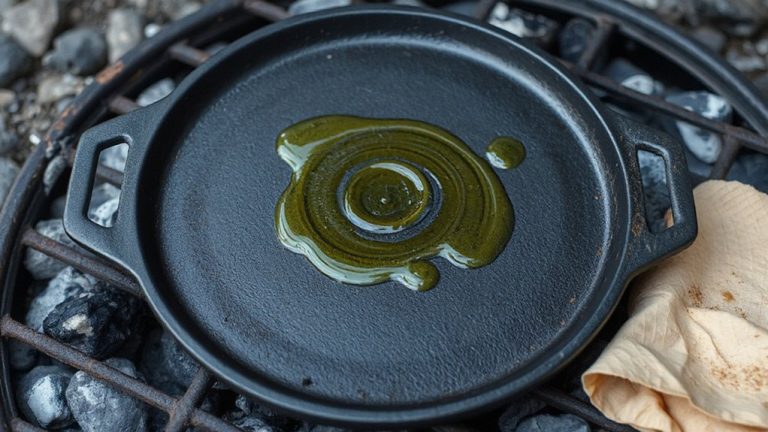
Braised Collard Greens With Smoked Ham Hock in Cast Iron for Authentic Southern Taste
You’ll get the most authentic Southern flavor by braising collard greens with a smoked ham hock in a cast-iron Dutch oven. The even heat retention guarantees a steady simmer, while the ham hock infuses smoky, umami richness and naturally thickens the pot likker. Properly prepped greens-washed, de-ribbed, and cut into ribbons-cook evenly and absorb flavor best. Cook low and slow for 1.5 to 3 hours until tender and deeply flavored. There’s more to mastering the details just ahead.
Notable Insights
- Use a cast iron Dutch oven for even heat distribution and superior simmering during braising.
- Choose smoked ham hock for authentic Southern flavor, adding deep smoke, umami, and natural richness.
- Prep collard greens by removing tough ribs and slicing into uniform half-inch ribbons.
- Braise low and slow for 1.5 to 3 hours until greens are tender and bitterness is mellowed.
- Serve with cornbread and a splash of vinegar-based hot sauce for traditional balance.
How Cast Iron Improves Braised Collard Greens
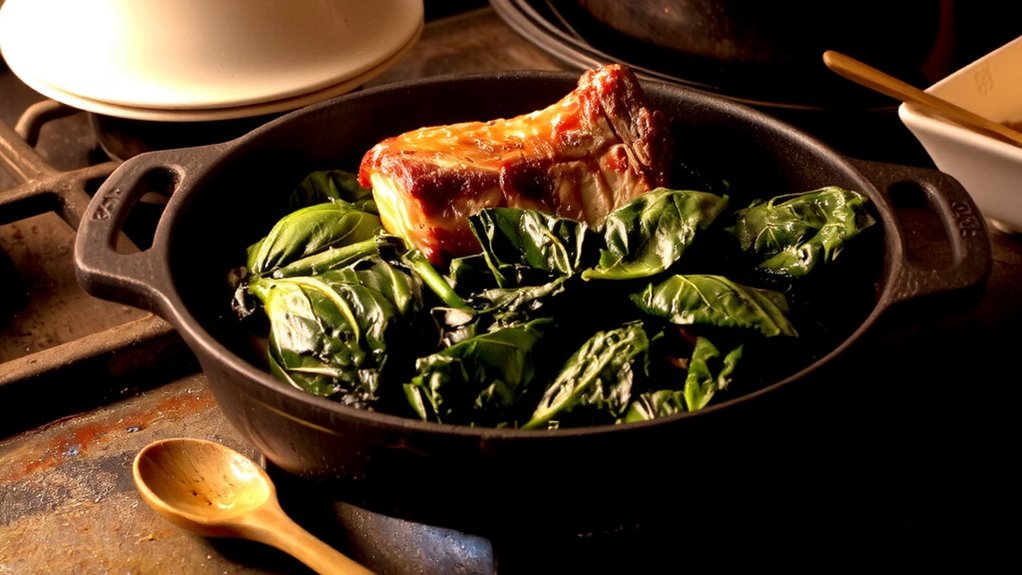
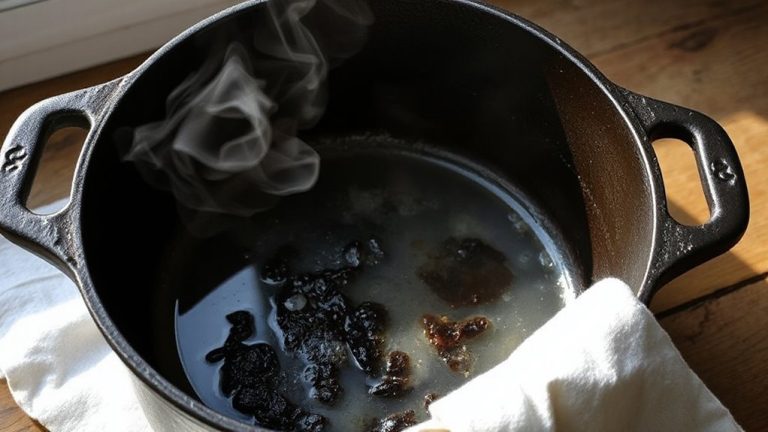
While you could braise collard greens in any heavy pot, using a cast iron Dutch oven makes a noticeable difference in both heat control and flavor development. Its superior heat retention guarantees a steady simmer, essential for breaking down tough greens over hours. You’ll notice the way cast iron holds and distributes heat minimizes hot spots, promoting even browning when you sear ingredients first. This foundational step builds depth, enhancing the overall taste. Unlike thinner pots, cast iron responds slowly to temperature changes, giving you more predictable results on the stove or in the oven. Over time, a well-seasoned Dutch oven improves nonstick performance and adds subtle richness to dishes. It’s a workhorse for Southern cooking, especially when slow, consistent heat is key. For braised greens, the vessel isn’t just practical-it’s transformative, delivering texture and complexity other cookware can’t match. Choosing the right equipment, such as a best cast iron cookware can significantly enhance your grilling and braising results.
Why Smoked Ham Hock Adds Authentic Flavor
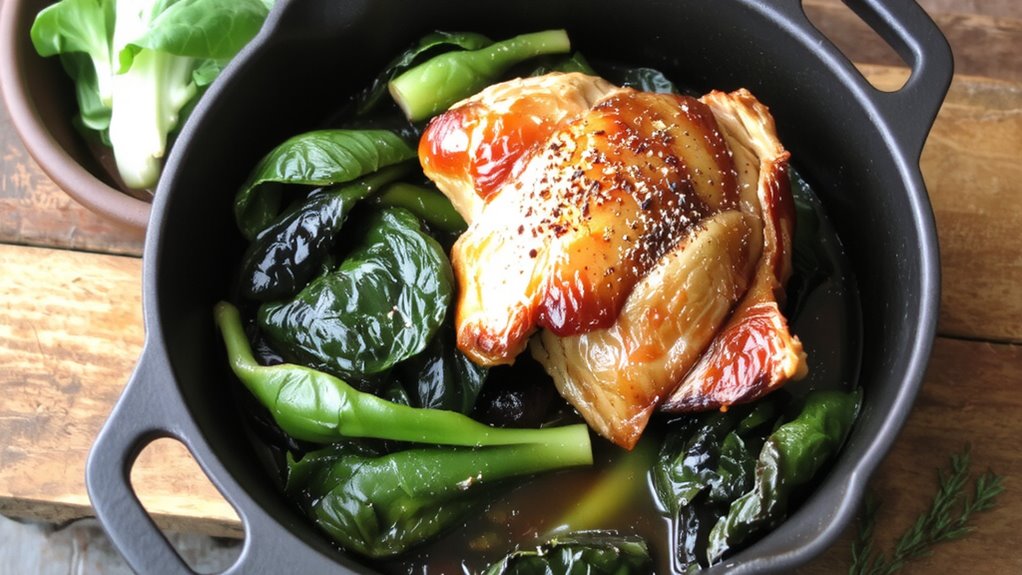
Because it’s cured and smoked over hardwood, a smoked ham hock brings a deep, savory complexity that’s hard to replicate with other pork cuts or flavorings. You get both smoky depth and rich umami, elements essential to authentic Southern greens. As it braises, the collagen breaks down, enriching the pot liquor with body and flavor that dried spices or liquid smoke can’t match. Unlike bacon or ham bone, the hock offers sustained release of taste and texture.
| Flavor Element | Smoked Ham Hock | Substitute (e.g., bacon) |
|---|---|---|
| Smoky depth | Deep, natural | Often artificial or sharp |
| Rich umami | Full-bodied, layered | Mild or one-dimensional |
| Texture contribution | Gelatinous, thickens broth | Fatty, can overpower |
That’s why you’ll find it in traditional cast-iron prep-perfection through patience.
How to Prep Collard Greens for Braising
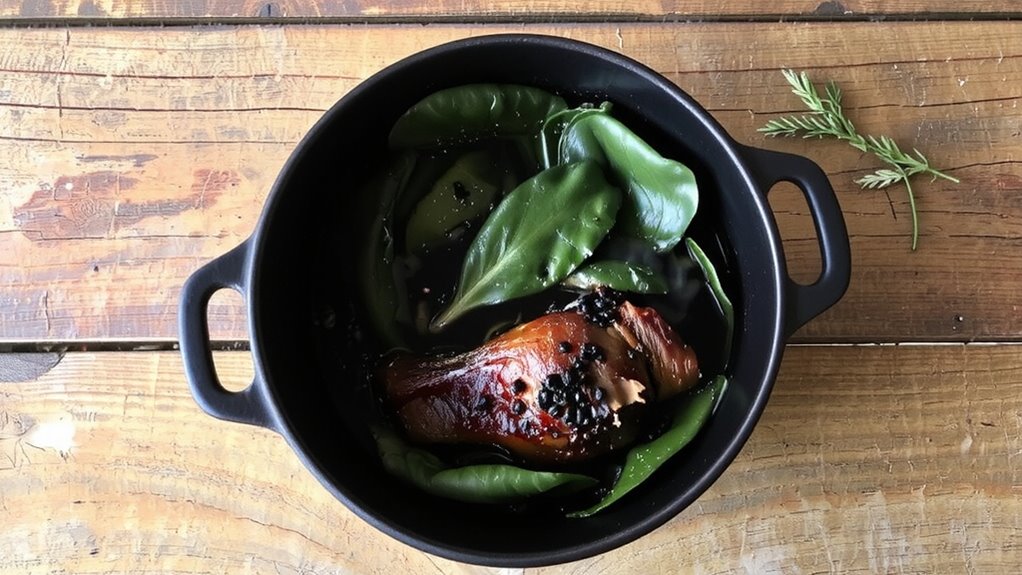
You’ve got your smoked ham hock ready to build that deep, authentic foundation, so now it’s time to focus on the greens themselves. Start by choosing collard varieties known for tenderness and leaf size-Georgia and Vates are solid picks, with broad, deep-green leaves that hold up well during cooking. Once you’ve selected your greens, wash them thoroughly in cold water to remove grit and field residue. Lay each leaf flat and slice along the center rib to remove tough stems; they’re fibrous and don’t soften well, so discarding them guarantees a more enjoyable texture. Stack a few leaves, roll them tightly, and slice into uniform half-inch ribbons-this cut exposes more surface area for flavor absorption while maintaining structural integrity. Prepping this way is essential for even braising and maximum tenderness, especially in cast iron, where consistent sizing prevents uneven cooking.
Step-by-Step: How to Braise Collard Greens
Patience pays off when braising collard greens, transforming tough, raw leaves into a richly flavored, tender side dish that carries the essence of slow-cooked tradition. You’ll start by placing your prepped greens in a cast-iron pot with smoked ham hock and enough cooking liquid to simmer-this base drives deep flavor development. Cover and let it cook low and slow; the longer cooking time, typically 1.5 to 3 hours, allows bitterness to mellow and textures to soften evenly. Stir occasionally to redistribute heat and extract hock-infused richness. The collards absorb savory notes while the collagen from the hock breaks down, enriching the pot likker. Extended braising also guarantees balanced flavor development, letting spices and smoke integrate fully. Avoid rushing-it compromises texture and depth. Steady heat and time are essential. You’re not just cooking; you’re cultivating tradition through methodical, reliable technique.
How to Tell When Collard Greens Are Done
The deep flavors and tender texture you’re after in collard greens won’t happen overnight, but now that your pot has been simmering steadily, it’s time to assess doneness. After at least 90 minutes, perform a texture check: grab a leaf with tongs and tug-done greens should yield easily, shredding softly rather than snapping. They’ll turn a deeper green and lose their raw bite. Next, do a taste test: the bitterness should mellow into a rich, savory depth, complemented by the ham hock’s smoke and salt. Undercooked greens taste harsh and fibrous; overcooked ones turn mushy and lose complexity. Aim for a balance-tender but with slight resilience. Stir well before testing, as the bottom layer cooks faster. Doneness varies by pot and heat, so rely on feel and flavor over strict timing. Your palate and fingers are the best tools here.
Serving Suggestions for Traditional Flavor
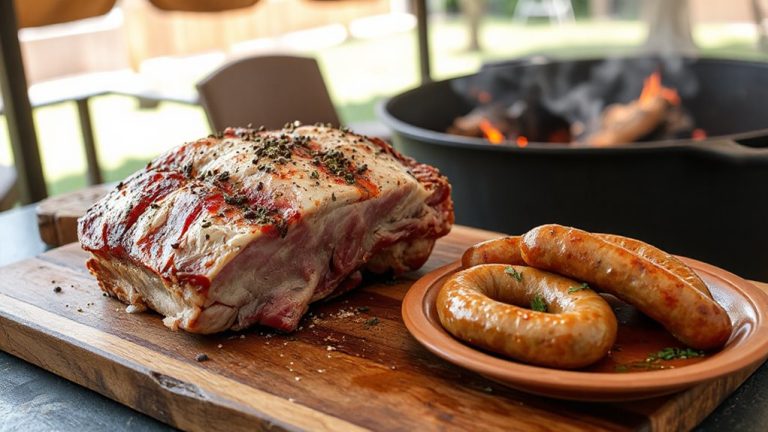
While collard greens shine on their own, pairing them with complementary sides enhances the overall meal, especially when aiming for traditional Southern flavor. Classic side dish pairings include cornbread, fried chicken, or pan-seared catfish, all of which balance the greens’ earthiness with texture and richness. For a hearty, authentic plate, serve alongside black-eyed peas and smoked sausage-this combination delivers depth and warmth. Don’t overlook garnish options: a dash of hot sauce or a sprinkle of chopped green onions adds brightness without overshadowing the smoky ham hock essence. A splash of vinegar-based pepper sauce just before serving cuts through the richness, elevating both aroma and taste. When presenting, use a wide, shallow dish to showcase the deep green leaves and glossy broth. These pairings and touches aren’t just tradition-they’re tested enhancements that honor the dish’s roots while improving balance and satisfaction on the plate.
On a final note
You’ve got a flavorful, authentic dish when collard greens are slow-braised with a smoked ham hock in cast iron. The skillet retains heat evenly, promoting consistent tenderness, while the ham hock infuses deep, smoky richness. Proper prep-washing, de-stemming, and chopping-ensures palatable texture. When greens are deep in color, soft to the bite, and the liquid has reduced slightly, they’re done. Serve with cornbread or alongside barbecue for a satisfying, traditional Southern meal.