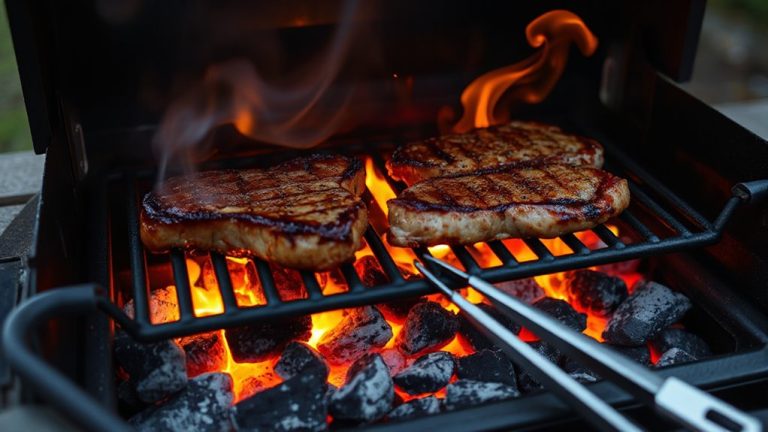
How to Re-Season a Campfire Griddle After Aggressive Scrubbing
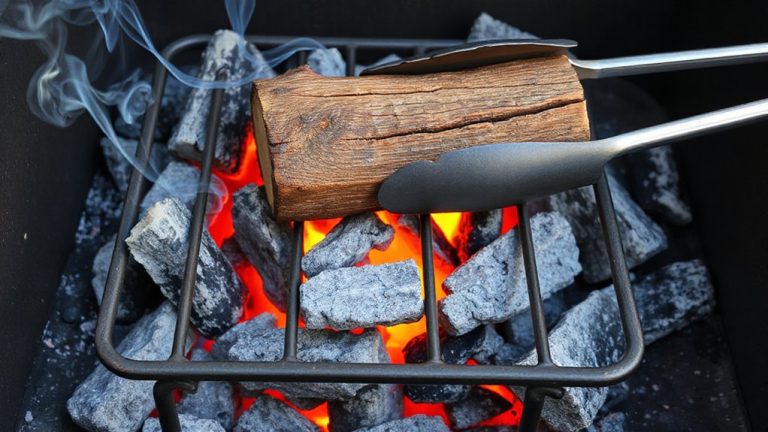
After scrubbing, inspect your griddle for bare or pitted metal, then preheat it slowly over campfire coals to open the pores. Use tongs to apply a thin layer of high-smoke-point oil like canola or grapeseed, letting it polymerize until it stops smoking. Repeat 2–3 times. Avoid thick coats or olive oil-they’ll gum up. A well-seasoned surface should let eggs slide freely and repel water. Get it right, and you’ll build a resilient, non-stick finish that improves with every fire.
Notable Insights
- Preheat the griddle slowly over the fire to open metal pores before applying oil.
- Use high smoke point oil like canola or grapeseed to ensure proper polymerization.
- Apply thin, even oil layers with a cloth-wrapped tong, letting each layer smoke off completely.
- Avoid thick oil coats which cause sticky, uneven seasoning and surface buildup.
- Repeat oiling and heating 2–3 times for a durable, nonstick finish resistant to scrubbing.
Check Your Griddle’s Surface
A smooth, dark surface isn’t just a mark of a well-used campfire griddle-it’s a sign of proper seasoning. You should check your griddle’s surface closely before re-seasoning, especially after aggressive scrubbing. Look for griddle damage like deep scratches or areas where the blackened layer has peeled. These weak spots expose raw metal and invite rust. Also, watch for surface pitting-tiny, uneven divots etched into the iron-often caused by moisture or acidic buildup. While minor pitting won’t ruin your cooking, it weakens the nonstick qualities over time. Smooth patches should dominate; rough, reddish areas mean the seasoning’s gone. Inconsistent finishes affect heat distribution and food release. You can’t reverse pitting, but you can rebuild the surface with proper care. A thorough inspection tells you how much work lies ahead and guarantees your next cook goes smoothly. Choosing the right campfire grills can also impact how evenly your griddle heats and maintains seasoning.
Choose the Best Oil for Campfire Seasoning
Now that you’ve inspected your griddle and know the condition of the surface, it’s time to pick the right oil for rebuilding or maintaining that slick, black finish. You’ll want an oil with a high smoke point-think 400°F or higher-so it polymerizes instead of burning when heated over flames. Flaxseed oil creates a strong initial layer, but its low smoke point and tendency to flake make it less ideal for campfire use. Canola and grapeseed oils strike a better balance: decent smoke points, reliable polymerization, and moderate oil viscosity that spreads evenly without pooling. The right viscosity guarantees a thin, uniform coat that doesn’t drip or leave sticky spots. Vegetable shortening works too, offering stability and ease of application in the wild. For long-term durability under fluctuating campfire heat, a blend of high smoke point and medium viscosity is your best bet. Skip butter or olive oil-they burn too fast and won’t season well. For more guidance on choosing the ideal product, check out our best oil for seasoning a grill recommendations.
Re-Season Your Griddle Over the Fire
Why risk uneven seasoning when you can build a durable, nonstick layer right where you cook? Re-seasoning over the fire gives you direct heat control, letting you manage oil polymerization efficiently. With proper flame adjustment, you avoid scorching while ensuring an even bond. Place the clean, dry griddle back on the fire and preheat slowly. Apply a thin oil layer with tongs and a cloth, then let it smoke until the residue disappears. Repeat 2–3 times, adjusting the flame as needed to maintain consistent heat without flare-ups. For best results, use a high-smoke-point oil like flaxseed or best outdoor griddles recommended oil.
| Factor | Benefit |
|---|---|
| Direct heat control | Prevents warping and hot spots |
| Flame adjustment | Supports gradual polymerization |
| On-site seasoning | Reinforces existing layers |
| Smoke monitoring | Indicates proper curing |
| Repeat thin coats | Builds durable, nonstick surface |
This method’s reliability makes it a field-tested standard.
Don’t Make These Re-Seasoning Mistakes
If you’re re-seasoning your campfire griddle, skipping preheating or slathering on thick layers of oil might seem harmless, but these missteps can sabotage your results. Preheating guarantees the metal pores open, allowing oil to bond properly-skip it, and your seasoning may peel. Thick oil creates sticky, uneven buildup instead of a smooth polymerized layer. Also, avoid using harsh detergents after scrubbing-even post-cleaning, residue can prevent oil adhesion and degrade seasoning quality. Pairing those with metal scourers might remove rust, but they also strip existing seasoning and scratch the surface, leaving patchy spots that won’t cook evenly. Instead, use gentle abrasives like nylon brushes or chainmail scrapers designed for griddles. You’re aiming for a durable, non-stick surface, not a shiny but compromised plate. Proper re-seasoning relies on patience and precision, not force. Respect the process, and your griddle will reward you with years of reliable outdoor cooking performance.
Test Your Griddle’s Non-Stick Finish
How can you tell when your campfire griddle’s seasoning has truly taken hold? Check for consistent surface slickness and reliable heat response after cooking tests. A well-seasoned griddle won’t let food stick, browns evenly, and repels water slightly when hot. Below are key indicators of a successful non-stick finish:
| Test | Observation | What It Means |
|---|---|---|
| Egg Test | Egg slides easily, doesn’t cling | Surface slickness is ideal |
| Water Beading | Small droplets dance and sizzle | Seasoned layer is water-resistant |
| Browning | Meat sears without over-sticking | Heat response is even and controlled |
| Oil Residue | Minimal oil remains after cooking | Polymerized layer is stable |
These performance benchmarks confirm durability and functionality in outdoor cooking environments. Reliable heat response guarantees consistent results over open flames. A slick, non-stick finish isn’t just convenient-it’s a hallmark of proper griddle care and long-term BBQ success.
Why Seasoning Fails on Campfire Griddles
Ever wonder why your campfire griddle just won’t hold onto that slick, non-stick surface no matter how carefully you oil it? The problem often lies in surface oxidation and uneven heating. When you cook over an open flame, hot spots develop fast, and those temperature swings prevent polymerized oil layers from forming evenly. That uneven heating breaks down seasoning instead of building it. On top of that, exposure to moisture and high heat accelerates surface oxidation, which weakens the bond between the metal and the seasoned layer. You might think you’re doing everything right-applying flaxseed or canola oil, heating slowly-but without consistent, controlled temps, the oil burns off or turns sticky instead of curing properly. Cast iron can handle the fire, but mastering the balance between heat management and oil application is key. Without it, your seasoning won’t stand a chance.
Keep the Seasoning Strong on Future Fires
Though you can’t control every aspect of a campfire, you can still protect your griddle’s seasoning with smart practices and the right mindset. After each cook, allow the surface to cool slightly, then wipe it down with a paper towel to remove excess grease and food debris-this simple step is key to regular maintenance. Reapply a thin coat of high-smoke-point oil like flaxseed or grapeseed before storing. Proper storage means keeping the griddle in a dry place, preferably covered or inverted to avoid moisture buildup. If left outside, use a weather-resistant cover to prevent rust. Re-season periodically, even if the surface looks intact, as thermal cycling degrades layers over time. With consistent care, your griddle retains its non-stick performance and durability. Proper storage and regular maintenance aren’t just routines-they’re investments in long-term cooking success over open flame.
On a final note
You’ve restored your griddle’s surface, chosen a high-smoke-point oil like flaxseed or vegetable oil, and heated it evenly over campfire coals for a durable polymerized layer. Avoiding common errors-such as using too much oil or rushing the cool-down-ensures lasting results. A well-seasoned griddle improves non-stick performance and resists rust. Proper post-cook cleaning and light oiling preserve seasoning, making outdoor cooking more efficient and enjoyable on future trips.