Using Ceramic Tiles as Heat Retention Panels in Gas Grill Interiors
You’ll get better heat retention and fewer flare-ups using high-density, kiln-fired ceramic tiles rated for at least 1,800°F in your gas grill. They absorb and radiate heat evenly, reducing hot spots and improving searing. Install them with high-temp adhesive and leave expansion gaps to prevent cracking. Unlike lava rock, they resist grease buildup and last longer. Clean with a non-metallic brush and mild soap to maintain performance-there’s more to get right for ideal results.
Notable Insights
- High-density, kiln-fired ceramic tiles rated for 1,800°F enhance heat retention and even cooking in gas grills.
- Install tiles with high-temperature adhesive and ¼ inch expansion gaps to prevent cracking from thermal stress.
- Ceramic tiles reduce flare-ups by intercepting grease drips before they reach open flames or burners.
- They provide superior heat diffusion compared to lava rocks, minimizing hot spots and improving searing consistency.
- Regular cleaning with non-metallic tools and mild soap maintains tile integrity and long-term thermal performance.
Choose the Right Ceramic Tiles for Your Gas Grill
While not all gas grills come with ceramic interiors, choosing the right ceramic tiles-if your model supports them-can markedly boost heat retention and evenly distribute cooking temperatures. You’ll want high-density, kiln-fired ceramic tiles designed for grilling, as these offer superior tile durability under repeated thermal stress. Cheaper alternatives may crack or spall, risking contamination and reducing efficiency. Look for tiles rated to at least 1,800°F to guarantee they withstand flare-ups and searing. Installation safety is critical; poorly fitted pieces can shift or block burner ports, creating hot spots or gas flow issues. Always confirm compatibility with your grill’s interior dimensions and ventilation design. Well-chosen ceramics not only improve heat consistency but also reduce fuel consumption over time. With proper selection, you’re investing in performance, longevity, and safer, more controlled outdoor cooking-key for anyone serious about backyard BBQ mastery.
Install Ceramic Tiles Without Damaging Your Grill
You’ve picked the right ceramic tiles for your gas grill, ones that can handle high heat and improve thermal performance, so now it’s time to get them installed the right way. Proper grill tile adhesion guarantees longevity and safety. Use high-temperature mortar or adhesive rated for 1,800°F+ to secure tiles firmly. Avoid direct fasteners-they can crack tiles under thermal stress. Always leave small tile expansion gaps (¼ inch) between pieces to accommodate heat-induced movement and prevent warping or breakage. Arrange tiles over the heat shield or burner tubes, guaranteeing airflow isn’t blocked.
| Position | Adhesive Type | Gap Size |
|---|---|---|
| Bottom Layer | High-temp mortar | ¼” gaps |
| Side Walls | Ceramic bonding glue | ¼” gaps |
| Rear Panel | RTV ceramic sealant | ¼” gaps |
| Around Vents | Non-flammable mat + adhesive | ¼” gaps |
| Edge Tiles | Mortar + gap spacers | ¼” gaps |
Prevent Flare-Ups and Even Out Heat Distribution
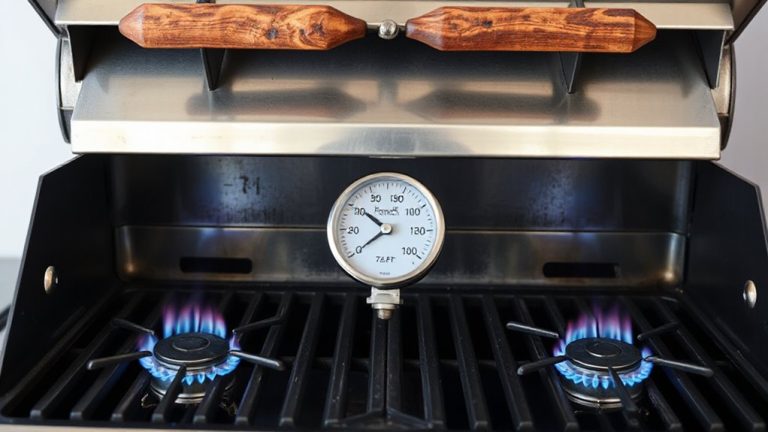
Because ceramic tiles absorb and radiate heat more evenly than bare metal, they naturally reduce hot spots and help prevent flare-ups when searing meats over a gas grill. You’ll notice improved heat diffusion across the cooking surface, which means more consistent temperatures-especially useful when grilling delicate foods or searing steaks. The tiles act as thermal buffers, storing heat and releasing it steadily, so temperature swings are minimized. This enhanced heat diffusion also supports better flare up prevention; fat drips onto the tiles instead of open flames, reducing sudden bursts of fire. You’re still in control, but with fewer surprises. Unlike flame tamers or lava rocks, ceramic tiles offer a durable, predictable way to even out heat distribution. Over time, that stability elevates your cooking results, making searing, roasting, or indirect grilling more reliable. With proper placement, you substantially improve both safety and performance.
Clean Grill Tiles to Maintain Performance
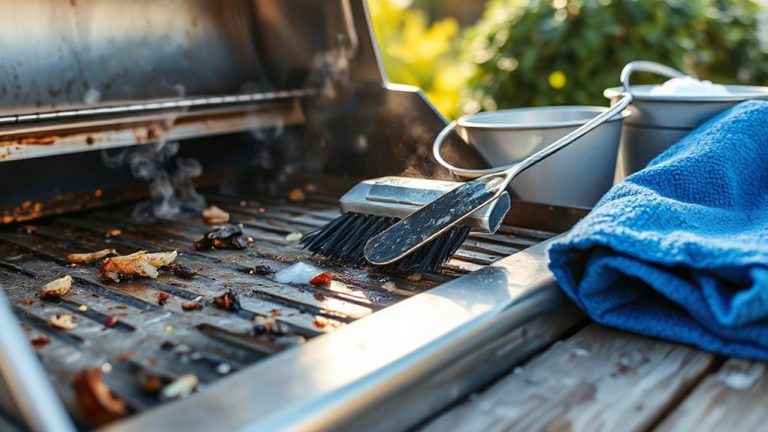
A well-maintained ceramic tile lining keeps your gas grill performing at its best, and cleaning those tiles regularly is key to sustaining their thermal efficiency and longevity. You’ll want to remove grease and food debris after several uses, as grime accumulation can create hotspots and reduce heat retention. Over time, built-up residue may also contribute to tile degradation, especially when exposed to repeated high temperatures. A simple brush with a non-metallic scrubber and warm, soapy water usually does the trick-avoid harsh chemicals that could weaken the ceramic. Let the tiles dry completely before firing up the grill again. Consistent cleaning not only preserves appearance but guarantees even radiant heat, which is the main advantage of using ceramic. Ignoring maintenance might mean diminished performance and a shorter lifespan for your heat panels-so a few minutes of care go a long way.
Compare Ceramic Tiles vs. Lava Rock and Briquettes
Ceramic tiles offer a cleaner, more consistent cooking experience compared to traditional lava rock and ceramic briquettes, making them a smarter long-term choice for modern gas grills. You’ll notice better thermal efficiency, as tiles absorb, store, and radiate heat more evenly than porous lava rock, which tends to absorb grease and produce flare-ups. Unlike briquettes that degrade over time, ceramic tiles boast superior material durability, resisting cracking and erosion through repeated heating cycles. They don’t need replacing every season, saving you time and maintenance costs. Lava rock may be cheaper upfront, but it retains moisture and oils, increasing the risk of inconsistent heating and smoke buildup. With ceramic tiles, you get steady temperatures and fewer hot spots, which means more predictable results when grilling. Their smooth surface resists residue, simplifying cleanup. For long-term performance and reliability, ceramic tiles outperform both lava rock and briquettes in nearly every measure.
How Ceramic Tiles Improve Gas Grill Searing
Heat retention is where ceramic tiles truly shine, giving you the high, steady temperatures needed for restaurant-quality searing. Once heated, they maintain consistent heat intensity, minimizing temperature drops when you place thick cuts of meat on the grates. Unlike metal or lava rock, ceramic absorbs and re-radiates heat evenly, reducing hot spots and improving searing efficiency. You’ll notice deeper, more uniform grill marks and better caramelization in less time. The tiles respond slowly to flare-ups, which keeps flames under control while still delivering aggressive heat. Over time, this translates to more predictable results, especially with steaks or chops that demand precision. Maintenance is simple-just occasional brushing and inspection. While they take longer to preheat than briquettes, the trade-off in performance is worth it. Overall, ceramic tiles elevate your searing game by combining durability, thermal stability, and superior heat management.
On a final note
You’ll find ceramic tiles offer exceptional heat retention and steady searing performance in gas grills. They outlast lava rock, resist cracking with proper installation, and spread heat more evenly than metal plates. Flare-ups drop considerably since they distribute flames efficiently. Though they need occasional brushing and inspection, their durability and thermal consistency make them a smart upgrade. For serious outdoor cooking, ceramic tiles enhance control, improve results, and simplify maintenance over time.