Cooking With Natural Materials: Using Green Sticks for Skewers
Choose green sticks from safe hardwoods like hickory or maple for better flavor and heat control. Soak them for at least 30 minutes to reduce flare-ups and charring. Use thumb-thick, straight sticks about a foot long, trimmed evenly for stable grilling. They insulate heat better than metal, giving you more even cooking and a subtle smoky taste. Just avoid dry, resinous, or damaged wood to prevent bitterness and flare risks-there’s more to mastering this simple tool than meets the eye.
Notable Insights
- Choose safe, non-resinous woods like maple, apple, or cherry for flavorful, contaminant-free cooking.
- Use fresh green sticks that bend slightly before breaking to ensure proper moisture content.
- Soak sticks in water for at least 30 minutes to reduce flare-ups and extend grilling time.
- Cut sticks to about a thumb’s thickness and one foot in length for optimal handling and heat distribution.
- Rotate sticks frequently on the grill to prevent charring and ensure even, consistent cooking.
Choose the Right Green Sticks for Cooking
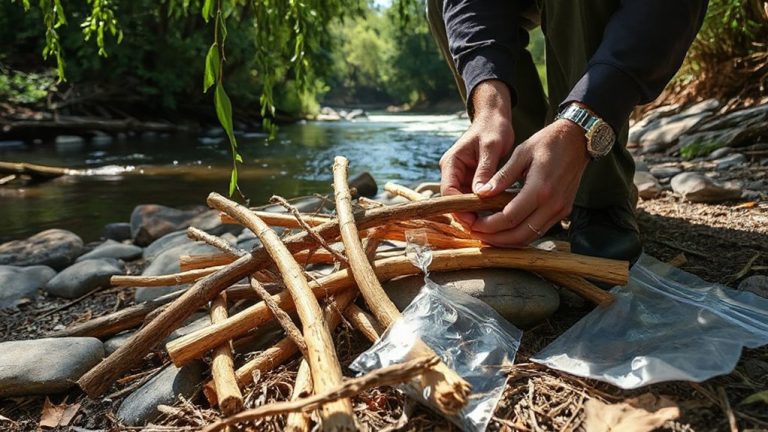
Green sticks for cooking aren’t just random twigs you grab from the yard-they need to be the right kind of wood, fresh and properly sized. You’ll want to focus on identifying safe species, like maple, hickory, or fruitwoods, since some trees release harmful compounds when heated. Avoid conifers or anything with strong sap-these can spoil your meal or even make you sick. Checking for freshness is just as essential: snap a small branch to see if it’s moist inside, not dry and brittle. Fresh green sticks should bend slightly before breaking, indicating usable flexibility and moisture content. They also shouldn’t have mold, bark discoloration, or insect holes. Proper sizing guarantees even cooking-aim for thumb-thickness and about a foot long. With the right prep, green sticks deliver subtle, smoky flavor and reliable performance over open flames. For more guidance on selecting quality wood, consider reviewing the best smoking wood picks.
Soak Green Sticks to Prevent Burning
While you might be tempted to toss those freshly gathered sticks straight onto the fire, soaking them first makes a noticeable difference in how well they hold up during cooking. Submerging green sticks in water for at least 30 minutes boosts their moisture retention, reducing the risk of flare-ups and charring. Though wood isn’t a strong heat conductor, its natural heat conductivity increases slightly when dry-so keeping it wet helps regulate temperature transfer to your food. Soaking doesn’t make sticks fireproof, but it extends their durability on the grill. For best results, use thick, straight sticks and change water if it becomes cloudy. Reusable metal skewer options offer a durable alternative for frequent grilling.
How to Grill Kebabs and Fish on Green Sticks
Since you’ve soaked your green sticks properly, they’re ready to perform well over direct heat, whether you’re threading marinated cubes of meat for kebabs or securing delicate fillets of fish. These natural skewers work beautifully with traditional cooking techniques, charring slightly to add a subtle smokiness without breaking down. The moisture in the wood helps regulate temperature, reducing flare-ups and promoting even cooking. As the sticks heat, they contribute to a unique flavor infusion, imparting earthy notes that metal can’t replicate. Position your skewers diagonally on the grill to encourage rotation and prevent sticking. For fish, use wider, flatter pieces to minimize slipping. Monitor closely-green sticks char, so rotate often to avoid ash buildup. Unlike rigid metal, they demand a bit more attention, but the payoff in aroma and authenticity is worth it. This method blends practicality with tradition, enhancing your outdoor cooking with minimal gear and maximal effect.
Why Green Sticks Work Better Than Metal
You’ve already seen how green sticks hold up when grilling kebabs and fish, charring just enough to enhance flavor without falling apart. Unlike metal, they bring subtle smoke flavor and exceptional stick flexibility, adapting to food shapes without piercing or crushing. Metal conducts heat too quickly, often overcooking the center while waiting for the outside to caramelize. Green sticks regulate heat transfer, creating more even cooking and richer taste.
| Feature | Green Sticks | Metal Skewers |
|---|---|---|
| Heat Conduction | Slow, even | Fast, intense |
| Smoke Flavor | Yes, natural | None |
| Flexibility | High – absorbs motion | Rigid – can tear food |
| Cleanup | Discard after use | Requires scrubbing |
You’ll notice the difference in both texture and taste-green sticks don’t just work; they improve the dish.
Avoid These Common Green Stick Mistakes
Though they’re convenient and flavor-friendly, green sticks can fall short if you don’t choose and prepare them properly. Using sticks that are too dry or too thick leads to improper seasoning, which means they won’t absorb moisture well and may char unevenly. You should soak them in water for at least 30 minutes before use-this simple step reduces flare-ups and prolongs burn time. Avoid resinous woods like pine; they impart bitter flavors and increase smoke intensity unpredictably. Instead, opt for fruit-bearing trees such as apple or cherry, which offer milder smoke and better compatibility with meats and vegetables. If you skip soaking or pick the wrong wood, you’ll likely face uneven roasting-food cooks inconsistently, with some pieces burning while others remain underdone. Always trim sticks to uniform lengths and thicknesses to promote balanced heat exposure. Proper prep guarantees reliable results, enhancing both safety and taste in your outdoor cooking. For consistent smoking flavor, consider using best wood chips for smoking when grilling with wood.
On a final note
You’ll find green sticks effective for outdoor cooking when chosen and prepped correctly. Soaked hardwoods like maple or hickory resist burning and impart subtle flavor, outperforming metal in heat distribution and smoke interaction. They’re ideal for delicate fish or vegetable kebabs, reducing flare-ups. Still, improper soaking or using softwoods risks charring or off-flavors. With attention to wood type, moisture content, and grill placement, green sticks offer a reliable, traditional alternative that enhances both cooking control and taste.