Grilling Pizza Crust Over Minimal Beech Smoke to Let Cheese Shine Through
Use properly aged beech wood for a clean, mild smoke that enhances crust without overwhelming the cheese. Opt for high-protein flour and cold-ferment the dough to build structure and flavor. Set up a two-zone fire-sear the crust over direct heat, then move it to indirect to finish. Add cheese once the crust has light char; let radiant heat melt it gently. Keep smoke minimal with small, seasoned beech chunks so dairy notes stay bright and distinct. You’ll soon see how balance elevates the whole pie.
Notable Insights
- Use properly aged beech wood for a mild, clean smoke that won’t overpower the cheese.
- Limit smoke by using small, well-seasoned beech chunks instead of chips or fresh wood.
- Apply the two-zone grilling method to control heat and minimize excessive smoke exposure.
- Grill the crust over direct heat first, then move to indirect heat for finishing.
- Add cheese only when the crust is lightly charred and nearly cooked to prevent scorching.
Choose the Best Beech Wood for Subtle Grilled Pizza Flavor
A handful of wood types deliver that delicate balance between aroma and heat for grilled pizza, and beech stands out as one of the best choices if you’re after a mild, clean smokiness without overpowering the toppings. You’ll find beech produces a consistent smoke density-dense enough to flavor, but not so heavy it masks the cheese or sauce. For best results, use properly aged beech; wood aging reduces moisture, ensuring a hotter, cleaner burn with less soot. Fresh-cut wood smolders too much, creating acrid smoke that can ruin delicate flavors. Beech burns evenly, making temperature control easier on both gas and charcoal grills. It’s not as aromatic as hickory or mesquite, but that’s the point-this wood enhances, not dominates. If you’re aiming for subtlety, beech delivers reliability and refined taste. For top-quality options, consider checking out the best smoking wood picks based on performance and flavor consistency.
Prepare Dough for Lightly Charred Grilled Pizza Crust
Now that you’ve selected your beech wood for its clean, mild smoke, it’s time to focus on what carries that flavor-the dough. For a lightly charred grilled crust, your flour type matters: opt for high-protein bread flour or tipo “00” for its superior structure and crisp exterior. These flours support the heat stress of direct grilling while retaining a tender crumb. Your kneading technique should develop gluten thoroughly-10 to 12 minutes by hand or 6 to 8 with a stand mixer-until the dough feels smooth and elastic, passing the windowpane test. Proper kneading guarantees the crust holds up on the grate without tearing. Let the dough rise until puffy but not over-expanded; a slightly firmer dough handles better on the grill. Cold fermentation for 24–48 hours deepens flavor and texture control, essential for achieving that balanced char without bitterness.
Set Up a Two-Zone Fire for Grilled Pizza Control
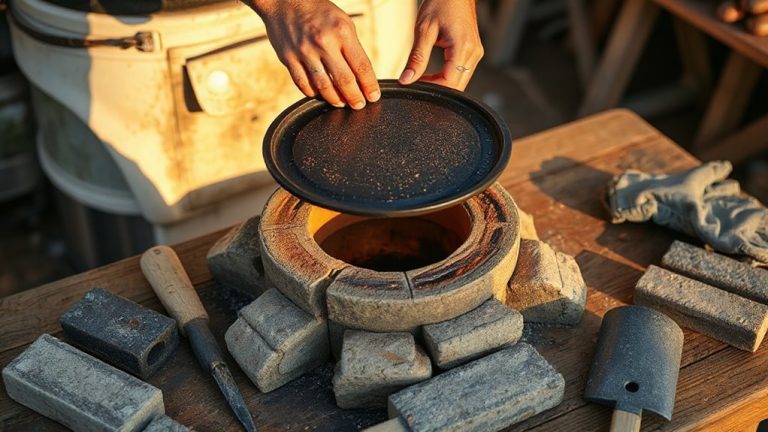
Since controlling heat is essential when grilling pizza, setting up a two-zone fire gives you the precision needed to achieve a lightly charred crust without burning. You’ll stack coals on one side of your grill, creating direct heat for searing, while leaving the other side cooler for indirect cooking. This setup prevents uneven cooking-common when the entire surface blasts the dough with intense flames. You start by crisping the crust over direct heat, then quickly move it to the cooler zone to finish cooking through without scorching. It’s especially effective with beech wood, which burns clean and steady, offering subtle smoke without overpowering. Managing airflow and coal placement guarantees consistent temperatures. A two-zone configuration isn’t just practical-it’s essential for anyone serious about grilled pizza, giving you control that mimics a professional stone oven while avoiding unpredictable results.
Add Cheese at the Right Time for Perfect Melt
Timing, not temperature alone, determines whether your cheese melts into a gooey, golden blanket or burns into a bitter smear. You need to respect melt timing-add cheese too early, and it overcooks under direct heat; too late, and it barely softens. Wait until the crust is nearly done, with firm structure and light char, then move it to the indirect zone. That’s when you scatter or layer your cheese evenly. This method preserves ideal cheese texture: creamy, cohesive, with slight pull but no greasiness. Low, consistent radiant heat from indirect coals allows the cheese to warm through gradually, avoiding hotspots. Fresh mozzarella melts beautifully, while aged cheeses like provolone offer richer consistency when timed right. Proper melt timing guarantees full coverage and seamless integration with the crust. You’re not just melting-you’re finishing with precision.
Maximize Cheese Flavor With Minimal Smoke
You’ve already nailed the melt by adding cheese at the right moment, letting it soften just enough to cling without scorching. Now, focus on enhancing that flavor with minimal smoke-beech wood is ideal, delivering a subtle sweetness that won’t overpower. Achieving proper smoke balance means using small, well-seasoned chunks rather than chips; too much smoke mutes the dairy richness you want to highlight. Position the grill for indirect heat after searing the crust, allowing the cheese to warm through without aggressive cheese browning. Light golden spots are fine-they add depth-but avoid dark blistering, which signals overheating and flavor loss. The goal isn’t smokiness, but clarity: let the milk fats and salt sing. You’re not masking the cheese; you’re elevating it. With restrained smoke and attentive airflow control, your pizza showcases dairy as the star, not a side note.
Fix Grilling Mistakes That Hide Cheese on Pizza
Why does your grilled pizza end up with cheese that’s buried, burnt, or barely noticeable? It’s usually because you’re grilling the toppings too long before adding the cheese. Leaving cheese on during high-heat searing leads to excessive cheese browning or even charring, muting its flavor. For best results, add cheese only in the final 60–90 seconds, letting it melt without scorching. Also, crust sticking can pull the pizza apart when flipping, burying the cheese underneath. Prevent this by oiling the grates and ensuring the crust sets fully before turning. Use a thin, even dough layer to promote quick, even cooking. Timing and technique matter-prioritize crust development first, then finish with cheese. This approach preserves creaminess and lets the cheese shine, just as minimal beech smoke enhances without overpowering. A well-chosen outdoor pizza oven can make all the difference, and top models like those in the best outdoor pizza ovens category offer precise heat control for perfect results.
On a final note
You’ve grilled the crust just enough to add character without overpowering it. The beech smoke, subtle and clean, enhances rather than masks. By timing cheese placement precisely, you guarantee gooey melt without scorch. Two-zone heat gives you control, preventing bitter char. This method prioritizes balance-crisp texture, rich dairy flavor, and a whisper of smoke. It’s efficient, effective, and lets the cheese truly shine.