How to Rehydrate Wood Chips for Optimal Smoke Production
Soaking wood chips won’t boost smoke production since they only absorb surface moisture and must dry before smoldering anyway. You’ll get delayed ignition and extra steam, but not richer flavor. A 30-minute soak in hot water speeds up surface saturation, though dry chips usually burn hotter and more consistently. For longer cooks, soaked chips in a foil pouch may help extend smoke slightly. There’s more to learn about timing and technique for better results.
Notable Insights
- Soak wood chips for 30 minutes in cold water or 15–20 minutes in hot water to speed surface saturation.
- Use a food-grade bucket or mesh bag for even water exposure and easy removal.
- Hot water accelerates moisture absorption but avoid prolonged soaking to preserve chip integrity.
- Rehydrated chips delay smoke onset, producing steam first, which suits long-duration smoking.
- For quicker, more consistent smoke, use dry chips in a smoker box or foil pouch.
Does Soaking Wood Chips Actually Work?
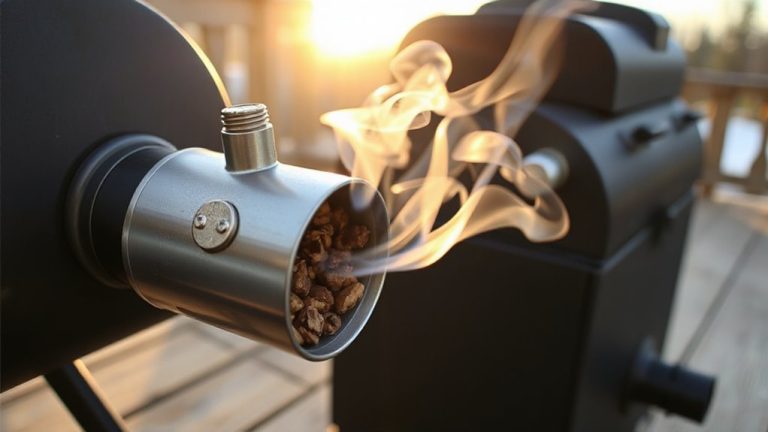
While you might think soaking wood chips before tossing them on the grill helps them smoke longer, the truth is a bit more complicated. Waterlogged chips must first lose moisture before they can smolder, delaying smoke production. The evaporation rate of water from soaked chips slows initial combustion, but once dry, they burn similarly to unsoaked ones. You’re not substantially extending smoke time-just adding a wet phase. Smoke density doesn’t noticeably improve either; real, rich smoke comes from consistent, controlled burn temperatures, not water content. In fact, excess moisture may cool the fire, disrupting airflow and combustion efficiency. Most experts agree: soaked chips don’t offer meaningful benefits. For better smoke density and flavor, use dry chips in a smoker box or foil pouch. They ignite faster, smolder more evenly, and give you more control. Ultimately, skipping the soak saves time and delivers more predictable, practical results in real-world outdoor cooking. A reliable option for consistent results is choosing the best wood chips for smoking based on your meat and equipment type.
How Long Should You Soak Wood Chips?
If you’re still soaking your wood chips, you might as well know that even a full 12-hour soak won’t change the outcome as much as you’d think-you’re adding extra time with little return. The soaking duration has minimal impact because wood only absorbs moisture on the surface; it doesn’t saturate internally like a sponge. Thinner chips may absorb slightly more relative to their mass, but even then, the difference in smoke production is negligible. Chip thickness plays a bigger role in burn time than moisture retention-thicker chunks smolder longer, regardless of soaking. Most of the steam you see during grilling is surface water evaporating quickly, not sustained smoke. If you do soak, 30 minutes is plenty-longer soaks don’t enhance flavor or longevity. In practice, skipping the soak saves time and delivers nearly identical results, especially with proper airflow and heat control.
Hot Vs Cold Water: Which Soaks Faster?
Why does your soak water temperature even matter-could it actually change how your wood chips behave on the grill? Hot water speeds up absorption because the molecules penetrate the wood fibers faster, greatly reducing your soak time. With cold water, you’re typically looking at 30 minutes to two hours for full saturation, but hot water can cut that down to 15–20 minutes. However, don’t assume faster is always better-some pitmasters argue rapid soaking doesn’t let moisture reach the core evenly. While water temperature influences efficiency, excessively hot water might weaken the chips’ structure, leading to quicker burn-off. For balance, warm water often works best: it shortens soak time without compromising chip integrity. Ultimately, your ideal water temperature depends on how much prep time you have and your smoking method. Control matters more than speed-consistent moisture absorption guarantees steady smoke, not just faster soaking.
Best Buckets and Bags for Soaking Chips
You’ve already considered how water temperature affects soaking time and smoke output, but the container you use plays just as big a role in how evenly your wood chips absorb moisture. For buckets, choose one with solid bucket durability-thick, food-grade plastic resists cracking and holds shape when full. A 5-gallon size gives enough room for expansion, and a lid keeps debris out. Metal containers risk corrosion and aren’t recommended. When using bags, mesh or burlap works best due to high bag permeability, allowing water to circulate freely around each chip. Avoid sealed plastic bags-they trap air and create uneven soaking. Nylon produce bags are a decent middle ground, durable yet porous. Just make sure the material won’t degrade during extended soaks. A reliable bucket or permeable bag guarantees consistent hydration, which translates to steady smoke later on.
When to Use (or Skip) Soaked Wood Chips
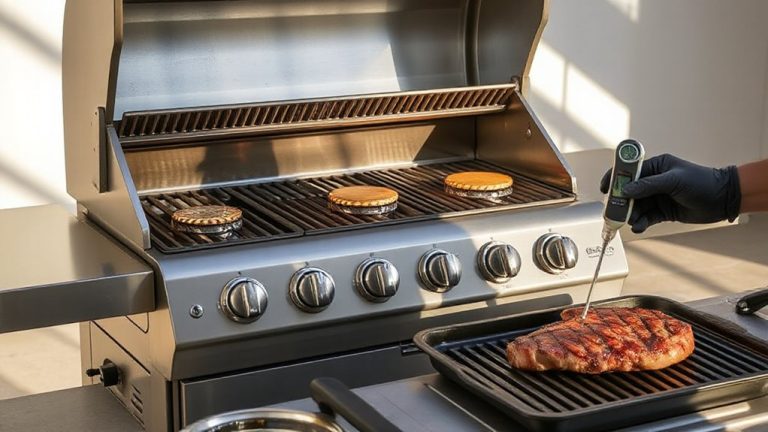
What makes the difference between a rich, lingering smoke and a quick flare-up? It’s whether you soak your wood chips. Soaked chips steam before they smoke, delaying ignition and extending smoke duration-ideal for longer cooks like pork shoulder or brisket. You’ll get milder flavor intensity, which works well when you don’t want wood to overpower the meat. But if you’re searing steaks or grilling quickly, skip the soak. Dry chips ignite faster, delivering a concentrated burst of flavor intensity right when you need it. On charcoal grills, dry wood often performs better, syncing with the fire’s natural rhythm. With gas grills, soaked chips can help stretch smoke duration using a foil pouch. Ultimately, match your choice to cook time and flavor goals. Soaking isn’t mandatory-it’s a tool. Use it when it serves your smoke strategy, not just by habit. For those using a charcoal grill smoker, the design naturally enhances smoke circulation and wood efficiency.
On a final note
You’ll get a burst of steam and delayed smoke when soaking wood chips, but it’s not always necessary. Soaking over 30 minutes in cold water works fine, though hot water speeds uptake slightly. Wet chips can cool your fire, so use them sparingly with charcoal. Skip soaking for pellet smokers or tight burn chambers. Rehydrated chips shine best in offset smokers where moisture helps regulate temperature and prolong smolder. Balance practicality with your cooker’s design for best results.