How to Prevent Skewers From Burning on a Konro Grill
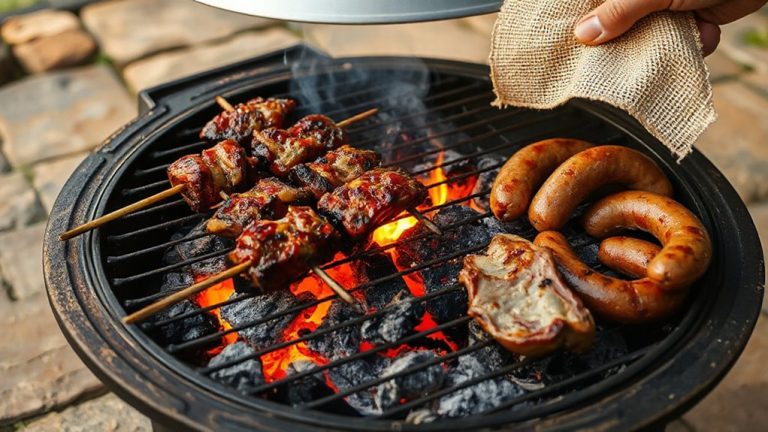
Soak wooden skewers for 30 minutes to delay burning, but know they’ll likely still char on a konro grill’s intense heat. Use metal skewers instead-stainless steel handles high temps without warping. Flat or twisted designs grip food better than round ones. Try two skewers to stop spinning and improve heat contact. Position food away from direct flame, rotating every 90 seconds for even cooking. Adjust airflow to manage flare-ups. There’s more to mastering this balance.
Notable Insights
- Use stainless steel skewers to resist warping and prevent burning on high-heat konro grills.
- Soak wooden skewers for at least 30 minutes to reduce charring, though metal is more reliable.
- Employ a dual skewer setup to stabilize food and minimize overexposure to direct flame.
- Position skewers toward the grill’s edges for gentler, indirect heat to avoid burning.
- Rotate skewers every 90 seconds to ensure even cooking and prevent hot spot damage.
Pick Skewers That Resist Konro Heat
You’ll want to choose skewers that can actually stand up to the intense heat of a konro grill-because nobody likes charred wooden sticks falling apart halfway through cooking. For reliable heat resistance, go with metal skewers, especially stainless steel. They handle high temperatures without warping or degrading, offering strong material durability over repeated use. Flat or twisted designs work better than round ones, helping food stay in place while rotating. While wooden skewers can burn easily, even when soaked, metal ones eliminate that risk entirely. Sure, they cost more upfront, but their longevity and performance make them a smarter long-term choice. You’ll also save time-not having to prep or replace broken skewers mid-grill. In the fast-paced environment of konro cooking, where precise heat control matters, dependable tools are essential. Skewers with solid material durability support consistent results, letting you focus on technique, flavor, and timing instead of equipment failure. For top-performing options, check out the best skewers for grilling based on durability and design.
Soak Wooden Skewers for 30 Minutes
While soaking wooden skewers won’t make them heatproof, it does help reduce the risk of rapid charring when using a konro grill’s intense flame. You should soak them for at least 30 minutes in water to maximize water absorption, which temporarily boosts their fire resistance. The moisture inside slows down how quickly the wood ignites or burns, especially important given the konro’s high, direct heat. Skewers that haven’t soaked are more likely to blacken or even catch fire, ruining both the presentation and taste of your food. Though metal skewers don’t need this step, many prefer wood for its traditional feel and natural impact on flavor. Keep in mind, soaking isn’t a foolproof fix-overexposure to flame will still degrade them-but it’s a simple, effective precaution. For reliable results, treat soaking as a standard prep step whenever using wood.
Use Two Skewers for Stable Grilling
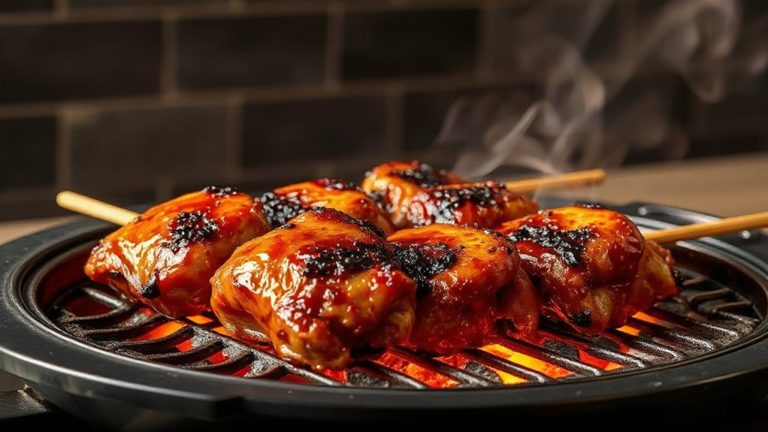
Using two skewers instead of one can make a noticeable difference when grilling delicate or heavier foods on a konro. You’ll find that dual skewers improve stability, especially with items like chicken thighs or fish fillets that might otherwise spin or slip through the grates. Proper skewer alignment guarantees even cooking, as the food stays level and rotates predictably. This setup also enhances heat distribution, since the food maintains consistent contact with the grill surface without wobbling. You’re less likely to overcook one side while undercooking another. Plus, double skewers reduce the chance of twisting, making flipping smoother and more controlled. It’s a small adjustment, but one backed by performance-especially on the konro’s compact, intense heat zone. For both precision and practicality, two skewers deliver better results than one, particularly when tackling trickier ingredients that demand attention and balance.
Grill Skewers Away From Direct Flame
Though the konro grill’s concentrated heat excels at searing, positioning skewers away from direct flame often leads to better results, especially with smaller or delicate items prone to charring. You’ll improve flame control and achieve more even heat distribution by placing skewers toward the grill’s edges, where the temperature is gentler. This method reduces the risk of burning while still allowing thorough cooking. Adjust airflow slightly to moderate the fire, and use the grill’s natural radiant heat for consistent results. Consider the type of food when deciding placement-denser items tolerate center heat, but delicate proteins or veggies do better off direct flame. Optimal performance depends on choosing the right konro grill model for your cooking needs.
Rotate Every 90 Seconds for Even Cooking
If you want your skewers to cook evenly without burning, rotating them every 90 seconds is a simple but effective technique that makes a noticeable difference. This regular turn guarantees each side gets equal exposure to heat, promoting consistent cooking while preventing hot spots from charring the surface. Good temperature control on a konro grill starts with managing airflow and charcoal placement, but your active role matters-rotating helps balance the cooking duration across all sides. Since konro grills deliver intense, direct heat, skipping rotation risks one side overcooking by the time the opposite side is barely done. You’re not just flipping-you’re fine-tuning the process, aligning timing and heat exposure. Over several turns, this method gives you juicier results with better texture. For best results, use tongs to rotate precisely, watching for color and doneness. It takes minimal effort but elevates your control over the entire cook.
Try Metal Skewers If Wood Keeps Burning
You’ve already seen how rotating skewers every 90 seconds improves even cooking, but what if the material itself is working against you? If your wooden skewers keep charring despite soaking, it might be time to switch to metal. Stainless steel or flat metal skewers offer superior durability comparison-resisting warping and lasting for years. Their high heat conductivity guarantees even temperature distribution, searing food fast without hot spots that cause burning. Unlike wood, which insulates and chars, metal transfers heat directly, speeding up cook time and improving texture. While metal skewers don’t need pre-soaking, they can get extremely hot-use tongs or handles. For frequent grilling, their long-term performance outweighs the higher upfront cost. If you’re using a konro’s intense, concentrated heat, metal skewers match the grill’s efficiency, making them a practical upgrade for consistent, reliable results.
On a final note
You’ll get the best results by choosing the right skewers and managing heat wisely. Soaking wooden ones helps, but using two skewers or switching to metal often works better on a konro’s intense flame. Positioning food just off the direct fire and rotating every 90 seconds guarantees even cooking without charring. These practical steps, grounded in grill design and heat dynamics, make outdoor grilling more effective, preserving both food quality and equipment longevity.