How to Season a Cast Iron Cornbread Pan for Use on a Grill Lid
You’ll want to season your cast iron cornbread pan with a high-smoke-point oil like canola or grapeseed, since it bonds well under grill heat and creates a slick, durable layer. Scrub the pan with a stiff brush, dry it completely over low heat, then apply a thin coat of oil, buffing off any excess. Place it on the grill with the lid closed to guarantee even polymerization-repeat 3–4 times for best results. Keep the seasoning intact by wiping it clean after each use and storing it with a paper towel inside to block moisture. There’s more to mastering grill seasoning than just heat and oil.
Notable Insights
- Apply a thin layer of high-smoke-point oil like canola or grapeseed to the entire pan surface before heating.
- Heat the pan on the grill with the lid closed to ensure even, oven-like seasoning and proper oil polymerization.
- Use a stiff brush or chainmail scrubber with warm water to clean the pan, avoiding soap to preserve seasoning.
- Dry the pan thoroughly on the grill over low heat after washing to prevent rust and moisture buildup.
- Repeat the oil-and-heat process 3–4 times to build a durable, non-stick seasoning layer for consistent grilling results.
Start With Why Seasoning Prevents Sticking and Rust
While it might seem like an optional step, seasoning your cast iron cornbread pan is actually essential for both performance and longevity. You’re building up a natural non-stick layer through repeated oil application and heating, which prevents stubborn food residue from clinging. That seasoned surface also acts as a barrier, shielding the iron from moisture-meaning rust won’t eat away at your pan over time. Plus, cast iron thrives on heat retention, evenly distributing high grill temperatures for golden, consistent cornbread. Without proper seasoning, that thermal efficiency diminishes, leading to hot spots and uneven baking. Seasoning isn’t just about cooking ease; it’s long-term surface protection. Every time you heat and oil the pan, you’re reinforcing this protective layer. For outdoor cooking, where conditions are less controlled, this durability is vital. A well-seasoned pan handles flare-ups, temperature swings, and frequent use better than any unseasoned alternative. A properly maintained cast iron cornbread pan performs exceptionally well when used with the right grilling techniques.
Pick the Best Oil for High-Heat Grilling
One key factor in successful outdoor grilling lies in choosing the right oil for seasoning your cast iron cornbread pan, since not all oils can withstand the intense heat of a grill. You need one with a high smoke point-typically above 400°F-so it bonds well with the metal without burning off. Canola and grapeseed oils work well here, offering both stability and even coating. Flaxseed oil creates a hard finish but can flake over time, so it’s not ideal if you grill often. Oil thickness matters too; thinner oils spread more evenly, filling tiny pores in the cast iron for a smoother layer. Thicker oils might pool or glisten, leading to sticky spots. For consistent results, pick a neutral oil with reliable performance under high heat. It makes a real difference in how your cornbread releases and how long the seasoning lasts. A top choice for high-heat applications is best oil for grilling, known for its exceptional smoke point and durability on cast iron surfaces.
Scrub and Dry the Pan Thoroughly
You’ve picked the right oil for high-heat grilling, but before you start applying it, you need to make sure your cast iron cornbread pan is properly prepped. Proper pan cleaning is essential to remove any residue or old seasoning that could interfere with adhesion. Use a stiff brush or chainmail scrubber with warm water-no soap-and focus on stubborn spots. After scrubbing, perform a thorough surface inspection to check for rust, pitting, or leftover debris. Drying immediately is vital; any moisture can lead to rust, undermining your seasoning efforts. Use a towel, then place the pan on the grill or stove over low heat for 5–10 minutes.
| Tool | Purpose | Frequency |
|---|---|---|
| Chainmail scrubber | Deep pan cleaning | As needed |
| Paper towel | Drying | After every wash |
| Stovetop | Final drying | Every use |
| Flashlight | Surface inspection | Seasoning prep |
Coat the Pan Evenly With Oil
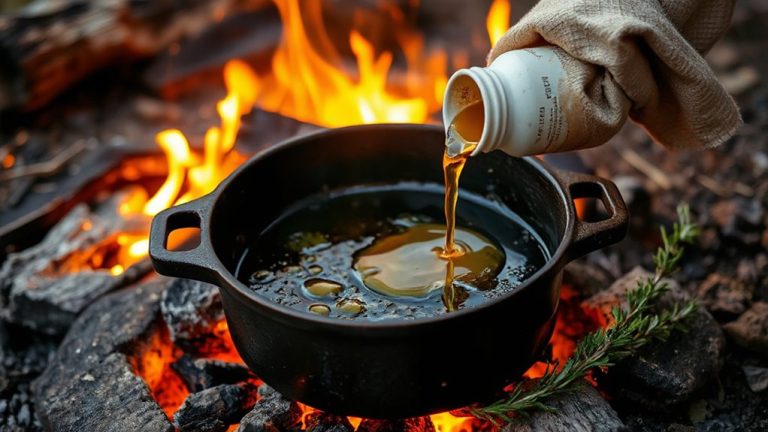
Since proper seasoning relies on a thin, uniform layer of oil, you’ll want to grab a high-smoke-point fat like flaxseed, grapeseed, or vegetable oil and a clean paper towel to spread it evenly across the entire surface. Proper oil distribution is critical-too much creates a sticky residue, while too little leads to uneven coating and weak polymerization. You’re not lubricating; you’re laying down a foundation for durable, nonstick performance. Use a lint-free cloth or your fingers to rub the oil in small, circular motions, ensuring it reaches every ridge and corner. Buff lightly with a dry towel afterward to remove excess. This method promotes consistent heat retention and corrosion resistance. For outdoor cooking, especially on a grill, an even coating withstands fluctuating temperatures better than uneven layers. It’s not just about protection-it’s about performance. The quality of your seasoning directly impacts how food releases and browns. Done right, it makes your cornbread pan a reliable tool for high-heat applications.
Grill With Lid Closed for Even Heat
When you’re aiming for consistent, oven-like results on the grill, keeping the lid closed is essential-it traps heat and circulates it evenly around the cast iron, mimicking the ambient heat distribution of a kitchen oven. Unlike direct heat, which can scorch spots and create uneven seasoning, the closed environment guarantees a steady temperature across the pan’s surface. You’ll notice fewer hot zones and better polymerization of the oil, critical for a durable finish. For added control, tenting the pan with aluminum foil can shield it from flare-ups while still allowing heat to build. Though some prefer open-flame methods, they often sacrifice consistency. Closing the lid not only stabilizes the cooking climate but also reduces oxygen exposure, minimizing smoke and improving adhesion of the oil layer. This technique, rooted in precision, transforms outdoor seasoning from a crude process into a reliable method comparable to indoor oven seasoning, especially when performed over indirect heat with a lid sealing in efficiency.
Bake Additional Layers for Long-Lasting Non-Stick Performance
Though a single round of seasoning might seem sufficient, baking on additional layers is what truly transforms your cast iron cornbread pan into a high-performance cooking surface. You’ll notice improved heat distribution across the base, ensuring your cornbread bakes evenly without hot spots. Each added layer of polymerized oil enhances caramelization control, allowing crusts to develop rich color and depth without burning. This buildup isn’t just protective-it’s functional, creating a smoother, more resilient non-stick finish over time. For best results, repeat the oil-and-bake process three to four times before first use. You’ll find the pan responds better to indirect heat on the grill, maintaining stability when searing or baking. These extra steps demand patience, but they’re essential for maximizing performance. The payoff? Reliable cooking behavior, consistent browning, and a seasoned surface that improves with every use.
Preserve the Seasoning After Every Grill Session
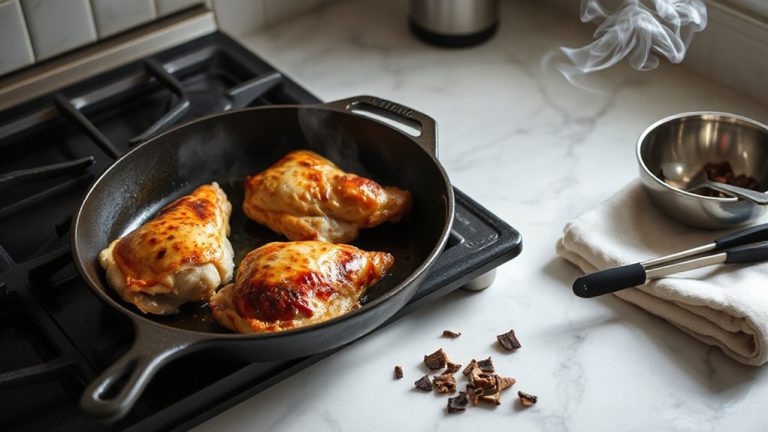
After building up those multiple layers of seasoning, your cast iron cornbread pan is ready for serious outdoor work, but maintaining that hard-won surface means paying attention after the grill session ends. The right cleaning technique guarantees you don’t strip away the polymerized oil-let the pan cool slightly, then wipe out residue with a soft cloth or use a minimal amount of hot water and a brush. Never soak it or use harsh detergents. Dry it thoroughly over low heat to prevent rust. Then, apply a whisper-thin coat of oil before storing. Your storage method matters just as much: keep it in a dry place, ideally with a paper towel inside to absorb moisture. A well-ventilated cupboard beats a damp garage. Consistent maintenance like this preserves non-stick performance and extends the pan’s lifespan far beyond typical care. When using your cornbread pan on the grill, consider pairing it with best wood chips for smoking chicken to enhance flavor during outdoor cooking sessions.
On a final note
You’ve built a resilient, non-stick surface tailored for high-heat grilling by seasoning your cast iron cornbread pan properly. Using smoke-point-rich oils like grapeseed or avocado guarantees durability, while closed-lid grilling distributes heat evenly, preventing hot spots. Multiple baked-on layers enhance performance over time. Maintaining the seasoning after each use preserves integrity, making the pan ideal for consistent outdoor baking. It’s a practical, long-term investment in flavorful, well-browned cornbread.