How to Store a Pellet Grill During Winter to Prevent Moisture Damage
Clean your pellet grill thoroughly after the last cook, removing grates and ash from the firepot. Let all components dry completely-moisture causes rust and auger issues. Empty the hopper fully and store pellets in airtight containers to prevent rot. Elevate the grill off damp surfaces and use silica gel in key areas to manage humidity. Cover it with a breathable, waterproof cover. Check it monthly to guarantee no moisture buildup-your grill’s longevity depends on these steps. There’s a smarter way to winterize every component.
Notable Insights
- Thoroughly clean the grill, removing ash, grease, and debris from the firepot, burn grate, and interior surfaces.
- Ensure all components are completely dry by leaving the grill uncovered in a ventilated area for 24 hours.
- Empty the hopper completely and store unused pellets in airtight containers to prevent moisture damage and rot.
- Place the grill on an elevated, non-conductive surface to prevent ground moisture from wicking into the unit.
- Use moisture absorbers like silica gel in the hopper, firepot, and grease tray, and seal vents to limit humidity buildup.
Clean Your Pellet Grill After Final Cook
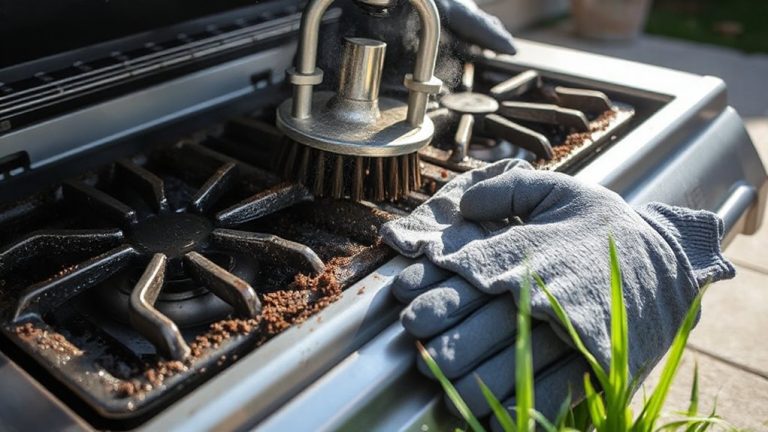
After you’ve finished your last cook of the season, it’s essential to give your pellet grill a thorough cleaning before stashing it for winter, since lingering grease, ash, and leftover pellets can lead to corrosion, pest infestations, or poor performance when you fire it up again. Proper grill maintenance isn’t just about appearance-it directly affects efficiency and longevity. Start by removing grates and cleaning them with a grill brush, then vacuum out ash from the firepot and burn grate. Wipe down interior surfaces to eliminate grease buildup, which can degrade components over time. Check the hopper and discard any remaining pellets; old or damp fuel compromises fuel quality, leading to incomplete combustion and inconsistent heat. A clean grill guarantees reliable startup come spring and preserves both parts and performance. Consistent care reflects smart ownership-don’t skip it.
Remove All Moisture Before Winter Storage
Moisture is one of the biggest threats to your pellet grill during winter storage, so you’ll want to make absolutely sure every component is bone dry before covering it up. After cleaning, let the grill sit uncovered in a dry, ventilated area for at least 24 hours to help residual moisture evaporate. If your grill has a dehumidify cabinet, use it according to the manufacturer’s instructions-it helps maintain internal dryness, especially in humid climates. Once dry, seal vents with weather-resistant tape or covers to prevent cold, damp air from entering the burn pot and firebox. This step is essential; unchecked airflow carries condensation that can corrode metal and damage electronics. While some models are built to withstand moisture better than others, even high-end grills benefit from proactive protection. Don’t rely solely on the cover-internal safeguards like a dehumidify cabinet and sealed vents considerably improve your grill’s longevity and performance come spring.
Empty Hopper and Prevent Pellet Rot
Though pellets might seem like inert fuel, leaving them in the hopper over winter can lead to trouble you’ll regret come spring thaw. Moisture seeps in, degrading pellet quality and encouraging rot or mold. This not only clogs augers but also compromises flavor and combustion. Proper hopper maintenance means emptying it completely before storage. Check for leftover fines at the bottom-those can attract moisture and pests. Store unused pellets in airtight containers to preserve integrity. Choosing a high-quality pellet grill can also make off-season maintenance easier and more effective.
| Issue | Cause | Prevention |
|---|---|---|
| Pellet rot | Trapped moisture | Empty hopper fully |
| Poor ignition | Compromised pellet quality | Use dry, fresh pellets |
| Auger jam | Leftover fines | Clean hopper interior |
| Bad flavor | Moldy or damp pellets | Store pellets properly |
This step is essential for reliable performance and long-term grill care.
Store Your Grill Off the Ground in a Dry Spot
Your pellet grill’s longevity hinges on where you park it during winter, and leaving it on damp soil or a concrete slab can spell trouble. Concrete may seem solid, but it wicks ground moisture, especially in freeze-thaw cycles, promoting rust on critical components like the firepot and auger. To avoid this, place your grill on a dry surface elevated above the ground. An elevated platform-like treated wood pallets, deck blocks, or a gravel pad-creates airflow underneath, reducing moisture buildup. This small lift makes a significant difference in protecting the grill’s undercarriage and electronic connections. Even in covered areas, humidity accumulates at ground level, so an elevated platform isn’t just helpful-it’s essential. Choose a sheltered, well-ventilated spot like a covered patio or dry shed, but never skip the lift. Doing so preserves structural integrity and guarantees reliable performance come spring.
Use Moisture Absorbers in Key Areas
A few strategically placed moisture absorbers can make all the difference in keeping your pellet grill in top shape over winter. You’ll want to focus on areas like the firepot, grease tray, and hopper, where humidity accumulates and rust prevention is critical. Silica gel packs or reusable dehumidifier bags work well, absorbing trapped moisture that could otherwise corrode metal components. While proper ventilation tips suggest allowing some air movement to discourage condensation, too much exposure risks moisture infiltration-so balance is key. These absorbers aren’t a fix-all, but they complement smart storage by managing humidity where airflow alone can’t reach. For long-term reliability, especially in damp climates, their use is a small effort with meaningful returns. Ignoring hidden moisture might seem harmless now, but over months, it undermines performance and shortens your grill’s lifespan. Investing in high-quality BBQ tools ensures you have the right accessories for maintenance and protection during off-season storage.
Cover With a Waterproof, Breathable Grill Cover
One of the most effective steps you can take to protect your pellet grill over winter is using a waterproof, breathable cover that shields against snow and rain while allowing trapped moisture to escape. This balance keeps internal components dry without trapping humidity, which can corrode metal and degrade performance. A high-quality cover also preserves grill aesthetics by resisting fading, cracking, and abrasion from harsh weather. Don’t underestimate cover durability-cheaper materials may save money now but often fail within a single season. For reliable protection, consider covers from Top Weber grill covers that are engineered for longevity and all-weather resistance.
| Feature | Benefit | Long-Term Value |
|---|---|---|
| Waterproof layer | Blocks rain and snow | Prevents rust and electrical issues |
| Breathable fabric | Allows vapor escape | Reduces internal condensation |
| UV-resistant coating | Protects color and texture | Maintains grill aesthetics |
| Reinforced seams | Enhances cover durability | Withstands wind and heavy weather |
Check Every Month to Prevent Winter Damage
Regularly checking your pellet grill over winter isn’t just cautious-it’s essential for longevity and performance when grilling season returns. You’ll catch early signs of moisture buildup, which ties directly into rust prevention. Even with a waterproof, breathable cover, condensation can form during freeze-thaw cycles, especially in humid climates. A quick inspection lets you wipe down surfaces and confirm the cover is intact and properly sealed. Don’t overlook pest control-rodents and insects often nest in unused grills, chewing wires or blocking fuel pathways. Look for droppings, strange odors, or obstructed augers. Checking monthly also guarantees pellets stay dry; damp fuel degrades quickly and can jam the hopper. These routine visits take minutes but save costly repairs later. Ultimately, a well-maintained grill performs more efficiently, lights faster, and delivers consistent heat-all key for quality outdoor cooking.
On a final note
You’ve cleaned the grease, dried every surface, and stored the pellets properly-now your pellet grill is ready for winter. A breathable, waterproof cover and monthly checks prevent moisture damage, while elevation off damp ground protects the frame. These steps aren’t just cautious; they’re essential for preserving precision components like the aug/Desktop and ignition system. Proper storage extends lifespan, guarantees reliable startup in spring, and maintains cooking performance-critical for consistent searing and smoke control.