The Science Behind Lid Position When Grilling Thick Cuts of Meat
You’ll get better results grilling thick cuts with the lid closed-it traps heat and creates a convection-like environment that cooks evenly, much like an oven. Leaving it open risks charring the outside while the inside stays undercooked, since heat can’t circulate properly. A closed lid guarantees consistent internal temperatures, improves moisture retention, and supports even doneness. For steaks over 1.5 inches, sealing in heat from the start is key. There’s more to mastering this technique than just timing-details matter.
Notable Insights
- Closing the grill lid traps heat, creating a convection-like environment for even cooking of thick cuts.
- A closed lid promotes consistent internal temperatures by enabling indirect heat circulation around the meat.
- Trapped hot air enhances moisture retention, preventing juices from escaping during prolonged grilling.
- Leaving the lid open increases direct flame exposure, raising the risk of surface charring before the center is done.
- Radiant and convective heat transfer under a closed lid mimics oven roasting for uniform doneness.
Why Lid Position Matters for Thick Cuts
When you’re dealing with thick cuts like a 1.5-inch steak or a whole chicken, leaving the lid open might seem like a way to keep an eye on things, but you’re actually sabotaging the cooking process. Heat escapes rapidly, creating uneven temperatures that hinder proper searing and internal doneness. Closing the lid traps rising hot air, forming a convection-like environment vital for consistent results. This isn’t just about speed-it’s about control. Proper lid use enhances flavor retention by preventing volatile compounds from evaporating too quickly. It also guarantees superior moisture control, keeping juices locked within the meat’s fibers. Without the lid, you lose both tenderness and taste. Even experienced grillers sometimes overlook this, mistaking visibility for better management. But effective grilling isn’t about watching-it’s about engineering the environment. For thick cuts, the closed lid isn’t optional; it’s essential for predictable, high-quality outcomes.
How a Closed Grill Cooks Thick Cuts Like an Oven
Though you might think grilling relies solely on direct flame, a closed grill actually transforms your setup into something closer to an oven, especially when handling thick cuts. With the lid shut, heat gets trapped, creating consistent temperatures throughout the chamber. This environment promotes convection circulation, where hot air moves evenly around the meat, cooking it uniformly from all sides. At the same time, radiant absorption allows the food to absorb infrared energy from the grates and surrounding metal, enhancing browning and depth of flavor. Unlike open-flame methods, this dual heat transfer mimics oven roasting, ensuring the interior cooks through without scorching the exterior. You gain better control, predictable results, and improved moisture retention. For thick steaks or roasts, that’s not just helpful-it’s essential. A closed grill isn’t just blocking wind; it’s creating a precision cooking space.
The Risk of Charring Thick Meat With the Lid Open
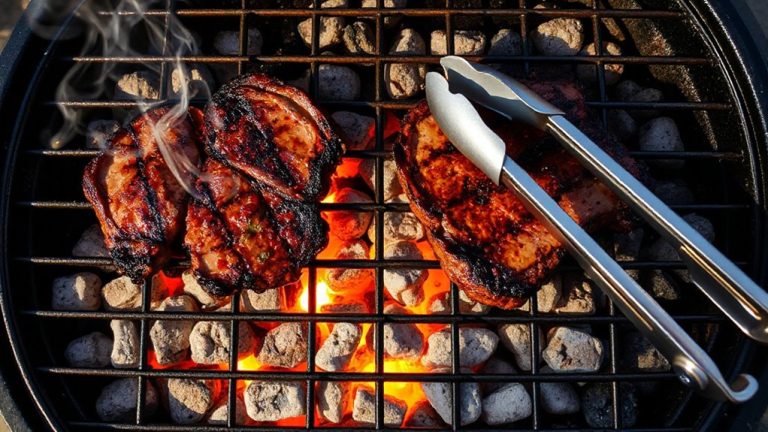
Leaving the lid open while grilling thick cuts might seem like a way to keep a close eye on the sear, but it quickly leads to uneven cooking and excessive charring. Without the lid to contain heat, the grill relies solely on direct flame, increasing the risk of surface burning before the center reaches the desired doneness. You’re fundamentally prioritizing exterior color over internal consistency, which often results in uneven carbonization-dark, bitter spots alongside undercooked areas. Thick steaks or roasts need radiant heat from all sides to cook evenly, and an open lid disrupts that balance. You might achieve a nice crust in spots, but the trade-off is a less controlled, predictable outcome. For better results, close the lid early to promote even heat distribution and minimize unwanted surface burning. It’s not just about avoiding flare-ups-it’s about mastering heat management for superior texture and flavor throughout.
How Heat Differs: Open vs. Closed Lid for Thick Cuts
Because heat behaves differently depending on lid position, you’ll see a clear gap in cooking performance between open and closed methods when grilling thick cuts. With the lid open, you’re relying mostly on direct heat, which sears the surface quickly but struggles to penetrate deeply. This can leave the center undercooked while the exterior risks charring. Closing the lid transforms your grill into an oven, trapping heat and circulating it around the meat. Now, indirect heat plays a bigger role, allowing temperature to build evenly and cook thick steaks or roasts through without over-browning the outside. You get better moisture retention and more consistent doneness from edge to center. While direct heat is great for crust development, indirect heat-activated by a closed lid-is essential for thicker pieces. You’re not just grilling; you’re managing a controlled thermal environment. That control is what separates good results from great ones.
When to Close the Lid on Thick Steaks and Roasts
When you’re working with thick steaks or roasts-cuts over an inch and a half-closing the lid early in the cook is the move that keeps temperature in check and cooking even. You’re fundamentally turning your grill into an oven, trapping heat to conduct steadily through the center without scorching the exterior. This is especially important when you’ve used a marinade-the extra time and stable environment support deeper marinade penetration, enhancing flavor beyond the surface. Closing the lid helps maintain the consistent internal rise needed for accurate doneness, directly influencing your resting technique later. Letting meat rest after grilling allows juices to redistribute, but if the internal temp wasn’t evenly managed due to an open lid, resting won’t fix uneven doneness. For thick cuts, sealing in that heat isn’t just helpful-it’s essential for control, flavor, and a result worth the cut’s cost.
6 Pro Tips for Grilling Thick Cuts Perfectly
Even if you’ve mastered the basics, grilling thick cuts perfectly means paying close attention to heat management and timing. Marinade penetration is essential-allow at least 4 hours (or overnight) for deeper flavor and tenderness. Use a two-zone fire to sear over high heat, then finish over indirect with the lid closed. Internal temperature matters: pull meat 5°F below target since carryover cooking occurs. Never skip resting time; 10–15 minutes lets juices redistribute, ensuring moist results. Here’s a quick reference:
| Cut Thickness | Grill Temp (°F) | Resting Time (min) |
|---|---|---|
| 1.5 inches | 400–450 | 5–10 |
| 2 inches | 375–400 | 10–15 |
| 2.5 inches | 350–375 | 15–20 |
| 3 inches | 325–350 | 20–25 |
| 3.5+ inches | 300–325 | 25–30 |
On a final note
You’ll get better results by closing the lid when grilling thick cuts-it creates an oven-like environment, ensuring even heat penetration without scorching the exterior. An open lid risks charred outsides and raw centers, especially on steaks over an inch thick. For consistent doneness and efficient cooking, keep the lid down. This method improves temperature control, reduces flare-ups, and preserves juices, yielding juicier, more flavorful meat every time.