Layering Smoke, Rub, and Sauce to Create a Multi-Dimensional BBQ Experience
You start building flavor early with clean, thin blue smoke at 225°F-hickory for pork, cherry for poultry-letting the meat absorb rich, smoky notes when it’s most receptive. A coarse rub of brown sugar, salt, and cracked pepper sticks better and forms a flavorful crust, especially after resting uncovered overnight. Then, in the final 15–30 minutes, add a balanced sauce-sweet, tangy, spicy-to caramelize without burning. Each layer should enhance the next, not overpower it. There’s more to how these elements interact at every stage.
Notable Insights
- Establish a smoke foundation early using thin blue smoke for clean, deep flavor absorption.
- Match wood type to meat: hickory for pork, fruitwoods for poultry, mesquite for beef.
- Apply a textured rub with sugar, salt, and spices to build crust and enhance browning.
- Rest the seasoned meat overnight uncovered to deepen flavor and improve bark formation.
- Glaze with sauce in the final 15–30 minutes to balance sweetness, tang, and smoke.
Build Your Foundation With Smoke
While you can always add more smoke later, getting the foundation right from the start makes a real difference in how your meat turns out. Proper smoke infusion begins early, when the meat is most receptive to absorbing wood flavors. You need steady, thin blue smoke-not thick billows-to achieve clean flavor development without bitterness. Maintain consistent temperatures between 225°F and 250°F, as fluctuations disrupt smoke absorption. Hardwoods burned efficiently produce the ideal smoke profile, penetrating the meat’s surface and bonding with fats and proteins. This initial phase sets the stage for deeper taste layers to follow. Over-smoking at this stage risks overwhelming the palate, so control matters more than quantity. You’re not just adding flavor-you’re building a base. When managed well, early smoke infusion enhances complexity without dominating, letting rubs and sauces play their supporting roles later. It’s precision work, but essential for balanced, professional-grade BBQ. Choosing the right type of wood is crucial, and best smoking wood can significantly influence the quality of your smoke.
Choose Wood to Enhance Your Meat’s Flavor
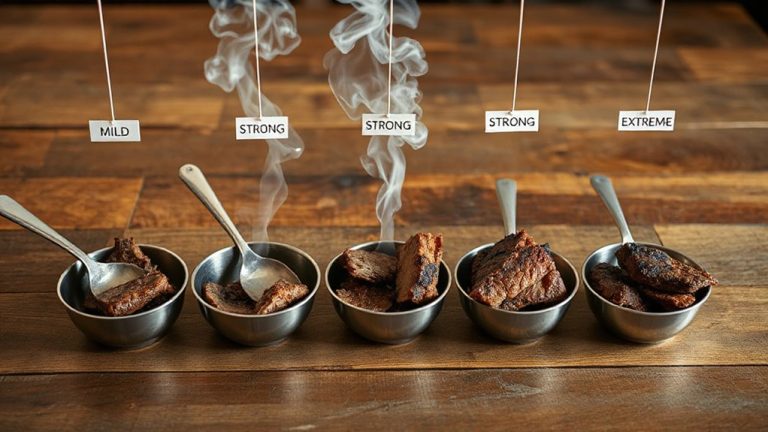
Why does hickory deliver bold, bacon-like notes while cherry wood imparts a subtle fruit-sweet finish? It comes down to wood chemistry and how different species interact with meat during slow cooking. Your choice of wood directly affects flavor infusion, shaping the final taste profile. Hickory’s strong smokiness suits pork shoulders and ribs, while fruitwoods like cherry or apple offer milder complexity ideal for poultry or ham. Effective wood pairing isn’t just tradition-it’s strategy. Mesquite burns hot and fast, best for beef brisket if monitored closely, whereas oak provides consistent, medium smoke perfect for long cooks. You’ll want to match wood intensity to meat richness: delicate fish needs alder, not walnut. Smoke is flavor, and the right wood elevates your protein without overpowering it. Mastering wood pairing means understanding combustion, moisture content, and time-each log or chip contributes to a layered, intentional taste experience you can’t achieve with sauce alone. For chicken, selecting the best smoke wood can make a significant difference in achieving balanced, delicious results, with top choices including best smoke wood for chicken.
Make a Rub That Crisps and Pops
A well-crafted rub does more than season-it builds texture, depth, and a savory crust that crackles when you press it with your fork. You’ll want a balanced mix of sugar, salt, and spices to promote proper crust formation while withstanding hours of smoke and heat. Brown sugar helps it caramelize, while kosher salt draws out surface moisture so the rub adheres and sears. A generous pinch of paprika adds color and a mild flavor burst, and cracked pepper brings just enough bite. Don’t skip coarse elements like crushed black pepper or finely chopped dried herbs-they add grit that aids browning. Apply it evenly, but don’t pack it down; you’re after crisp edges, not a paste. When roasted slow and low, the sugars and proteins undergo a Maillard reaction, creating a deeply flavored, shatter-ready crust. This isn’t just seasoning-it’s structure. For best results, choose high-quality ingredients by reviewing a trusted grilling spices buying guide.
Let the Rub Rest for Deep Flavor
Several hours-ideally overnight-are all it takes for your rub to transform from surface seasoning to flavor foundation. When you let the rub rest on the meat, moisture draws salt and spices inward, promoting deeper flavor penetration. This isn’t just about taste lingering on the surface-it’s about building complexity from within. Over time, the salts dissolve and migrate, seasoning the interior while drying the exterior for better bark formation. Meanwhile, the oils in spices slowly absorb moisture, triggering a subtle spice bloom that amplifies aroma and intensity. You’ll notice richer, more integrated flavors compared to when the rub is applied minutes before cooking. For best results, generously coat the meat and refrigerate uncovered. This simple delay doesn’t just save time on cook day-it elevates the entire profile. Skipping it? You’re settling for shallow seasoning when depth is within easy reach.
Apply Sauce at the Right Time
You’ve already let your rub work its magic overnight, building a seasoned crust and drawing flavor deep into the meat-now it’s time to think about when that glossy coat of sauce makes its entrance. Proper sauce timing is critical; apply too early, and the sugars burn, turning your glaze bitter and blackened. Wait too long, and the sauce never sets, leaving a thin, uneven layer. For best results, begin glaze application during the final 15 to 30 minutes of cooking, depending on heat intensity and sauce composition. This window allows caramelization without scorching, forming a sticky, flavorful shell. Use a brush for even coverage, letting each layer set slightly before adding more. Thick sauces need more time to adhere, while thinner ones set faster. Mastering sauce timing elevates your BBQ from good to exceptional-balancing texture, color, and depth through precise, informed glaze application.
Balance Sweet, Tangy, and Spicy in Your Glaze
Getting the balance right in your BBQ glaze means playing up the strengths of sweet, tangy, and spicy elements without letting one overpower the others. You want the maple sweetness to round out the edges, not drown the flavor. Tangy components like apple cider vinegar lift the profile and cut through fat, enhancing mouthfeel. Then, chili heat brings depth-but it should linger, not burn. The best glazes integrate these traits cohesively, evolving on the palate with each bite. Below is a guide to balancing core glaze elements effectively:
| Flavor Profile | Key Ingredient | Role in Glaze |
|---|---|---|
| Sweet | Maple syrup | Adds rich maple sweetness and gloss |
| Tangy | Apple cider vinegar | Brightens and balances richness |
| Spicy | Crushed red pepper | Delivers controlled chili heat |
Master this trio, and your glaze won’t just coat-it’ll elevate.
Layer Smoke, Rub, and Sauce Like a Pro
While smoke lays the foundation, it’s the interplay of rub, sauce, and timing that defines a great BBQ finish. You build depth by considering flavor pairing at every stage-smoked meat’s richness works best with a rub that has balanced heat and sweetness, like one with paprika, brown sugar, and garlic. When applied early, the rub forms a crust that enhances texture contrast, giving way to tender interior meat. Sauce shouldn’t mask the smoke but complement it; apply it late to avoid burning and preserve its bright, tangy notes. A glossy glaze over a coarse rub creates both visual and tactile appeal. Think of each layer as a deliberate choice-smoke for depth, rub for complexity, sauce for finish. Done right, your BBQ isn’t just cooked-it’s composed, with each bite offering balanced flavor pairing and satisfying texture contrast.
On a final note
You’ve layered smoke, rub, and sauce like a pro, and the results show. Proper wood selection imparts a clean, complementary flavor-hickory for boldness, apple for sweetness. Your rested rub formed a crisp bark, locking in taste. Applying sauce late prevented burning while adding gloss and balance. This methodical approach doesn’t just build flavor-it multiplies it. Master these stages, and your BBQ won’t just impress; it’ll consistently perform at a high level, pit after pit.