Mastering the Art of Campfire Frittatas in a Cast Iron Skillet
You’ll get the best results with a cast iron skillet-it holds heat evenly over coals, preventing scorching and hot spots. Build a two-zone fire for flexible cooking control, and pack simple, durable ingredients like vacuum-sealed cheese and dehydrated veggies. Preheat the skillet, use a light oil coat, then cook your frittata slowly for even doneness. Avoid soap and moisture to keep your pan seasoned. Flip carefully or finish with gentle heat. Master these basics, and you’ll access several proven variations that elevate your outdoor breakfast game.
Notable Insights
- Use a well-seasoned cast iron skillet for even heat distribution and reliable non-stick performance over campfire flames.
- Build a two-zone fire to sear ingredients on the hot side and gently cook the frittata on the cooler side.
- Pre-measure and pack durable, lightweight ingredients like dehydrated vegetables, vacuum-sealed meats, and shelf-stable cheese.
- Preheat the skillet over medium coals, then use a thin oil layer to protect seasoning and prevent sticking.
- Cook eggs slowly, flipping with a plate or using steady heat to avoid burning and ensure even doneness.
Use Cast Iron for Better Heat Control
A cast iron skillet is your best bet for cooking campfire frittatas because it delivers even, consistent heat over an open flame. You’ll appreciate its superior heat retention, which keeps temperatures stable even when you shift the pan or add cooler ingredients. That means no more hot spots burning one side while the other stays runny-just reliable, even cooking from edge to center. Unlike thinner pans that warp or heat unevenly, cast iron responds gradually and holds thermal energy well, letting you focus on technique, not temperature swings. It’s rugged, too, built to last decades with basic care. You can set it directly in the coals or suspend it over flames without worrying about damage. The seasoned surface also improves over time, naturally resisting sticking. For campfire cooking where control is limited, cast iron gives you the predictability you need. With this pan, you’re not just cooking outdoors-you’re mastering it. For optimal results, choose one of the top picks for cast iron cookware.
Build the Right Fire for Your Skillet
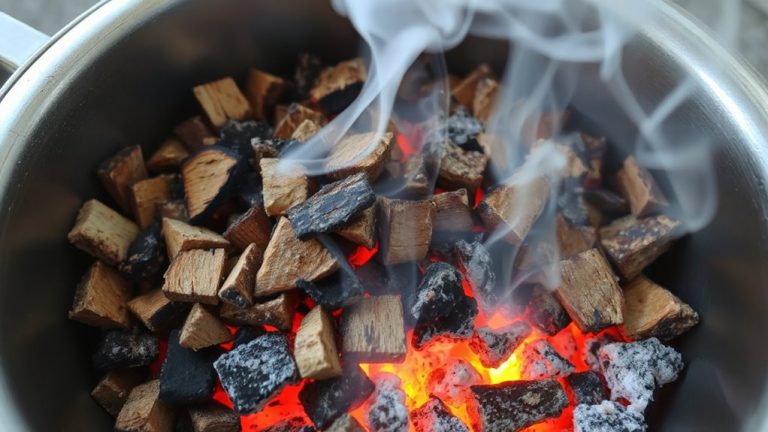
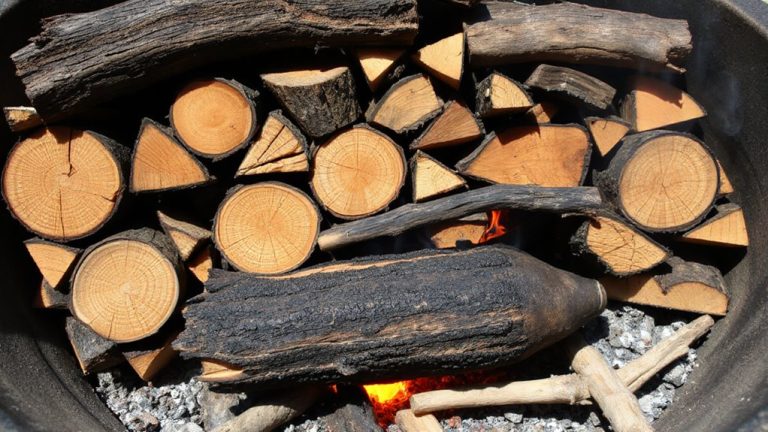
Even if you’ve got the best cast iron skillet, your frittata won’t cook right without a properly built fire-so get this step right, and everything else follows. Proper fire placement guarantees even heat regulation, preventing hot spots that can scorch your meal. Start with a two-zone fire: one side hot for searing, the other cooler for slower cooking. Use well-seasoned hardwood for steady heat and minimal smoke. Adjust flame height and skillet position as needed-this dynamic control is key to consistent results.
| Fire Type | Best For |
|---|---|
| Lean-to | Simmering, gentle cooking |
| Teepee | Quick, high heat |
| Log Cabin | Long burn, stable output |
Elevate the skillet on a grill grate for better airflow and safer handling. With smart fire placement and attentive heat regulation, your frittata cooks evenly-no guesswork, just reliable outdoor technique.
Pick Simple, Packable Frittata Ingredients
Efficiency starts with your ingredient choices-when you’re miles from a grocery store, simplicity and portability aren’t just convenient, they’re essential. Smart ingredient selection makes or breaks your campfire frittata. Stick to non-perishables or items that hold up well: pre-chopped dehydrated veggies, vacuum-sealed cooked meats, and shelf-stable dairy like vacuum-packed cheese. Eggs? Bring them in a leak-proof container-mess-free and crack-resistant. Whole ingredients beat pre-mixed kits; they’re lighter, cheaper, and give you control. For meal prep, pre-measure everything at home so you’re not fumbling with zip-locks at camp. Consider weight and volume-each ounce counts when packing light. Diced bell peppers, freeze-dried onions, or even canned diced tomatoes (packed in oil) add flavor without spoilage risk. Avoid bulky packaging; repack into resealable bags. This approach streamlines cooking, reduces waste, and guarantees consistency no matter the terrain.
How to Cook a Campfire Frittata
While the crackle of the campfire sets the mood, getting your frittata just right hinges on heat control and equipment choice-you’ll want a heavy-bottomed cast iron skillet for even heating and minimal scorching. Start by preheating the skillet over medium coals, then add a thin layer of oil to leverage proper skillet seasoning methods, ensuring ingredients won’t stick. Pour in your beaten eggs and mix-ins, cooking slowly to avoid browning the base too quickly. Use a wide, thin spatula to check the edges and gently lift them, letting uncooked egg flow underneath. For frittata flipping techniques, a confident, swift inversion onto a plate-then sliding it back into the skillet-is most reliable, though cooking through without flipping works well with careful heat management. The skillet’s retained heat allows for consistent finish, mimicking an oven’s broil, making it ideal for campfire precision. Choosing the right meat blend can elevate campfire meals, and for burgers, a mix featuring Best Meat Blends for Burgers ensures rich flavor and optimal fat content.
Avoid These Cast Iron Mistakes
A well-maintained cast iron skillet is your best ally for campfire frittatas, but common missteps can turn that trusted pan into a sticky frustration. Skipping proper rust maintenance invites corrosion, especially after outdoor use where moisture lingers. Always dry your skillet thoroughly-never let it air-dry-and apply a light coat of oil to prevent oxidation. Equally critical are consistent seasoning techniques: many camp cooks oil too heavily, leading to gummy buildup instead of a smooth, non-stick surface. For best results, use thin layers of high-smoke-point oil, heated gradually to polymerize. Repeating this process after each use extends your skillet’s life and performance. Avoid soap unless absolutely necessary, and never soak the pan. With mindful upkeep, your cast iron won’t just survive the elements-it’ll improve over time, delivering flawless frittatas trip after trip. Vintage cast iron picks can offer superior heat retention and durability when sourced from reputable eras and manufacturers. Proper care turns a simple tool into a legacy piece.
3 Outdoor-Tested Campfire Frittata Variations
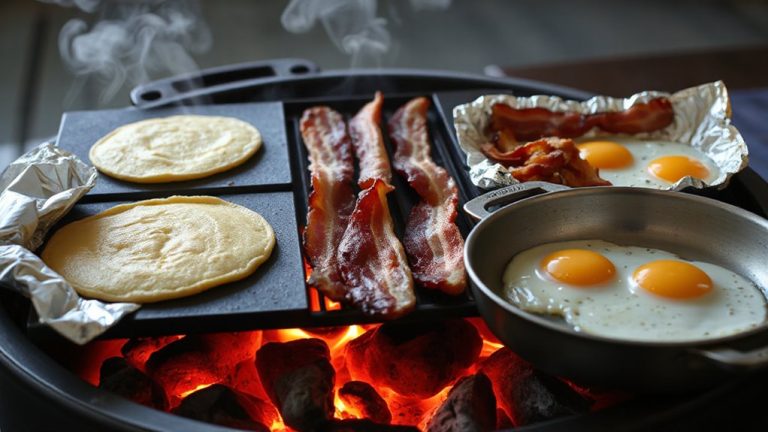
What makes a campfire frittata truly stand out in the wild? It’s your bold use of outdoor-tested variations that elevate it from basic to exceptional. You’re not just cooking eggs-you’re layering flavors that thrive over open flames. Think smoky bacon with sharp cheddar, or wild mushrooms paired with herbed goat cheese. Your cheese options should melt well but hold character under heat; feta, Gruyère, and pepper jack all perform reliably. Don’t overlook herb pairings: thyme and rosemary endure high heat, while chives or parsley added post-cook retain freshness. You’ll find sturdy vegetables like bell peppers or onions caramelize beautifully in the cast iron, deepening flavor. These variations aren’t random-they’re field-proven combinations that balance richness, texture, and fire resilience. When you tailor ingredients to outdoor conditions, your frittata stops being just breakfast and becomes a demonstration of smart, flavorful campfire craft.
On a final note
You’ve got the tools and techniques to master campfire frittatas in a cast iron skillet. Proper fire control, ingredient prep, and skillet care make all the difference. Cast iron retains heat evenly, delivering consistent results outdoors-something lightweight pans can’t match. While the process demands attention, the payoff is flavorful, well-cooked meals built over flame. With practice, avoiding common mistakes becomes second nature, turning outdoor cooking into reliable, satisfying performance.