The Art of Mexican Salsa De Nogada for Festive Grilling
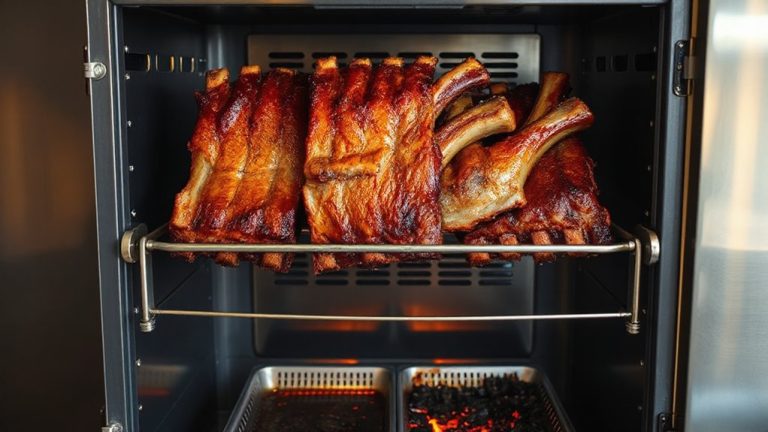
You’re grilling arrachera, but salsa de nogada takes it further-its cool, creamy walnut base balances the charred heat of the meat. Make it in September, when Puebla’s Nuez de Castilla walnuts are plump and mild, soaked in milk to preserve their pale hue. Blend in pears, apples, and fresh cheese for sweetness and silkiness, then crown with pomegranate seeds for crunch and color. Roast poblanos carefully for smoky depth without bitterness. This is authentic yet adaptable, tradition refined for modern outdoor feasts. There’s more to perfecting this balance than meets the eye.
Notable Insights
- Salsa de nogada enhances grilled meats like arrachera with its cool, creamy walnut-based sauce and seasonal fruit toppings.
- Use fresh September-harvested Nuez de Castilla walnuts, soaked in milk to preserve color and flavor.
- Roast poblano peppers evenly over flame, then steam and peel them to maintain tender texture and smoky depth.
- Blend milk-soaked walnuts with fresh cheese, pears, apples, and cinnamon for a balanced, velvety sauce.
- Garnish with pomegranate seeds and diced fruit to honor tradition while adding freshness and patriotic color.
Serve Salsa De Nogada at Your Asada
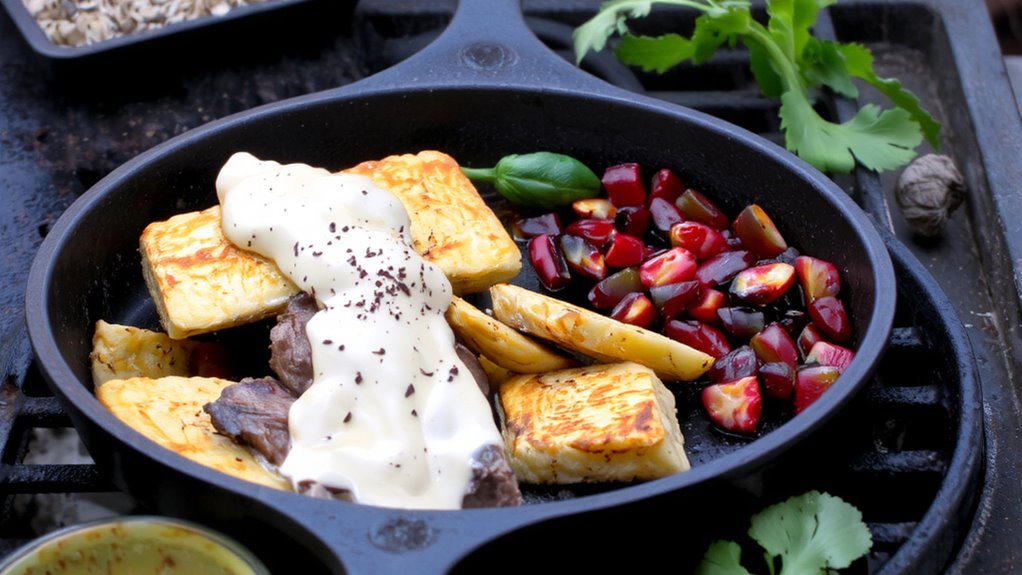
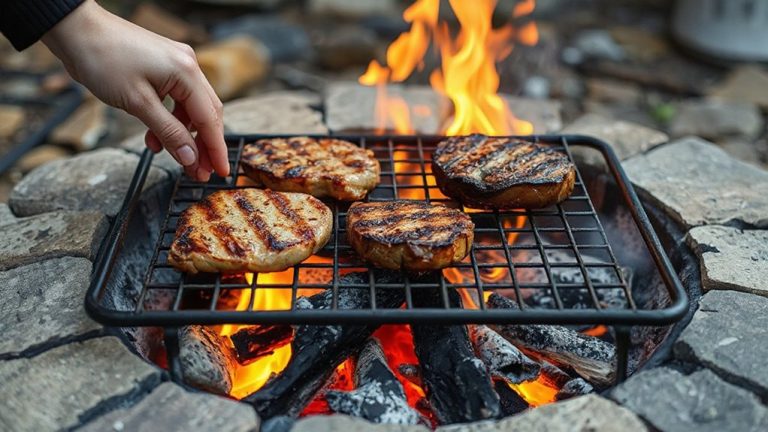
While you might not typically reach for a cold, creamy sauce at a smoky backyard asada, serving salsa de nogada alongside grilled meats can elevate your cookout with a bold nod to Mexican tradition. This variation of chile en nogada features a rich, walnut-based sauce made from hand-peeled Nuez de Castilla walnuts from Puebla, soaked in milk to preserve their pale hue and mild flavor. Blended with fresh cheese, milk, and a touch of cinnamon and sugar, it offers a cool, luscious contrast to smoky arrachera or pollo asado. You’ll find its subtle sweetness balances well with charred edges, while pomegranate seeds and diced fruit add texture and seasonal flair. Though unconventional, pairing salsa de nogada with grilled meats isn’t just festive-it’s a flavorful homage to heritage, turning any asada into a celebration of Mexico’s culinary artistry.
Why September Has the Best Walnuts and Pomegranates?
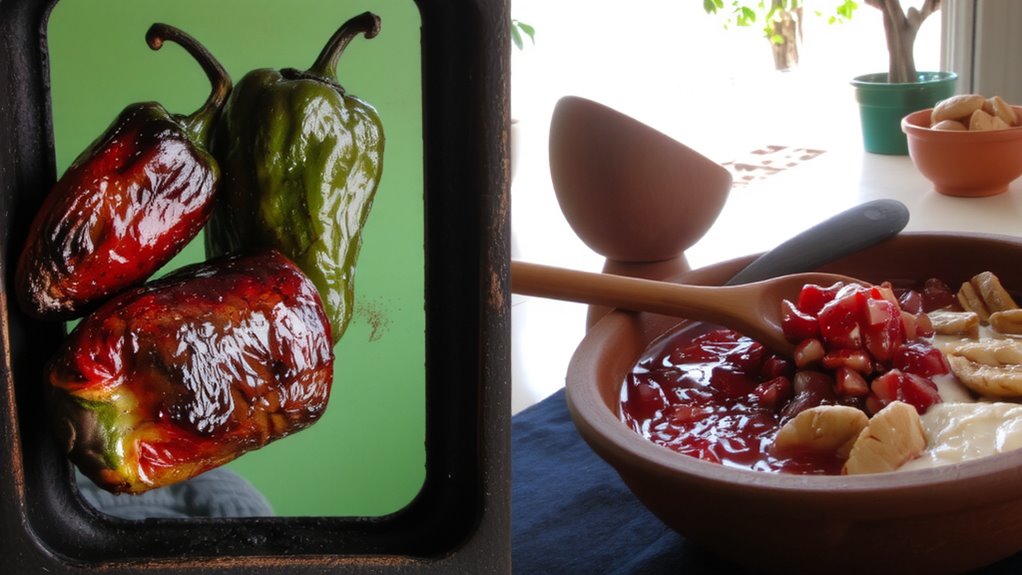
You’ve already seen how salsa de nogada can transform a backyard asada with its cool, creamy layers and festive colors, but the real magic lies in timing-specifically, why September delivers the best version of this iconic dish. That’s when Nuez de Castilla walnuts from Puebla peak-fresh, tender, and perfect for a traditional Nogada recipe. They’re hand-peeled and soaked in milk, deepening their rich, delicate flavor. Pomegranates hit their stride too, yielding plump, juicy fresh pomegranate seeds that pop with every bite.
| Ingredient | Peak Quality in September | Role in Salsa de Nogada |
|---|---|---|
| Nuez de Castilla | Plump, creamy texture | Base for smooth, nutty sauce |
| Pomegranate | Sweet-tart ripeness | Burst of color and freshness |
| Milk-soaked nuts | Enhanced aroma and smoothness | Essential for authentic depth |
This seasonal harmony guarantees unmatched authenticity, both in taste and patriotic presentation.
Roast Poblano Peppers for Smoky Depth
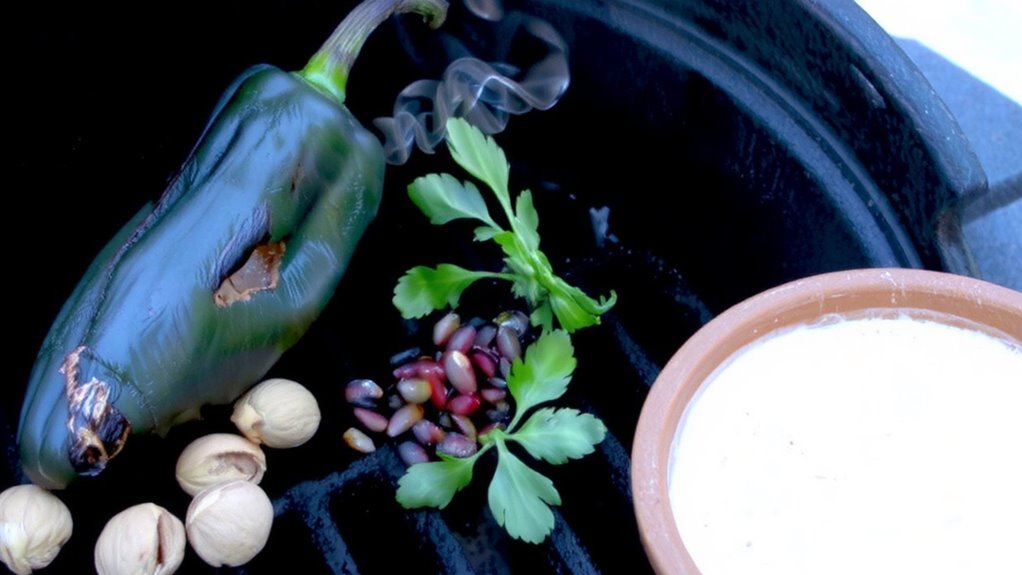
Getting the roast on poblano peppers just right makes all the difference when you’re building the layered flavor of salsa de nogada. You’ll want to roast poblano chiles over an open flame or under a broiler until the skin is evenly charred, rotating them frequently for consistent results. The blistered, darkened skin develops a smoky depth that raw peppers simply can’t offer. Once charred, wrap the chiles in a cotton towel and let them steam under a glass bowl for about 20 minutes-this loosens the skin, making peeling easier. Use a paring knife to gently remove the blackened layers without damaging the tender flesh beneath. Then, carefully slit each pepper lengthwise, keeping the stem intact, and remove the seeds and veins. Properly roasted poblano chiles deliver the rich, smoky depth essential to authentic salsa de nogada. For added heat and complexity, consider blending in a small amount of best hot peppers for salsa.
Make the Walnut Sauce With Pears and Apples
After roasting and peeling the poblanos to bring out their smoky depth, your focus shifts to crafting the heart of chiles en nogada: the walnut sauce. You’ll blend 4 cups of peeled Nuez de Castilla walnuts-soaked in milk and hand-crushed for richness-with goat or fresh Mexican cheese, 2 tablespoons sugar, and cold water until smooth. Add seasonal pears and apples for subtle sweetness and body, enhancing the sauce’s texture and balancing its richness. If it thickens too much, a splash of milk restores a spoonable consistency. Serve the walnut sauce at room temperature-it clings better without chilling the chiles en nogada.
| Ingredient | Purpose | Quantity |
|---|---|---|
| Walnuts | Creamy base | 4 cups |
| Pears & Apples | Natural sweetness | 1 cup, blended |
| Milk | Adjust consistency | As needed |
Top generously with pomegranate seeds and parsley for color and contrast.
How to Pair With Grilled Meats and Tortillas
While chile en nogada isn’t grilled itself, its complex sweet-savory profile makes it an excellent centerpiece alongside robust grilled meats like arrachera or pollo asado. You’ll find the richness of the picadillo-spiced ground meat with fruits-balances beautifully with the smoky char of well-seasoned grilled meats. The cool, creamy walnut sauce (nogada) offers a revitalizing contrast to the heat from the grill, especially when served alongside warm tortillas fresh off the comal. Pairing Chile en Nogada this way turns a festive dish into a full outdoor meal experience. Opt for lightly grilled tortillas to retain pliability and flavor without overpowering. This combination doesn’t just work-it elevates both elements, letting you enjoy seasonal authenticity with the satisfaction of classic barbecue. When you serve Chile en Nogada with grilled meats, you’re blending tradition with fire-kissed depth in a way that’s harmonious, satisfying, and perfect for celebratory grilling. For best results, use a best comal for tortillas to ensure even heating and authentic texture.
Balance Tradition and Innovation in Flavor
Because chiles en nogada carries such deep historical and cultural weight, tampering with its flavor profile means maneuvering more than just taste-it’s about respecting a culinary emblem tied to Mexican independence and regional identity. The white sauce, made from hand-peeled Puebla walnuts soaked in milk, must remain velvety and mild to honor tradition. You’ll want to balance tradition and innovation in flavor by keeping the stuffing’s sweet-savory core-peaches, apples, raisins, and pine nuts-intact while considering subtle updates. Yet, as seen when modern chefs alter key elements, even slight deviations can invite criticism. Seasonal preparation in September guarantees peak freshness of pomegranates and walnuts, reinforcing authenticity. When grilling, pair the dish carefully to preserve its complexity. True creativity here isn’t about reinvention, but refinement-respecting history while enhancing natural flavors through skillful, mindful cooking.
On a final note
You’ll find salsa de nogada elevates your asada by blending seasonal walnuts, fresh pomegranate, and roasted poblano into a rich, complex sauce. Its cool creaminess balances grilled meats’ smokiness, while the fruit adds brightness. When made with ripe autumn produce, it performs exceptionally, enhancing tradition without sacrificing flavor. This sauce isn’t just festive-it’s a practical, flavorful companion for outdoor cooking, merging heritage and innovation on the plate.