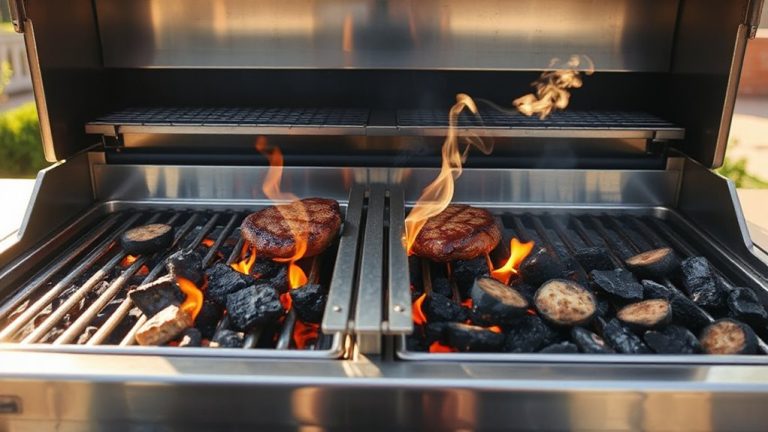
Cleaning a Portable Stove After Cooking Greasy or Sticky Foods
Let your stove cool completely before cleaning to avoid burns and warping. Wipe spills while it’s still slightly warm-this softens sticky residues without risking damage. For burnt-on grease, use a baking soda paste and a soft brush; it’s gentle on surfaces and effective. Remove burners regularly, clean gas ports with a toothpick, and soak them in soapy water. Always dry thoroughly before storing. There’s more to mastering post-cook cleanup than you might think.
Notable Insights
- Let the stove cool completely before cleaning to avoid burns and prevent damage to components.
- Wipe greasy spills with a damp microfiber cloth while the surface is slightly warm for easier removal.
- Apply a baking soda paste to burnt-on residue, let sit 10–15 minutes, then gently scrub with a soft brush.
- Remove burners and clean gas ports with a soft brush or toothpick to maintain proper flame function.
- Dry all parts thoroughly before storage to prevent corrosion and ensure safe, long-term use.
Let Your Stove Cool Before Cleaning
While it might be tempting to wipe down your portable stove right after cooking, you should always let it cool completely before beginning any cleaning. Rushing this process compromises both stove safety and cleaning timing, two critical factors in maintaining your gear. A hot surface can cause burns or warp delicate components, especially on compact models made with lightweight alloys. Furthermore, residual heat may distort cleaning cloths or leave behind melted residues that are harder to remove later. Waiting guarantees the stove’s parts stabilize, allowing for more effective and safer maintenance. Proper cleaning timing doesn’t just protect you-it extends the lifespan of your stove. In outdoor cooking, where reliability is paramount, neglecting stove safety during cleanup can lead to malfunction during your next BBQ or camping trip. Letting it cool is a small delay that prevents big problems.
Wipe Spills While Slightly Warm
Since waiting for your stove to cool completely is essential for safety, you shouldn’t wait too long before tackling spills-wiping them while the surface is still slightly warm makes removal easier without risking damage. When the residue is warmed, grease and sticky food bits loosen slightly, improving spill containment and reducing the effort needed for cleaning. A damp microfiber cloth works best here, lifting grime before it fully hardens. This brief window offers ideal surface protection, preserving the stove’s finish over time. Delaying beyond this point can lead to stubborn buildup, while cleaning too soon risks burns or warping. For outdoor cooking enthusiasts who rely on portability and efficiency, this step strikes the right balance between practicality and maintenance. Regular attention during this phase extends the stove’s lifespan and supports consistent performance, especially after heavy use like BBQ sessions. It’s a small habit that delivers measurable benefits.
Remove Burnt-On Residue With Baking Soda
If you’ve let spills cool completely or dealt with flare-ups during a hearty outdoor cook, you’ll likely face stubborn, burnt-on residue-but don’t reach for harsh chemicals just yet. Instead, reach for baking soda, a mild alkali that lifts grime without damaging surfaces. Mix it with a few drops of water to form a baking soda paste, then spread it over the affected area. Let it sit for 10–15 minutes to break down the carbonized layer. Afterward, use gentle scrubbing with a non-abrasive pad or soft brush to remove the residue. You’ll notice it loosens effectively, especially on enamel or stainless steel. This method protects your stove’s finish while delivering reliable results. Unlike chemical cleaners, baking soda won’t leave toxic fumes or residues, making it safer for equipment used in food prep. It’s a practical, eco-conscious approach well-suited to outdoor cooking routines.
Clean Burners and Prevent Igniter Clogs
A clean burner isn’t just about looks-it’s essential for consistent flame performance and fuel efficiency. Grease and food debris can block gas ports, leading to uneven flames or weak ignition. To clean burners effectively, remove them and inspect each port for blockages. Use a soft brush or toothpick to dislodge buildup, avoiding metal tools that could damage the surface. For deeper grime, soak the burners in warm, soapy water, then rinse and dry thoroughly. Keeping clean burners not only improves cooking results but helps prevent igniter clogs, which are common after cooking greasy meals. Clogged igniters may fail to spark, forcing you to use lighters-a safety concern and inconvenience. Regular maintenance guarantees reliable starts and extends your stove’s lifespan. Taking a few minutes after each use to inspect and wipe down components goes a long way to prevent clogs and maintain peak performance outdoors.
Store Your Stove Completely Dry
Lettting your portable stove dry fully before packing it away keeps performance intact and prevents long-term damage. Proper ventilation is essential during this stage-leave the stove assembled in an open area, allowing air to circulate around burners and beneath the base. Even small amounts of residual moisture can compromise fuel lines or corrode ignition components over time, especially with frequent use. For effective moisture control, avoid stowing the unit in sealed bags or damp environments like car trunks or basements. Instead, store it in a cool, dry place with consistent airflow. If you’re camping, wait until morning dew has lifted before breaking down your setup. Users who prioritize thorough drying report fewer ignition issues and longer appliance life. While it might be tempting to pack quickly, taking 10–15 extra minutes guarantees durability and reliability on your next cookout. Consistent drying isn’t just cleanup-it’s preventative maintenance.
On a final note
You’ve kept your portable stove in top shape by cleaning it promptly and properly. Regular maintenance prevents clogs, guarantees consistent flame performance, and extends the device’s lifespan. While outdoor cooking demands durability, even rugged gear suffers without care. Grease and debris compromise efficiency, especially around burners and igniters. Drying thoroughly before storage prevents corrosion. A well-maintained stove delivers reliable results, whether you’re frying bacon or simmering sauce on a weekend trip.