Using a Konro Grill to Char Fresh Peppers for Romesco Sauce
You get deeper smokiness charring peppers on a konro grill thanks to its intense, radiant heat and hardwood coals. Roast firm red bell and Padrón peppers 8–12 minutes, turning often for even blistering. Let them steam in a covered bowl to loosen skins effortlessly. The grill’s precise heat builds a smoky foundation ideal for romesco. Blend charred peppers with toasted almonds, garlic, and smoked paprika. Adjust texture and acidity to taste. Use lingering embers to enhance other ingredients-there’s more to uncover.
Notable Insights
- Choose sweet red bell peppers for flavor and Padrón or guindilla peppers for subtle heat.
- Use the konro grill’s high, direct heat to blister peppers evenly, turning frequently for 8–12 minutes.
- Cool peppers in a covered bowl or paper bag to trap steam and ease peeling.
- Peel charred skins after cooling-they should separate cleanly from the tender flesh.
- Leverage konro grill’s smoky char to build depth in romesco sauce naturally.
Choose the Best Peppers for Romesco
Peppers set the foundation for a great romesco sauce, and your choice directly impacts flavor, heat, and color. You’ll want to evaluate pepper varieties carefully-roasted red bell peppers bring sweetness and depth, while padrón or guindilla add subtle heat and complexity. Each variety contributes unique flavor profiles that shape the final sauce. Sweet peppers caramelize well, enhancing richness, whereas slightly spicy types introduce a nuanced kick that lingers. When selecting, look for firm, glossy skins, which char evenly and peel cleanly. Mixing varieties gives you a more dynamic sauce, balancing smokiness, fruitiness, and warmth. When using your konro grill, make sure to clean the grates thoroughly after charring peppers to maintain flavor integrity and prevent residue build-up, and using the best grill brushes can make this task safer and more effective. Though charring comes later, your initial choice determines much of the outcome. Romesco thrives on contrast, so combining mild and moderately spicy peppers often works best. Ultimately, the right blend of pepper varieties elevates both aroma and texture, ensuring your sauce has depth, character, and authenticity.
Char Peppers on a Konro Grill
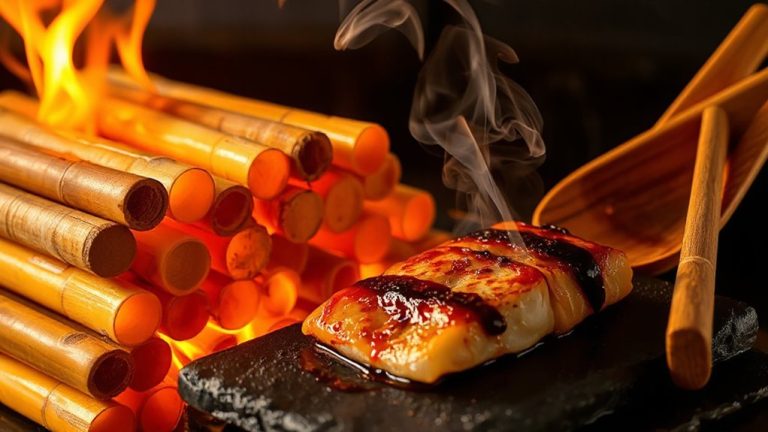
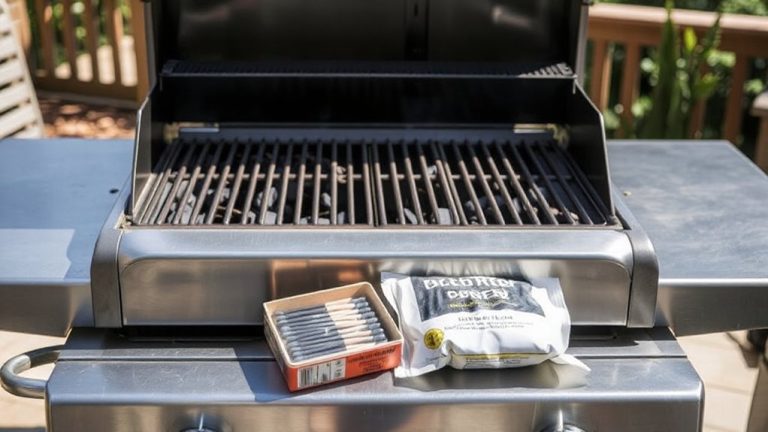
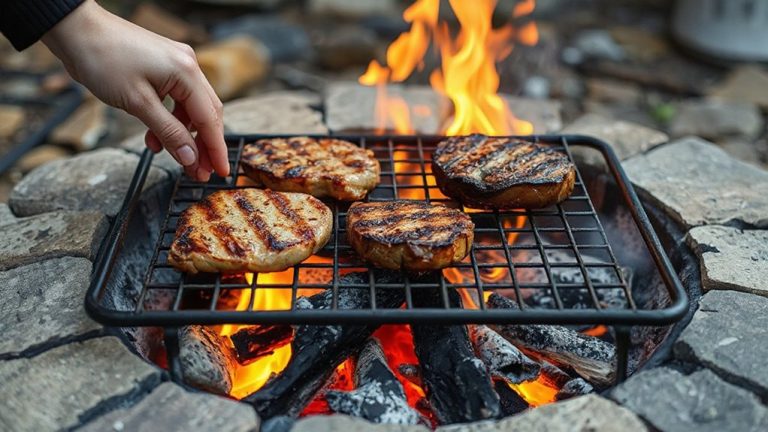
You’ll find that charring peppers over a konro grill brings out a deeper, smokier flavor than indoor methods, thanks to the high heat and direct flame. The konro’s compact design focuses intense heat upward, ideal for blistering pepper skins quickly. Heat control is key-adjust coal placement to maintain consistent temperatures without burning. Too much flame chars the outside before the inside softens, ruining texture. Grilling time typically runs 8–12 minutes, turning peppers with tongs until all sides blacken evenly. Thicker-walled peppers need closer monitoring to avoid undercooking. Unlike gas stoves or broilers, the konro delivers radiant and convective heat simultaneously, enhancing caramelization. This direct-fire method gives more precision than indoor options, assuming you manage airflow and coal spread. With practice, heat control becomes intuitive, and grilling time shortens as you learn pepper responses. It’s efficient, effective, and elevates your romesco’s base ingredient with authentic char. For best results, consider using a konro grill with adjustable height.
Peel Roasted Peppers Easily
Once the peppers have cooled slightly after roasting, peeling them becomes far easier, as the charred skin separates smoothly from the tender flesh beneath. Your cooling technique matters-let the peppers rest in a bowl covered with a plate or sealed in a paper bag for 10 to 15 minutes. This traps steam, loosening the skin for efficient skin removal. You’ll find the difference striking compared to peeling immediately. Using your fingers or a paring knife, gently rub or scrape away the blackened exterior; the softened layer should slip off cleanly. A konro grill’s even, radiant heat chars peppers uniformly, which enhances both texture and ease during peeling. This controlled charring, combined with proper cooling, makes the process remarkably consistent. Unlike gas stoves or broilers, the konro’s concentrated heat streamlines prep work, reducing mess and effort. It’s a small step, but one that reflects how thoughtful design improves practical tasks in outdoor cooking.
Make Smoky Romesco Sauce
That even char you achieved on the peppers using the konro grill isn’t just about clean peeling-it’s the foundation of a deeply layered Romesco sauce with authentic smokiness. The konro’s consistent radiant heat reveals a genuine smoky flavor other methods often lack. Unlike gas stoves or ovens, the open charcoal setup introduces a subtle, complex smoke that enhances depth without overpowering. For maximum depth enhancement, combine the charred peppers with roasted almonds, garlic, and smoked paprika directly on the grill. The residual heat helps meld flavors seamlessly. A key advantage of this cooking style is the precise control offered by adjustable airflow vents, which maintain optimal grilling temperatures.
| Element | Konro Advantage | Result in Sauce |
|---|---|---|
| Heat Source | Charcoal radiant heat | Intense, even char |
| Cooking Method | Open-flame roasting | Authentic smoky flavor |
| Thermal Control | Adjustable airflow | Precise depth enhancement |
Adjust Texture and Seasoning to Taste
A well-balanced Romesco sauce shouldn’t just taste bold-it should feel intentional in both texture and seasoning. You’ve built depth on the konro grill, but now it’s your call to fine-tune the final result. For ideal texture balance, pulse the mixture to your preference-smooth for drizzling, chunky for hearty dipping. Add a splash of water or vinegar if it thickens too much. Taste critically, then adjust with salt, lemon, or smoked paprika for seasoning precision. Romesco shouldn’t mask its ingredients but highlight them with clarity. A touch of sherry vinegar brightens; a drizzle of olive oil rounds sharp edges. Remember, grilled peppers vary in sweetness and moisture, so no two batches are identical. Your palate is the best tool-trust it. Small tweaks make a significant difference in complexity and cohesion. Final consistency and flavor should complement, not overwhelm, grilled proteins or crusty bread.
Use Leftover Konro Heat for Extra Depth
While the main cook finishes, don’t let that lingering konro heat go to waste-those diminishing embers are still working for you. The residual heat, though no longer ideal for searing, is perfect for gently toasting nuts or drying out stale bread for croutons. You’re not just reusing energy; you’re deepening flavor. Place almonds or hazelnuts near the edge of the grill, where the temperature is lower, letting them absorb a subtle smoky residue from the metal and leftover ash. This small step adds complexity to your romesco, enhancing its earthy profile without overpowering it. Unlike gas or electric methods, the konro’s natural cooling cycle offers a gradient of heat perfect for layered cooking. It’s efficient, sustainable, and makes full use of the grill’s capabilities. Smart use of residual heat shows thoughtful technique-something experienced outdoor cooks value more than brute flame.
On a final note
You’ve seen how a konro grill’s steady, radiant heat chars peppers evenly, enhancing their sweetness while adding a subtle smokiness essential for authentic romesco. This portable grill performs reliably, transferring heat efficiently through its binchotan charcoal. The result is deeply flavored sauce with complexity hard to achieve indoors. Using residual heat for toasting nuts or bread boosts efficiency. For outdoor cooks valuing precision and flavor depth, the konro isn’t just practical-it’s a worthwhile upgrade.