Minimizing Fuel Consumption by Optimizing Fire Shape Around the Spit
You’re wasting fuel if your fire’s shape is off-start with a pyramid or star log arrangement for even flames and better heat distribution. Position coals in a two-zone layout or centered under the spit, depending on what you’re cooking. Curve the coal bed slightly to reflect heat upward and keep the hottest coals beneath the meat’s thickest part. This focused approach cuts wood use, avoids flare-ups, and improves cooking precision-efficiency isn’t accidental, and there’s a smarter way to build every time.
Notable Insights
- Use a pyramid or star fire shape to promote even burning and reduce excess fuel use.
- Position coals in a two-zone layout to match cooking needs and improve heat efficiency.
- Shape the coal bed with a low center and raised edges to focus heat under the meat.
- Align the hottest coals directly beneath the meat’s thickest part for targeted, efficient cooking.
- Avoid uneven log piles by stacking wood tightly to maintain airflow and minimize fuel waste.
Start With the Right Fire Shape
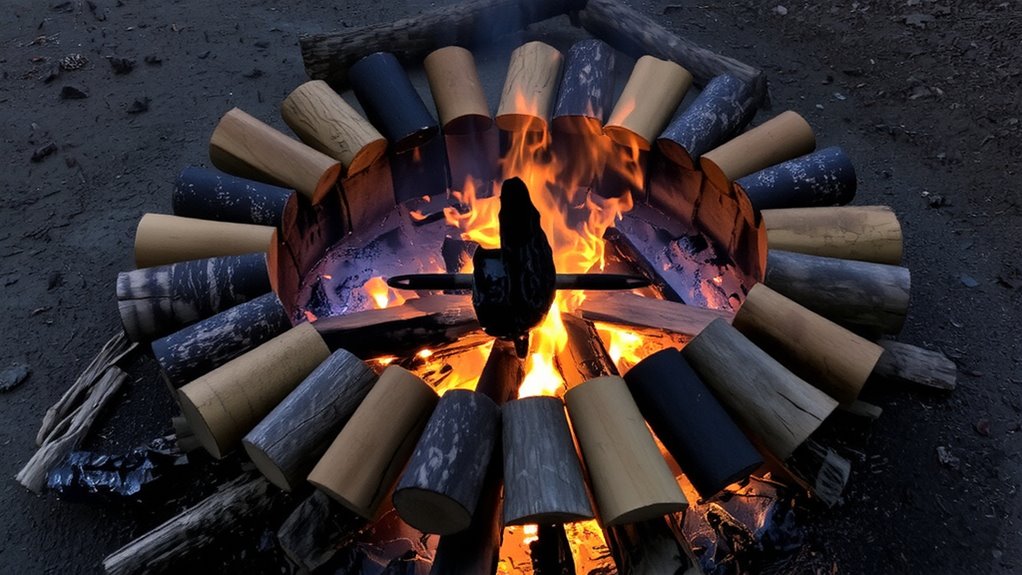
While you might think the key to efficient outdoor cooking lies solely in fuel quality or heat control, starting with the right fire shape can actually make a big difference in how well your fire burns and how evenly your food cooks. A well-structured fire promotes fire symmetry, ensuring flames rise uniformly and minimize hot spots. This symmetry directly supports heat balance, distributing warmth evenly across your cooking surface. You’ll notice less flare-ups and more consistent temperatures, especially when roasting over extended periods. Logically arranged logs-like in a pyramid or star shape-burn more efficiently than haphazard piles, reducing fuel consumption. Poor symmetry leads to uneven combustion, forcing you to add wood more often. When you prioritize shape from the start, you’re not just building a fire; you’re engineering a stable thermal system that sustains steady performance, giving you better control and fewer adjustments.
Choose the Best Layout for Your Spit
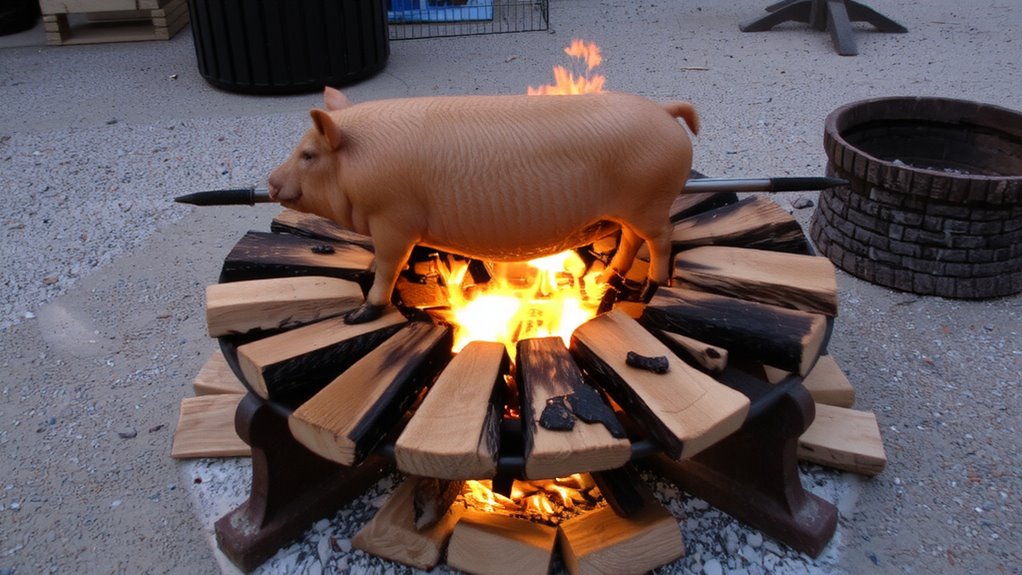
One effective way to maximize heat control and fuel efficiency when roasting on a spit is to match your fire layout to the type of meat and cooking duration. If you’re slow-roasting a large cut, a two-zone fire gives you steady heat distribution while preventing flare-ups. For quicker meals like chicken or sausages, centering the coals directly beneath the meat works well. Your spit alignment plays a vital role-ensure the spit runs parallel to the heat source so each section of meat receives even exposure. An off-kilter alignment causes uneven cooking and wastes fuel trying to compensate. Position the fire bed to match the thickest part of the meat, allowing radiant heat to do most of the work. You’ll notice consistent browning and juicier results when layout and alignment work together. This approach reduces fuel use substantially over long cooks, making your setup both smart and sustainable.
Lay Coals to Reflect Heat Upward
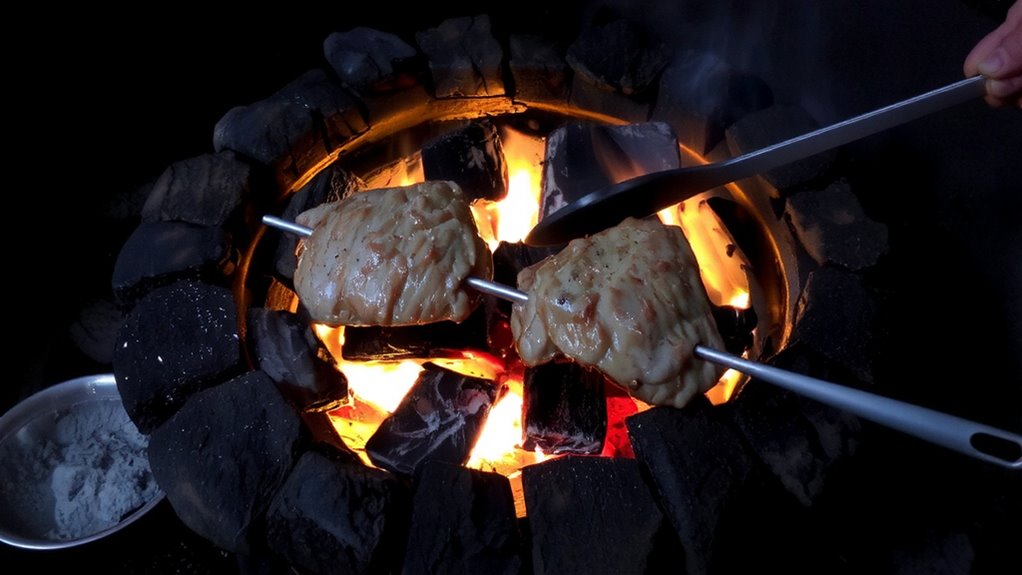
Since radiant heat plays a key role in efficient spit roasting, how you lay your coals directly affects both cooking performance and fuel use. You should arrange the coals in a gently curved bed, angling slightly upward toward the spit. This shape enhances heat reflection, directing warmth back toward the meat instead of letting it disperse. A flat coal layer loses energy fast, but a thoughtfully contoured one boosts thermal efficiency by recycling radiant energy. You’ll notice more even cooking and reduced flare-ups, meaning less need to adjust or add fuel mid-roast. Using fewer coals without sacrificing doneness isn’t just economical-it’s smart firecraft. The goal isn’t just heat, but smart heat distribution. Position each piece deliberately, favoring a low center that rises subtly near the edges. This subtle arc keeps energy focused where you need it, improving control and consistency without overcomplicating your setup.
Keep a Hot Zone Under the Meat
When you’re spit roasting, placing your hottest coals directly beneath the meat isn’t just logical-it’s essential for efficient cooking. You need consistent heat concentration right under the roast to sear the surface quickly, locking in juices and cutting down overall cook time. By maintaining this hot zone, you maximize fuel efficiency, since less energy is wasted heating empty space or unevenly cooking the meat. Position the densest cluster of glowing coals in a compact area aligned with the meat’s center of mass, where thermal impact matters most. This targeted approach guarantees the fire’s intensity is used where it’s needed, rather than diffused. You’ll notice better browning, more predictable doneness, and fewer flame adjustments. It’s not just about heat-it’s about smart heat placement. Over time, this method reduces wood use and improves control, making it a practical standard for serious spit roasting. Using a well-designed open fire grill can further enhance heat retention and airflow for optimal results.
Burn Less Wood With Focused Flames
You’ve already seen how positioning the hot zone directly under the meat streamlines cooking and conserves fuel. Now, take it further by refining flame concentration to burn less wood without sacrificing heat. When flames rise evenly and stay focused beneath the spit, you maximize efficiency-this means arranging coals and wood to create a tight, vertical burn zone. Flame concentration reduces wasted energy and limits the need for constant refueling. Denser wood types, like hickory or oak, support this by burning longer and more steadily than softer varieties. Their high wood density sustains consistent temperatures, so you add splits less often. This precision not only trims fuel use but also stabilizes cooking conditions. With proper airflow and log placement, you maintain intensity using fewer resources, proving that smart fire design beats raw volume. For hunters relying on efficient cooking methods in the field, choosing the right ammunition can be just as crucial as fire management, and selecting the best turkey hunting pellets ensures clean, ethical harvests with minimal waste.
Fix Common Fire Shape Mistakes
A surprising number of backyard cooks run through excess wood because of poor fire shape, often without realizing how simple adjustments could cut waste. You’re probably piling logs too high or spreading flames unevenly, which kills airflow balance and forces you to add fuel more often. Instead of a haphazard stack, shape your fire into a tight pyramid or log cabin structure-this promotes even burn and steady heat. Fire placement matters too: centering the fire under the spit guarantees direct radiant heat where it’s needed and reduces hotspots. If flames lick one side of the meat, you’re wasting energy. Adjust log position to maintain symmetry and expose all sides evenly. Proper airflow balance isn’t just about opening vents-it’s built into how you stack and space the wood. Fix these shape mistakes, and you’ll see longer burn times, less smoke, and much better fuel efficiency.
On a final note
You’ll burn less wood and cook more efficiently by shaping your fire to focus flames where they’re needed. A well-laid fire with coals angled upward reflects heat directly onto the meat, maintaining a consistent hot zone. This optimized structure improves temperature control and fuel use, especially during long roasts. While setup takes attention, the payoff-steady heat and reduced wood consumption-makes it worthwhile for serious outdoor cooks. Proper maintenance keeps it performing.