Smoking Venison Jerky Over Burnt Sagebrush in Desert Survival Style
You slice venison thinly across the grain, trim excess fat, and cure it simply with salt and sugar for survival-style jerky. Build a rack from greenwood and dry branches elevated above the ground, then use sagebrush-mixed with slightly green stems-to maintain a steady, low flame. The smoke should be thin and lazy, keeping temperatures around 150–160°F for 4–6 hours. Sagebrush adds an earthy, aromatic depth that pairs perfectly with lean game, enhancing both flavor and preservation. Rotate strips occasionally and test firmness by bending-clean cracks mean it’s ready-this method proves efficient, effective, and deeply rooted in desert tradition.
Notable Insights
- Slice venison into ¼-inch strips across the grain and trim excess fat to prevent spoilage in dry desert heat.
- Use a dry rub with salt, brown sugar, and curing salt to preserve and flavor the meat without refrigeration.
- Construct a smoke rack from greenwood poles and spaced cross branches, elevated 18–24 inches for airflow and smoke circulation.
- Control sagebrush fire by mixing dry and green stems, regulating airflow with gaps and dirt to maintain clean, low-temperature smoke.
- Smoke strips 4–6 hours at 150°F–160°F, testing doneness by a clean snap in texture, not tools.
Prepare Venison Strips for Smoking
Fresh venison, properly prepared, sets the foundation for successful desert-style jerky. You’ll want to slice the meat across the grain into uniform ¼-inch strips-consistency guarantees even drying. Trim excess fat, as it can spoil faster in arid heat. For preservation and flavor, curing methods matter: a dry rub with salt, brown sugar, and curing salt (like Prague Powder #1) works reliably without refrigeration. Alternatively, wet curing with brine is effective but requires more preparation. Marinating techniques boost taste and tenderness; acidic components like vinegar or citrus juice help break down fibers, though prolonged exposure toughens meat. A 4–6 hour soak in a seasoned mix with soy sauce, garlic, and crushed pepper delivers depth without compromising texture. These steps aren’t just tradition-they’re functional, tested responses to desert conditions where spoilage risks run high. Proper prep means safer, longer-lasting jerky.
Build a No-Tools Smoke Rack
Rocks, sticks, and time-those are your real tools when crafting a smoke rack in the desert with nothing but what’s around you. Start by laying two parallel greenwood poles across sturdy, upright support stakes driven into the ground. The greenwood resists heat better, improving fire safety while maintaining structural integrity. Cross smaller limbs perpendicularly over the main poles, spacing them about two inches apart for even airflow and good rack stability. Use dry, rigid branches to prevent sagging under the weight of venison strips. Secure them with natural fiber bindings or by notching intersecting points. Elevate the rack 18–24 inches above the ground to keep smoke flow consistent and reduce flare-ups. This height also aids fire safety by limiting direct flame contact. A stable, well-constructed rack guarantees consistent drying, prevents contamination, and maximizes efficiency. It’s primitive, yes-but with smart design, it performs like a field-expedient smoker. For consistent results, consider using a dedicated smoker for jerky.
Control Smoke Temperature With Sagebrush
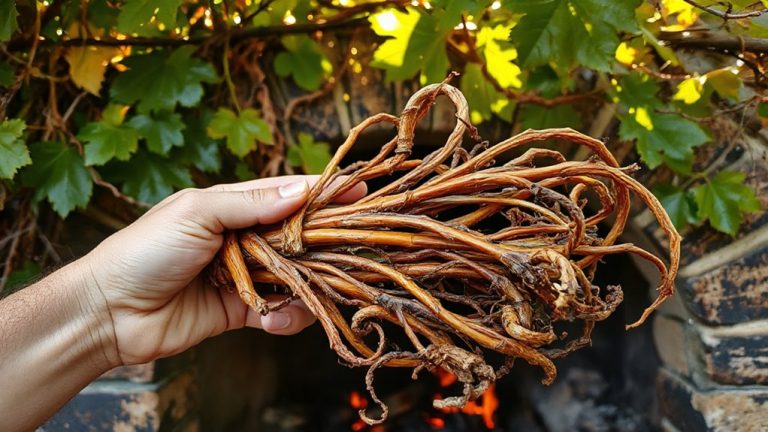
A handful of seasoned cooks in arid regions swear by sagebrush for managing smoke temperature, and for good reason-it burns hot and fast, so you’ve got to stay on your toes. You’ll need to monitor the sagebrush moisture content closely; dry branches ignite quickly but can send temps soaring, while slightly greener cuts burn cooler and steadier. Your best bet is a mix-layer drier wood with a few green stems to moderate the heat. Airflow regulation is just as essential: leave enough space between bundles for oxygen to circulate, but not so much that the fire rages out of control. Tweak the gaps with small stones or dirt if needed. Sagebrush smoke runs potent, so maintain a thin, lazy wisp-thick smoke means incomplete combustion and bitter jerky. With attentive airflow regulation and smart fuel choices, you can keep temps in a usable range. It’s not foolproof, but in desert survival style, it’s effective, reliable, and resource-smart. For those looking to explore more traditional options, the best smoking wood picks include popular wood types known for enhancing gamey flavors like venison.
Smoke Venison Jerky in 4–6 Hours
You can get quality venison jerky in just 4 to 6 hours with the right setup, and while shorter than traditional methods, this accelerated timeline works well when using hot smoking techniques common in desert environments. Maintaining a steady temperature between 150°F and 160°F guarantees proper dehydration without overcooking. The sagebrush smoke delivers distinct flavor infusion, lending an earthy, slightly piney note that complements the lean venison. Unlike hardwoods, it burns hotter and faster, making time efficiency a key benefit when resources are scarce. You’ll notice the jerky firms up and darkens within the first three hours, with best results by hour six. Rotating strips occasionally promotes even exposure and consistent texture. Though faster than cold smoking, this method still develops deep complexity if the fire is carefully managed. It’s a practical compromise-ideal for survival scenarios where both taste and efficiency matter.
Test Jerky Doneness Without Tools
Flex that strip between your fingers, and let the texture tell you when it’s done. You’re aiming for a firm, leathery feel-dry but not brittle. Bend snap is your best cue: give it a gentle curve. If it cracks cleanly without tearing, it’s ready. If it just bends or feels rubbery, it needs more time. The ideal taste texture strikes a balance-chewy, not tough, with no moisture oozing out. Over-dried jerky becomes hard to chew; under-dried risks spoilage. You won’t need tools if you pay attention to these cues. In survival settings, relying on instinct and observation trumps precision instruments. This method’s been tested through generations of outdoor cooks. It’s efficient, reliable, and rooted in practicality. While modern gadgets help, the bend snap test remains a gold standard. Trust your hands-they’re calibrated by experience. When the jerky resists tearing and snaps with authority, you’ve nailed it.
Why Sagebrush Smoke Enhances Venison Flavor
Once you’ve mastered judging jerky readiness by feel, it’s worth exploring how the smoke source shapes the final taste-especially when you’re miles from the nearest store and making do with what the desert offers. Sagebrush delivers a bold, earthy smoke infusion that deeply penetrates venison, enhancing it with a distinctive resinous note few woods can match. The flavor chemistry at play hinges on the aromatic terpenes in sagebrush-compounds like camphor and pinene-that bind to meat proteins during slow curing, forming new taste signatures. Compared to milder woods, sagebrush smoke is assertive, even pungent, but when balanced with proper airflow and controlled burn, it creates complexity rather than bitterness. You’ll notice a lingering, herbal finish that complements gamey richness without masking it. While not ideal for every palate, desert survival often demands unconventional choices-and sagebrush proves that necessity can refine flavor as much as sustain it.
On a final note
You’ve turned primal resources into a durable, flavorful food using simple survival techniques. Smoking venison over burnt sagebrush delivers aromatic depth few woods match, while the no-tools rack proves functionality under limits. Four to six hours of controlled smoke yields jerky that’s safe, lean, and rich in campfire authenticity. This method isn’t just effective-it’s a tested standard for backcountry efficiency and taste.