Wood Chips for Smoking Meat: Best Pairings by Cut
Match your wood chips to the meat’s texture and fat content-use bold hickory or mesquite for tough, fatty cuts like brisket, as they stand up to intense smoke and high heat. Opt for mild, sweet woods like apple, cherry, or alder with chicken and fish to avoid bitterness. Blend stronger woods with milder ones to balance flavor, and always consider how cook time and temperature shape smoke impact. You’ll discover even more ways to refine your smoke profile with a few expert-backed pairings.
Notable Insights
- Match smoke intensity to meat type, using bold woods like hickory for beef and mild woods like alder for fish.
- Choose fruitwoods such as apple or cherry for sweet, mild smoke ideal for chicken and pork.
- Use hickory or mesquite for tough, fatty cuts like brisket, as they deliver strong flavor and withstand long cooks.
- Avoid overpowering delicate meats like salmon with strong smoke; opt for alder or cherry for subtle flavor.
- Blend woods like apple and pecan or hickory and maple to balance sweetness and depth for complex flavor profiles.
Match Smoke Intensity to Your Meat First
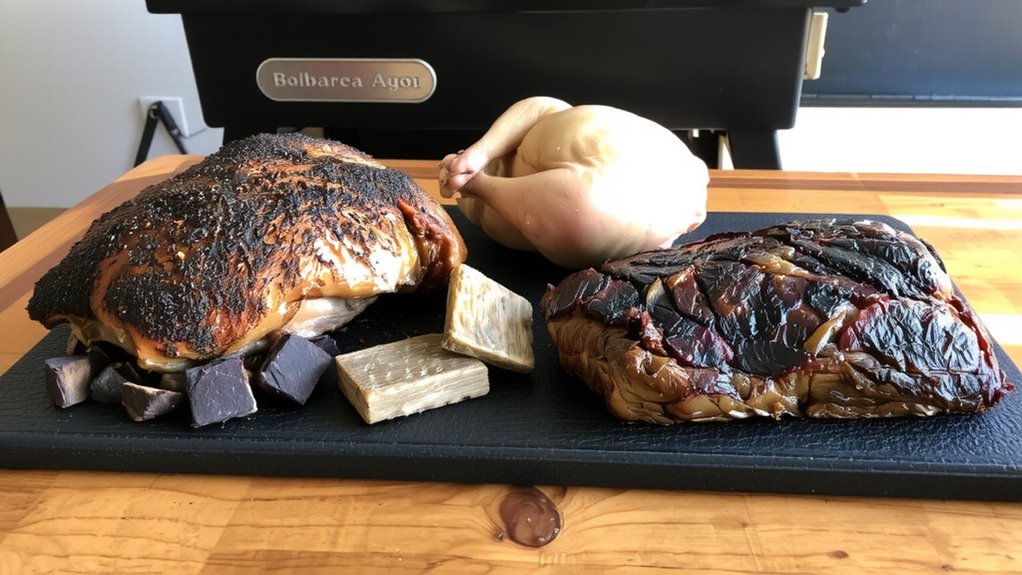
While some woods deliver a bold, assertive smoke that can dominate a dish, others offer a milder touch better suited to delicate proteins, so matching the intensity of your wood chips to the type of meat you’re smoking is essential for balanced flavor. If you’re smoking salmon or chicken, a mild smoke from alder or cherry works best-it enhances without overwhelming. On the other hand, beef brisket or pork shoulder can stand up to a strong smoke, like that from hickory or mesquite, which adds bold, robust depth. Using strong smoke on delicate meats leads to bitterness, just as mild smoke on hearty cuts can result in underwhelming flavor. You’ll want to take into account your smoker’s temperature and cook time, too-longer sessions amplify smoke impact. Matching intensity isn’t just about taste; it’s about harmony. Get this right, and you’re already ahead in crafting a well-balanced, flavorful result every time. For best results, choose from trusted wood types backed by expert product recommendations.
Pick Sweet or Savory Wood Flavors by Cut
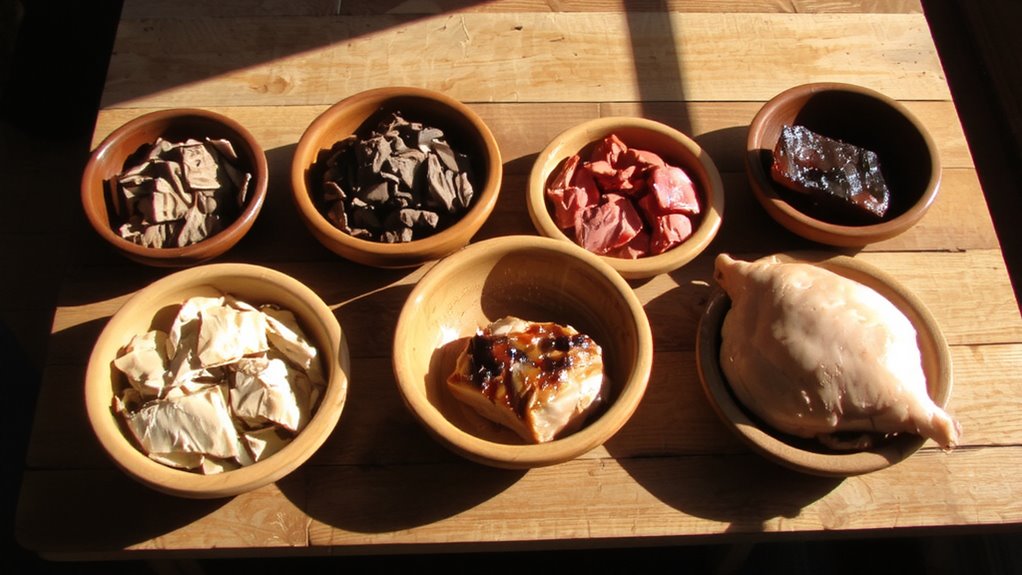
You’ve matched your wood’s smoke intensity to the meat-that’s half the battle. Now, tailor the flavor profile to the cut. For delicate meats like pork chops or chicken breasts, go sweet with fruitwood pairings-cherry, apple, or peach deliver mild, slightly sugary notes that enhance without overpowering. These woods caramelize the surface beautifully, especially on leaner cuts that benefit from a gentle touch. If you’re after something more aromatic, try herb infused chips, like rosemary- or thyme-blended oak, which add a savory complexity ideal for poultry or game birds. For richer meats such as beef brisket flat or lamb, a subtly spiced fruitwood or earthy herb blend balances the fat without clashing. Avoid sharp contrasts; the goal is harmony. Savory cuts often shine with deeper botanical notes, while sweeter meats welcome bright, fruity smoke. Choose wisely-each pairing shapes the final bite. For smoking chicken specifically, consider using best wood chips for smoking chicken to achieve optimal flavor and smoke balance.
Use Bold Hickory or Mesquite for Tough Cuts
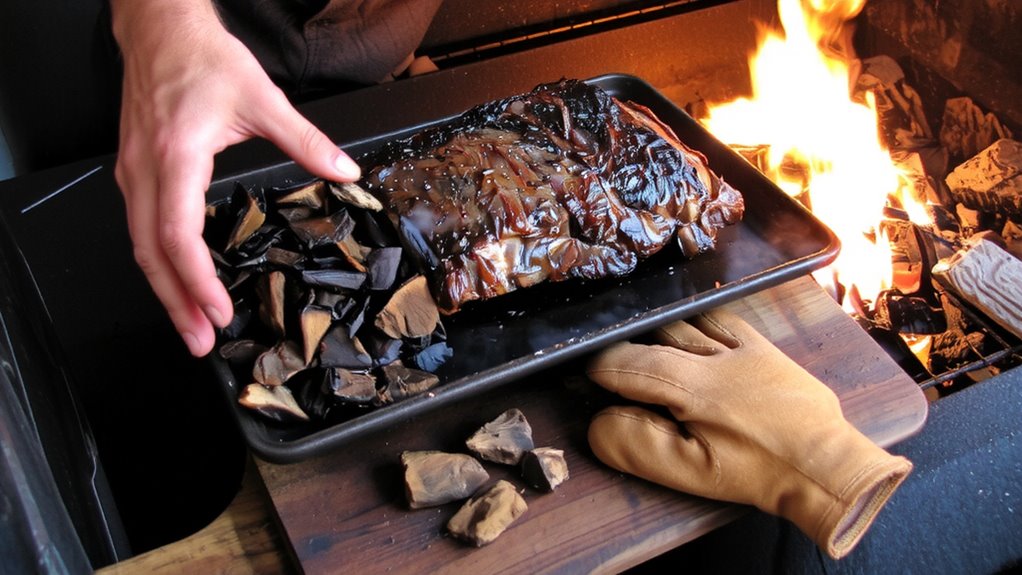
Some of the strongest flavors in your smoker will come from hickory or mesquite, and they’re best reserved for the toughest cuts of meat that can stand up to their intensity. When you’re dealing with dense, well-marbled meats like beef brisket or pork shoulder, the bold hickory smoke cuts through fat and connective tissue, adding depth without overwhelming. You’ll notice a rich, almost bacon-like sweetness with hickory, while mesquite delivers a sharper, earthier punch-perfect for long cooks. The mesquite pairing works exceptionally well with beef, enhancing char without turning bitter if managed carefully. Both woods burn hot and fast, so monitor your temperature. They’re not subtle, and that’s the point-these aren’t mild background notes but assertive flavors meant to complement meat that won’t quit. Use them when you want your barbecue to leave a lasting impression. For guidance on selecting the most reliable options, check out the Best Hickory Picks & Buying Guide.
Try These Best Wood Chips for Chicken and Fish
Hickory and mesquite pack a punch that suits heavy, fatty meats, but when you’re working with chicken and fish, lighter woods make all the difference. You’ll want mild smoke profiles that enhance, not overpower, delicate proteins. Fruitwood pairings like apple, cherry, and peach deliver just that-sweet, nuanced smoke with a soft aroma. Apple wood is especially popular for poultry, giving chicken a gently smoky finish with a hint of fruitiness. Cherry wood adds a slightly richer tone, perfect for both whole birds and fillets, while also deepening color. For fish, particularly trout or salmon, alder is a top choice; it burns evenly and produces a subtle smoke that complements natural oils. These woods work best at moderate temps, preserving texture and flavor. Skip the heavy varieties here-delicacy wins. With fruitwood pairings and mild smoke profiles, your chicken and fish come out tasting clean, balanced, and expertly smoked.
Blend Woods for Balanced Smoke Flavor
While strong single woods can dominate a dish, blending different wood types lets you fine-tune smoke intensity and complexity for a more balanced result. You’re better off combining milder woods like cherry or apple with stronger ones like hickory or oak-this kind of wood pairing prevents bitterness while enhancing depth. For example, mixing apple with pecan adds subtle sweetness and nuttiness, ideal for pork or poultry. Achieving proper flavor balance means considering both the meat’s richness and the smoke’s strength. A 70/30 blend-mild wood dominant-often works best, especially for longer smokes. You’ll notice how layered profiles develop without one note overpowering the rest. Experimentation matters, but start with proven combinations: hickory and maple for brisket, alder and oak for salmon. These pairings offer structure and nuance. Blending isn’t just practical-it’s strategic, letting you control the smoke’s character with precision and consistency across cooks.
Avoid These Common Wood Chip Mistakes
Because you’re aiming for rich, complementary smoke rather than harsh or overwhelming flavors, it’s essential to avoid using green or untreated wood fresh from the tree-this common mistake leads to excessive moisture, inconsistent burns, and off-putting, acrid smoke due to unburned sap and creosote buildup. You’ll run into wet wood issues if the chips haven’t been properly seasoned, resulting in poor combustion and sooty residue on your meat. Even with dry chips, overloading smoker chambers restricts airflow, which disrupts temperature control and creates uneven smoke distribution. You want consistent, thin blue smoke, not billowing gray clouds. Overloading smoker racks with chips also shortens burn time and increases the need for monitoring. Always use a drip pan and follow manufacturer guidelines for chip quantity. Pair wood type with meat density-mild fish doesn’t need bold mesquite. Avoid these mistakes, and your smoked meats will reflect control, balance, and flavor precision.
On a final note
You’ve got the tools to match wood chips to meat like a pro. Remember, bold hickory and mesquite shine with tough cuts like brisket, while fruitwoods elevate chicken and fish with subtle sweetness. Blending woods fine-tunes flavor, but avoid green or resinous woods-they bring harshness, not depth. Properly seasoned chips guarantee clean smoke, enhancing your BBQ’s taste without overpowering it. Smart choices transform outdoor cooking from guesswork to mastery.