Crafting the Perfect Smoky Flavor With Your Pellet Grill
Choose the right hardwood pellets-like alder for poultry or hickory for beef-and guarantee they’re fresh for clean, consistent smoke. Preheat your grill 10–15 minutes to stabilize temperature and reveal any combustion issues. Maximize smoke during the first hour, when meat absorbs the most flavor. Maintain steady heat and airflow to avoid bitter, white smoke. Use a pellet tube insert for extra punch at high temps, and keep an eye out for blue, not white, smoke. There’s more to mastering your grill’s flavor potential just ahead.
Notable Insights
- Choose 100% hardwood pellets like hickory or mesquite for bold flavor, or alder for delicate meats like fish and poultry.
- Preheat your pellet grill 10–15 minutes to ensure clean combustion and consistent smoke production.
- Maximize smoke absorption by cooking with moist meat surfaces during the first 30–60 minutes.
- Maintain stable cooking temperatures to avoid thick, bitter smoke and ensure even flavor development.
- Aim for thin blue smoke; use a pellet tube insert with quality pellets to enhance smoke at high temps.
Choose the Right Wood Pellets for Your Meat
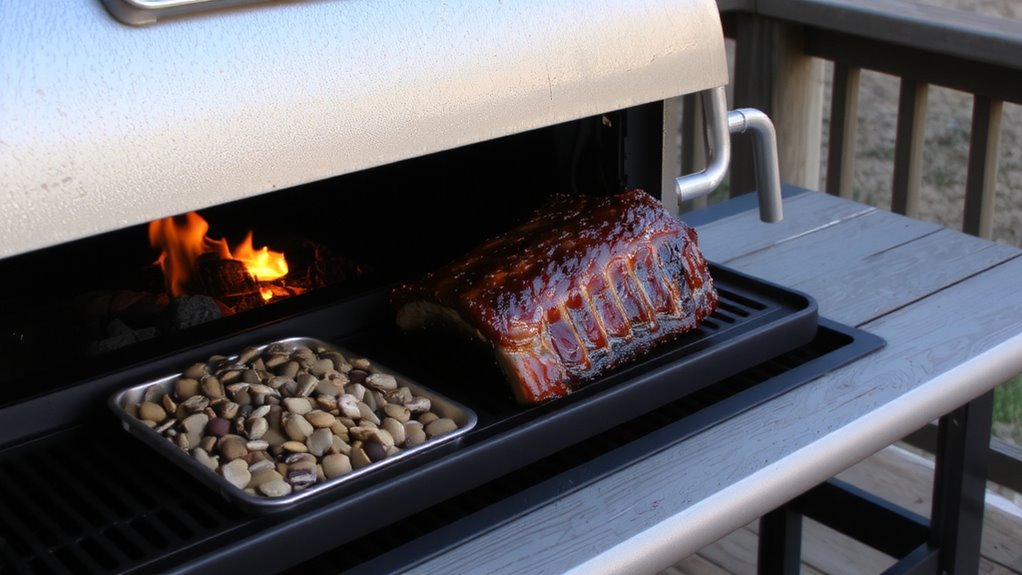
Flavor starts with the fuel, and when it comes to pellet grills, your choice of wood pellets directly shapes the character of your smoke. You need to take into account wood pairing carefully-mild woods like alder work well with fish and poultry, while hickory or mesquite deliver boldness ideal for beef or pork. Getting this right enhances the meat’s natural taste without overpowering it. Equally important is pellet freshness; stale or damp pellets burn unevenly and produce weak smoke, diminishing flavor depth. Fresh pellets ignite cleanly and maintain consistent smoke output, which translates to more control and better results. Always store your pellets in a sealed, dry container to preserve quality. High-quality brands tend to use pure hardwood without fillers, ensuring cleaner combustion. Ultimately, your flavor outcome hinges on these two factors. Choose wisely, and you’ll notice a clear difference in every bite. For robust, bacon-like notes ideal for pork and poultry, consider Best Hickory Picks based on performance and smoke quality.
Preheat Your Grill for Better Smoke Flavor
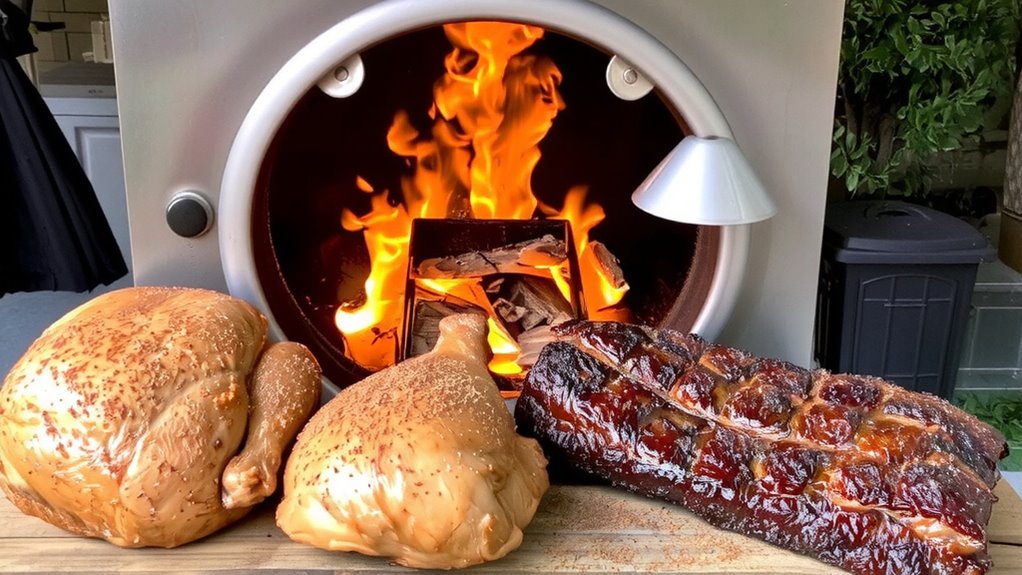
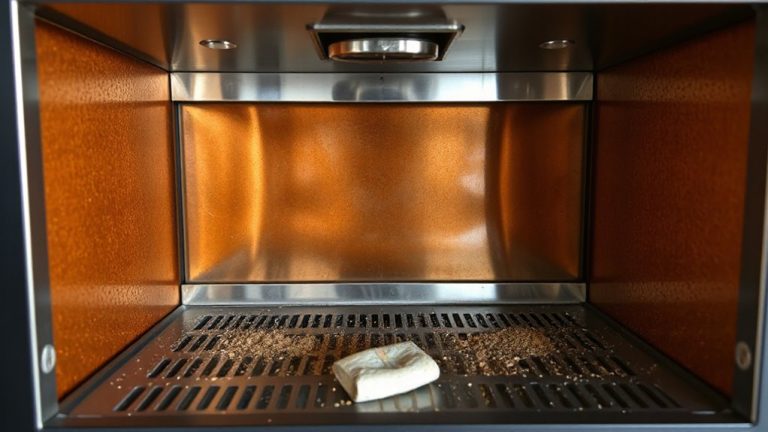
While it might be tempting to toss your meat on the grill the moment it powers up, taking the time to properly preheat your pellet grill makes a noticeable difference in smoke development and overall cooking performance. You need that steady thermal foundation-typically 10 to 15 minutes-for consistent smoke output and even searing. A fully heated firepot ignites pellets more efficiently, which boosts flavor and reduces startup smoke inconsistencies. This process also reveals any issues tied to grill maintenance, like grease buildup or airflow blockages, that could hinder combustion. Plus, preheating tests your fuel quality; damp or low-grade pellets won’t burn cleanly even at ideal temps. You want hardwood pellets with low moisture and minimal fillers to guarantee a stable, aromatic fire. Skipping preheat not only risks uneven cooking but dull smoke flavor, undermining your efforts from pellet selection onward. Patience here pays off in taste and control. For beginners, starting with a reliable beginner electric smoker can simplify mastering these fundamentals.
Maximize Smoke Early in the Cook
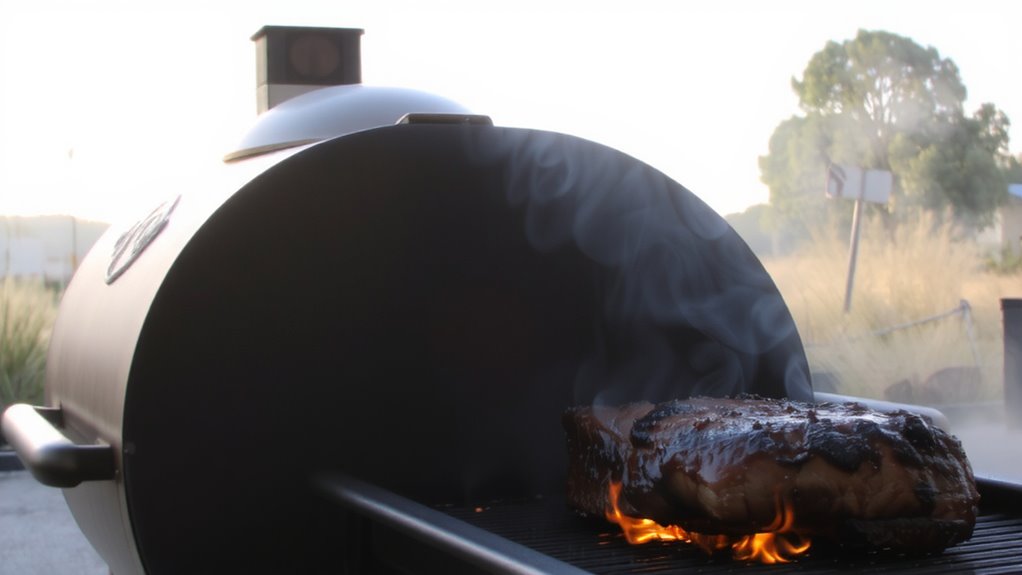
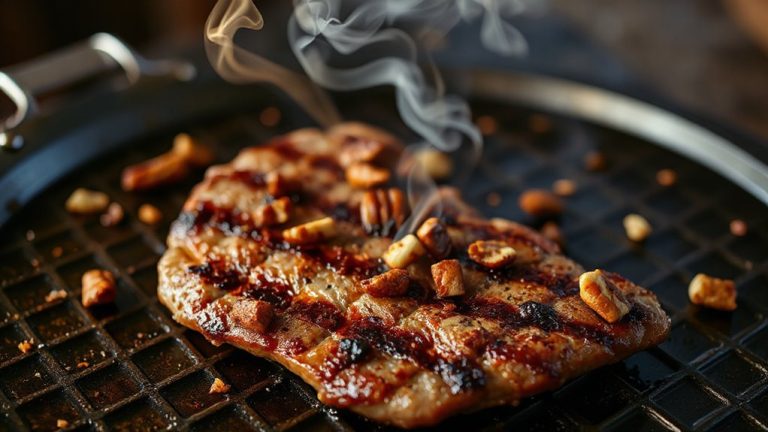
Once your pellet grill hits the right temperature, you’re set to make the most of the early stages of cooking, when smoke flavor has the greatest impact. This is the prime window for smoke timing-when proteins readily absorb the aromatic compounds from the burning wood. Within the first 30 to 60 minutes, especially with larger cuts, flavor development peaks as the meat’s surface remains moist and porous. After that, the outer layer dries, forming a barrier that resists further smoke absorption. You won’t gain much additional smokiness by extending cook time at lower temps beyond this phase. Focus on maximizing smoke early, then let the rest of the cook build texture and doneness. Using clean, dry hardwood pellets during this stage guarantees a consistent, flavorful smoke. Smart smoke timing isn’t just about duration-it’s about syncing pellet burn rate and airflow to match the critical early phase of flavor development. For best results, choose a high-quality wood pellet smoker that ensures consistent combustion and temperature control. best wood pellet smokers
Keep Temperature Stable for Clean Smoke
Because consistent heat directly affects smoke quality, keeping your pellet grill’s temperature steady is key to achieving clean, flavorful results. When the temperature fluctuates, you risk incomplete burn cycles, leading to thick, acrid smoke instead of the clean combustion you want. Modern pellet grills are designed to regulate heat efficiently, but only if they’re properly maintained and not overloaded. A steady airflow guarantees pellets burn completely, maximizing flavor and minimizing creosote buildup. Keep the firepot and burn grate clear of ash, and avoid crowding the grill-crowded chambers restrict airflow and destabilize temperature. You’ll notice better smoke consistency when the fan and auger operate without constant correction. Ultimately, stable temps aren’t just about cooking precision; they’re essential to generating that ideal, clean combustion. With steady airflow and minimal disruption, your food develops rich, balanced smokiness-without bitter notes.
Watch the Smoke: Thin Blue Means Flavor
Ever wonder why the most experienced pitmasters pause to glance at the smoke before touching the meat? It’s because smoke appearance tells you everything about flavor correlation. A thin blue stream isn’t just pretty-it’s ideal. That nearly invisible wisp means clean, efficient combustion and mild, aromatic flavor without bitterness. Thick white smoke? That’s a red flag-creosote building up, harsh taste incoming. You want consistency, not drama.
| Smoke Appearance | Flavor Correlation |
|---|---|
| Thin blue | Rich, clean smokiness |
| Thick white | Bitter, overwhelming |
Trust your eyes as much as your thermometer. When the smoke turns thin and blue, you’re not just grilling-you’re crafting flavor.
Boost Smoke With a Pellet Tube Insert
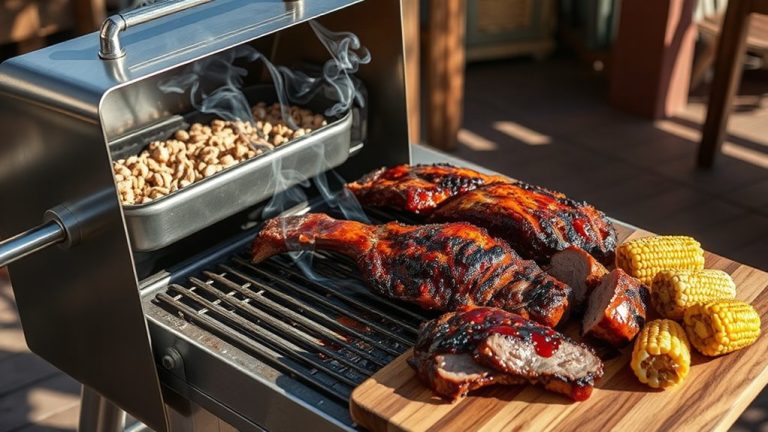
A pellet tube insert is a simple but effective tool for dialing in heavier smoke flavor on your pellet grill, especially when cooking at higher temps where natural smoke production often drops off. You fill the tube with quality pellets-pellet quality matters, as hardwood blends burn cleaner and produce richer smoke than softwood or fillers. Once lit, place it directly on the heat diffuser or near the burn pot; proper tube placement guarantees consistent airflow and smoke output. It runs independently of your grill’s auger, so you get smoke even when the main system cycles off. Stainless steel models last longer and handle high heat well. You’ll notice deeper flavor, particularly on steaks or roasts cooked above 300°F. Just monitor burn time-most last 3–5 hours-and replace before it dies out. It’s not a fix for poor technique, but when used right, it boosts complexity without overpowering the meat.
Fix Bitter, Thin, or Missing Smoke Flavor
You’ve got your pellet tube insert working and still end up with bitter, thin, or barely noticeable smoke flavor-now what? The issue might lie in pellet quality or improper smoke circulation. Low-grade pellets produce acrid, bitter smoke due to fillers and inconsistent burn rates. Always opt for 100% hardwood pellets with minimal dust. Meat moisture also plays a key role-wet surfaces absorb smoke better, especially in the first hour. A dry exterior limits smoke adhesion, yielding thin flavor. Manage your grill’s airflow: too much oxygen burns pellets too fast, reducing smoke density.
| Factor | Ideal Condition |
|---|---|
| Pellet Quality | 100% hardwood, low dust |
| Meat Moisture | Surface damp, not dripping |
| Grill Temp | 225–250°F for smoke absorption |
| Smoke Density | Thin blue, not white or thick |
On a final note
You’ve learned that success starts with quality pellets and proper preheating. Stable temps and thin blue smoke deliver clean flavor, while a pellet tube boosts results when needed. Avoiding bitter or weak smoke means watching combustion closely. These steps, rooted in technique and gear performance, make a real difference. Master them, and your BBQ won’t just taste better-it’ll reflect true control over the craft.