Adjusting Cooking Times Due to Variable Ambient Temperatures While Camping
Cold weather slows cooking by sapping heat from stoves and pots, so you’ll need to shield flames and boost fuel efficiency. Hot conditions speed things up but dry out food faster-watch moisture loss. Adjust cooking times: expect 20–30% longer below 50°F and slight reductions above 85°F. Wind adds delays regardless. A reliable thermometer helps fine-tune your approach. Smart heat control and time tweaks make all the difference-knowing more guarantees better meals no matter the weather.
Notable Insights
- Cold ambient temperatures increase cooking times by 20–50%, requiring longer boil and simmer durations.
- Wind exposure adds 15–20% to cooking time regardless of temperature due to heat loss.
- In hot weather, reduce cooking time to prevent overcooking, as food heats faster and loses moisture.
- Use wind shields and insulated cookware to improve heat retention in cold or windy conditions.
- Monitor ambient temperature with a digital thermometer to make real-time adjustments to heat and timing.
How Cold Weather Slows Down Camp Cooking
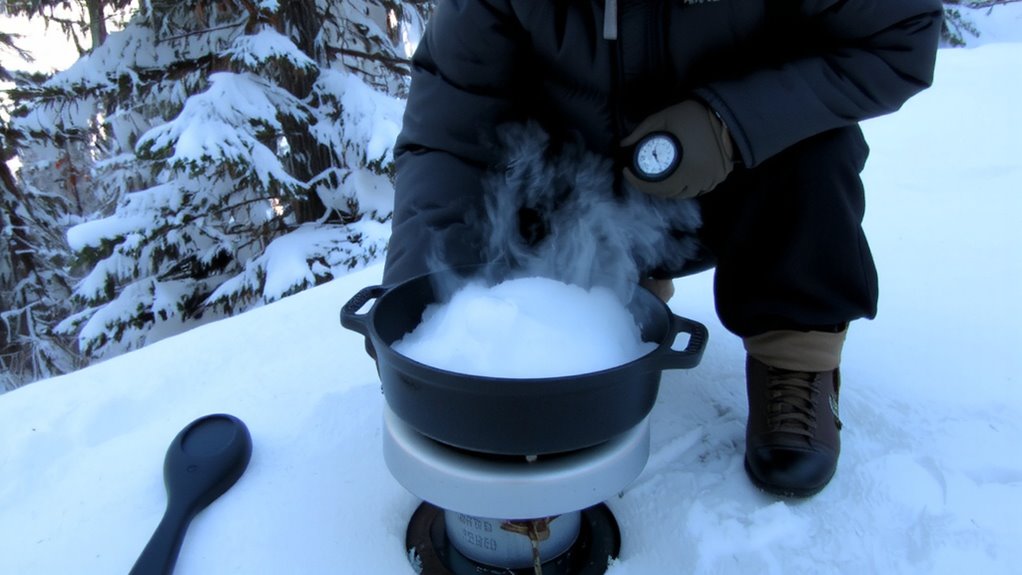
Even though you might follow your favorite camp recipe to the letter, cold weather can still throw off your results by greatly slowing down cooking times. Heat retention becomes critical when temperatures drop, as wind and ambient cold pull warmth away from your stove or fire, forcing you to extend burn periods. You’ll notice that pots take longer to boil and meats cook unevenly, mostly because your setup struggles to maintain consistent heat. This directly impacts fuel efficiency-your canister or wood supply depletes faster than expected, especially if you’re using gear not designed for winter. Investing in wind shields, insulated cookware, or thermal lids helps trap heat and improves performance. Still, you’ll need to adjust expectations: simmering might require double the time, and water may take 50% longer to boil. Planning meals with these delays in mind guarantees safer, more efficient outdoor cooking when the mercury falls.
Why Hot Weather Speeds Up Cooking but Dries Out Food
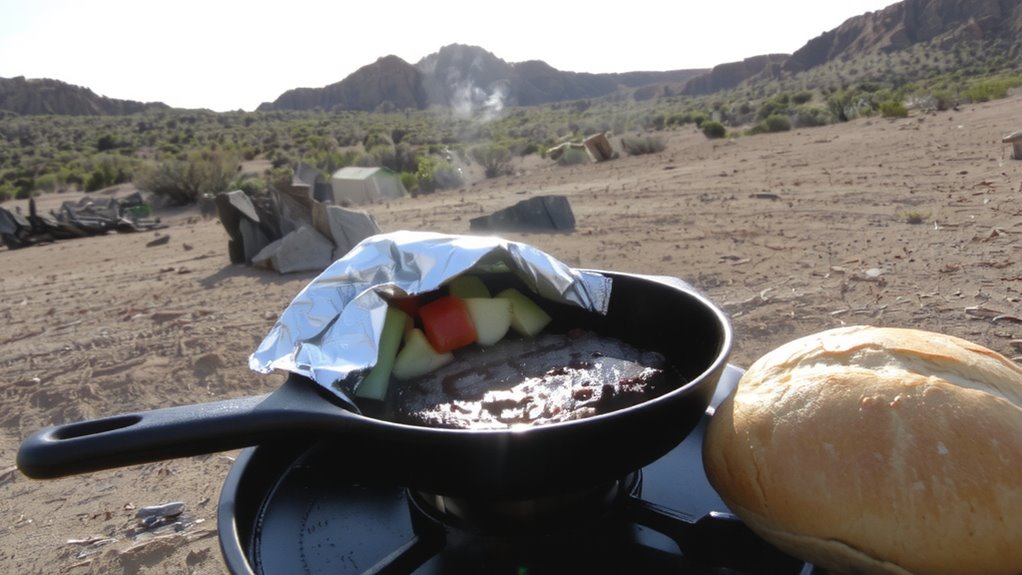
When temperatures rise, your cookware heats faster and flames burn more efficiently, so meals over the fire or stove tend to cook quicker than in cooler conditions. The increased ambient heat accelerates the evaporation rate, causing liquids in your food to escape into the air more rapidly. While this speeds up cooking, it also threatens moisture retention, leaving meats dry and vegetables tough if you’re not careful. You’ll notice dishes exposed to direct heat-like grilled chicken or foil-wrapped potatoes-lose juiciness faster in hot weather. Even covered pots can struggle to maintain internal moisture when the surrounding air is dry and hot. This means your usual cooking times might need trimming, but reducing heat exposure or covering food more securely becomes just as important. Without attention, speed becomes a trade-off: faster results, but less succulent meals due to compromised moisture retention.
How to Adjust Your Stove or Fire Based on Temperature
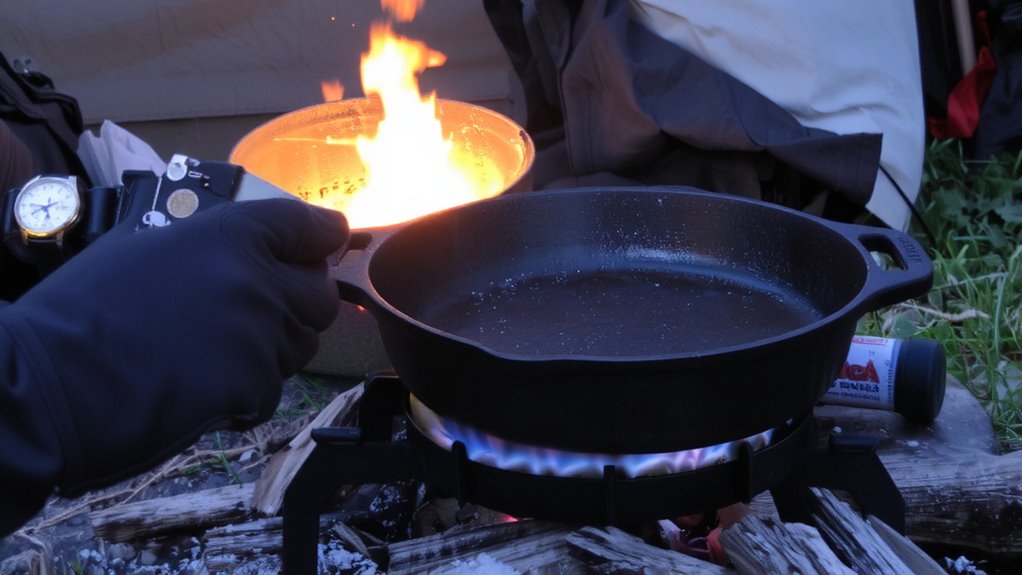
If you’re cooking in extreme temperatures, you’ll need to adapt your heat source to maintain control over cooking outcomes. In cold conditions, your stove may struggle to vaporize fuel efficiently, so pre-warming the fuel line or using a canister designed for low temps helps preserve fuel efficiency. You’ll notice performance drops when temperatures dip, especially with butane mixtures. To counteract wind exposure, which cools surfaces and disrupts flame consistency, always use a windscreen or natural barrier. This doesn’t just protect the flame-it boosts efficiency and heat transfer. With campfires, build smaller, hotter fires in colder weather, using dry, dense wood for steady output. In heat, reduce flame intensity to avoid scorching; high ambient temps mean your stove doesn’t need to work as hard. Monitoring fuel use and shielding your setup from wind exposure guarantees safer, more predictable cooking across variable conditions. For reliable performance in harsh weather, consider choosing one of the best camping stoves based on fuel type and design efficiency.
How to Adjust Cooking Times by Temperature
You’ve likely already tweaked your stove or fire to match the weather, but don’t stop there-adjusting your cooking times is just as important when temperature swings throw off your usual routine. Cold ambient temperatures slow heat transfer, meaning food takes longer to cook and can sabotage fuel efficiency. Wind exposure further cools surfaces and increases heating time, so shield your setup. Below are approximate adjustments for common cooking tasks:
| Ambient Temp (°F) | Time Adjustment |
|---|---|
| 70–85 | None |
| 50–69 | +10–15% |
| 32–49 | +20–30% |
| Below 32 | +35–50% |
| With wind exposure | Add 15–20% more |
These estimates help maintain performance while preserving fuel efficiency. You’ll need patience and slight recipe tweaks, especially for baking or simmering. Always consider total heat loss-not just from temperature, but also from wind exposure-when timing meals.
Best Tools to Track Campsite Temperature
How accurately are you measuring the environment that shapes every meal you cook outdoors? Reliable temperature tracking starts with the right tools. Digital instant-read thermometers with ambient sensors give real-time campsite readings, while portable weather stations offer continuous monitoring of fluctuating weather patterns. For high-elevation camping, consider devices calibrated to account for elevation effects, since thinner air alters both boiling points and heat retention. Smartphone apps can help, but they often rely on distant forecasts rather than on-site data. Invest in a rugged, backlit thermometer with a humidity sensor-this combo improves accuracy when adjusting cooking times. Look for models with long battery life and water resistance, especially if cooking in unpredictable conditions. These tools don’t just record numbers-they empower smarter decisions, ensuring your meals cook evenly despite outdoor variables. A reliable instant-read thermometer is essential for verifying both ambient and internal food temperatures quickly and accurately. Track wisely, cook confidently.
Camp Cooking in 40°F vs. 90°F: Real Examples
Temperature doesn’t just influence how you dress-it directly impacts how your food cooks over a camp stove or grill. At 40°F, water takes nearly twice as long to boil compared to 90°F, draining your fuel supply faster and reducing fuel efficiency. You’ll need to preheat pans longer, and simmering dishes like stews may require a lid and extended cook times. Wind exposure worsens this, pulling heat away and demanding constant flame adjustments. In contrast, 90°F helps retain ambient heat, so foods sear quicker and liquids boil faster. Yet, high temps increase flare-up risks on a grill, especially with fatty meats. You’ll use less fuel overall, improving fuel efficiency, but managing heat becomes critical. Wind exposure remains an issue, altering flame stability in both conditions. Real-world tests show a 30% longer cooking time at 40°F for identical meals, proving ambient temperature markedly shapes your camp kitchen’s performance.
On a final note
You’ll need to adapt cooking times based on ambient temperature, since cold slows heat transfer and hot conditions speed evaporation. At 40°F, expect longer boil times and uneven cooking; at 90°F, watch for rapid moisture loss. Adjust flame or fuel accordingly, and use a reliable thermometer to monitor conditions. Success hinges on observation, proper tools, and small, informed tweaks-making temperature awareness essential for efficient, consistent camp meals.