Flipping Thick Steaks Halfway Through Hot Smoking to Promote Uniform Browning
Flip your thick steaks halfway through hot smoking to promote even browning and a solid crust. Wait until the surface is dry and tacky, or around the 75% mark for best results. A two-zone smoker setup prevents scorching while ensuring consistent heat. Choose well-marbled cuts like ribeye or strip-they handle flipping well. Sear right after flipping for maximum Maillard reaction. You’ll get better crust, juicier results, and balanced smoke flavor with this method. There’s more to optimizing the flip than most realize.
Notable Insights
- Flip thick steaks at the 45-minute mark to allow surface moisture to evaporate and promote optimal browning.
- Use a two-zone smoker setup to ensure even heat distribution and prevent scorching during the flip.
- Flip only once halfway through smoking to maximize Maillard reaction and develop a consistent crust.
- Choose well-marbled cuts like ribeye or strip steak for better structural integrity and browning after flipping.
- Sear immediately after flipping at 450°F–500°F to enhance crust formation and lock in juices.
When to Flip Your Smoked Steak for Maximum Browning
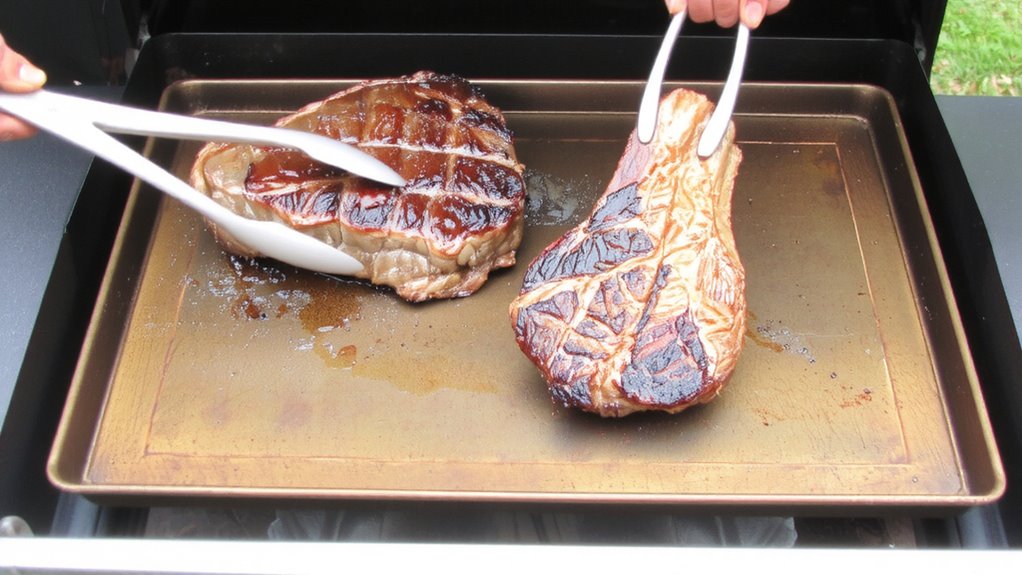
So when should you flip your thick-cut steak on the smoker for ideal browning? You’ll want to wait until the surface moisture has visibly evaporated and a tacky pellicle forms-usually around the 45-minute mark for a 1.5-inch steak. Meat thickness plays a critical role; thicker cuts retain more internal moisture, which migrates to the surface early in the cook, delaying browning. Flipping too soon traps steam against the meat, inhibiting crust development. Letting it sear undisturbed allows heat to overcome surface moisture, promoting Maillard reaction onset. Once you flip, the now-exposed side contacts drier air, accelerating caramelization. For best results, flip only once halfway through. While some swear by multiple flips, evidence suggests fewer interruptions yield a deeper, more uniform crust-especially with steaks over an inch thick. Patience here pays off in flavor and texture. Choosing the right cut matters-opt for well-marbled steaks like ribeye or strip, as the fat enhances smoke absorption and tenderness during low-and-slow cooking, making best steak for smoking a key factor in achieving optimal results.
Use a Two-Zone Smoker for an Even Crust
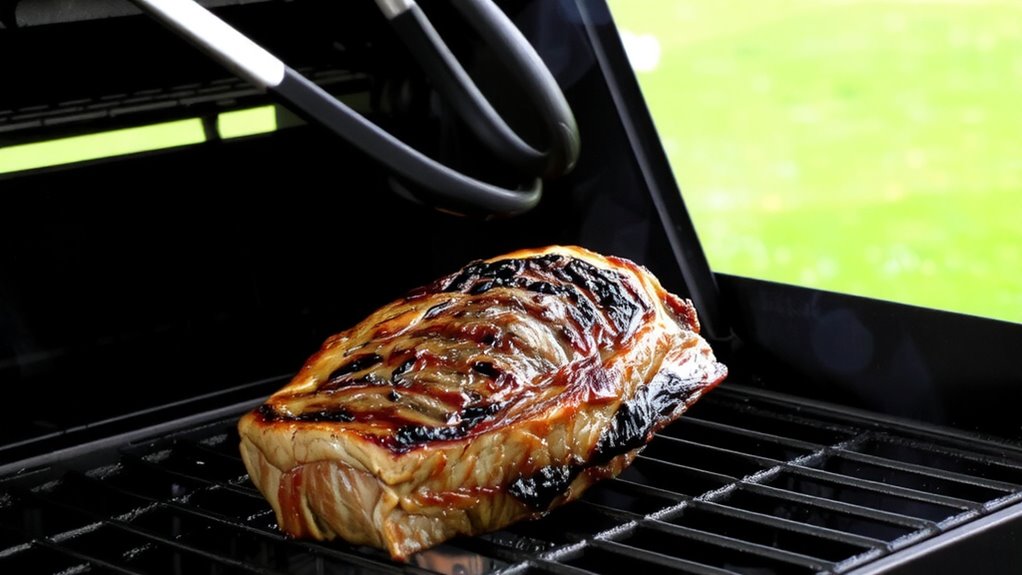
While managing heat distribution might seem secondary to smoke flavor, running your smoker in a two-zone setup can make or break the crust on thick steaks. You’ve got direct heat on one side, indirect on the other-this isn’t just for grilling; it’s essential for hot smoking. Proper heat control prevents scorching the exterior before the center reaches your target. Thick steaks need time, and a two-zone system delivers steady temps without hot spots. Even smoke distribution is key-positioning vents and wood chunks correctly guarantees flavor penetrates evenly. Without it, you’ll get patchy color and weak bark development. You’re not just cooking; you’re engineering Maillard across two inches of meat. The indirect zone gives you control, letting you manage carryover heat after flipping. Once you master the zones, you’ll see clearer sear lines, deeper color, and a crust that’s crisp, not charred. It’s not perfection-it’s practical science.
Flip Thick Steaks at 75% of Smoke Time
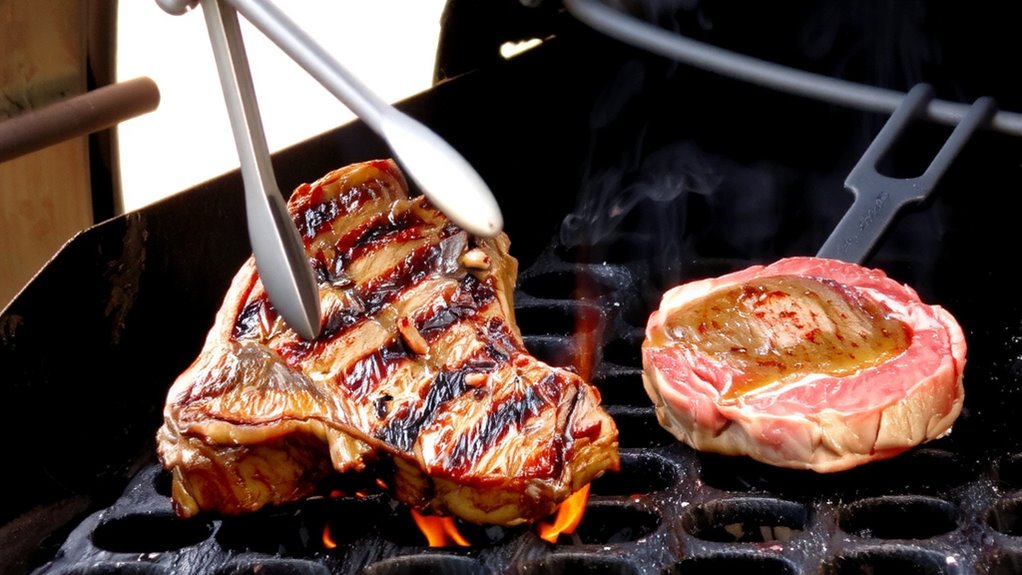
Flipping your thick steaks once-right at the 75% mark of your estimated smoke time-strikes the ideal balance between even heat exposure and bark development. This timing guarantees sufficient smoke penetration while preserving moisture and encouraging uniform browning. Earlier flips risk interrupting crust formation; later ones limit flavor development on the first side. At 75%, the exterior has already absorbed ample smoke and started to caramelize, so flipping helps both sides reach peak texture and richness.
| Smoke Phase | Side Exposure | Result |
|---|---|---|
| 0–75% | Undisturbed | Deep smoke penetration, initial bark |
| 75% Flip | Switched | Even browning, enhanced flavor development |
| Final 25% | Balanced heat | Uniform crust, juicy interior |
You’ll notice more consistent color and richer flavor development this way. It’s a small move that makes a measurable difference in your finished steak.
Pick Steaks That Hold Up to Flipping (Like Ribeye or Strip)
A thick-cut ribeye or a well-marbled strip steak handles the flip like a pro-retaining juices, developing crust, and responding predictively to direct heat. You’ll want cuts with strong marbling retention so fat renders evenly without collapsing under high temps. These steaks keep their structural integrity, staying firm enough to flip without falling apart on the grate. Weaker cuts might warp or tear, but ribeye and strip hold their shape, giving you control. Their density guarantees even smoke penetration and consistent texture from edge to center. When flipping, you need reliability-no guesswork. These steaks deliver because their composition supports both slow smoking and sudden sear. Marbling isn’t just flavor; it stabilizes internal moisture under thermal stress. Structural integrity means less mess, better browning, and a steak that looks as good as it tastes. Choose wisely-your flip depends on it. For the best results, select from the best beef cuts for steak known to balance fat and firmness under heat.
How Flipping Locks in Juices and Builds Texture
That juicy, tender bite you get from a well-smoked steak isn’t just luck-it’s science, and flipping plays a bigger role than most think. When you flip your steak halfway through hot smoking, you promote even heat exposure, which improves juice retention by preventing one side from overcooking. As both sides sear evenly, you enhance crust development without burning, creating a balanced texture from edge to center. This dual-side toasting tightens the muscle fibers just enough to seal in moisture, while still allowing smoke to penetrate deeply. You’re not just browning meat-you’re engineering mouthfeel. Flipping gives you control, turning a passive smoke into an active cook. Skip it, and you risk uneven texture and weak crust development. Do it right, and you maximize both flavor and structure. In thick-cut steaks, this step isn’t optional-it’s essential for top-tier juice retention and that craveable, hearty crust you want.
Don’t Flip Too Early: Avoid These Crust-Killing Mistakes
While it might be tempting to flip your steak the moment it hits the smoker, doing so too soon can sabotage the crust you’re aiming for. Proper crust formation relies on consistent heat distribution and uninterrupted contact with the cooking surface. If you flip too early, moisture hasn’t evaporated, and the surface remains slick, inhibiting browning. You’re basically steaming the meat instead of searing it. Most thick steaks need at least 15 to 20 minutes per side during hot smoking before a stable crust develops. Flipping prematurely disrupts this process, leading to uneven texture and pale, soft spots. Patience guarantees the Maillard reaction takes hold, creating that rich, flavorful exterior. Trust the process: let the steak develop a foundation before turning. Proper timing enhances both appearance and taste, making the wait worthwhile for a superior finish.
Sear Your Steak Right After the Flip (Pro Tips)
Once that first side’s had time to develop a deep, dry crust-usually around 15 to 20 minutes into the hot smoke-you’re in the perfect position to make the flip count. Right after turning, crank up the heat for an aggressive sear. This searing technique locks in juices while dramatically boosting flavor development through the Maillard reaction. You’ll notice immediate browning, a slightly smoky aroma, and a richer mouthfeel. Avoid delaying this step-timing is key. Waiting too long cools the steak, undermining the sear’s effectiveness. A grill set at 450°F to 500°F works best, ensuring rapid surface caramelization without overcooking the center. This method pairs well with thick-cut ribeyes or strip steaks, where crust integrity and internal tenderness both matter. Done right, the result is balanced: smoky depth on one side, bold char on the other. It’s not just cooking-it’s controlled transformation. For consistent temperature control and even smoke distribution, consider using a high-quality pellet grill.
On a final note
You’ll get the best crust by flipping thick steaks at the 75% mark, especially in a two-zone smoker where heat circulates evenly. Ribeyes and strips hold up well, developing texture without losing juices. Flipping too soon interrupts bark formation, but doing it late sets the stage for a tight sear right after. This method balances smoke penetration with surface browning, delivering deeper flavor and a restaurant-quality finish every time.