Infrared Grills: Pros, Cons & 700°F Searing Explained
You get faster searing and better fuel efficiency with an infrared grill, thanks to intense radiant heat that locks in juices and cuts preheat time. But the heat’s responsiveness makes temperature control tricky-small adjustments can cause big spikes. Hot spots are rare, but flare-ups happen fast if grease hits the element. They’re great for steaks, not ideal for slow cooking. You’ll see clear trade-offs between performance and precision the more you use one.
Notable Insights
- Infrared grills use radiant heat for faster cooking and superior searing at temperatures over 700°F.
- They heat up quickly and use less propane than traditional gas grills due to high energy efficiency.
- Even heat distribution minimizes hot spots, enabling consistent cooking across the surface.
- Precise temperature control is challenging, with small adjustments causing large heat spikes.
- High heat intensity increases flare-up risks and makes slow-cooking or delicate foods more difficult.
What Are Infrared Grills and How Do They Work?
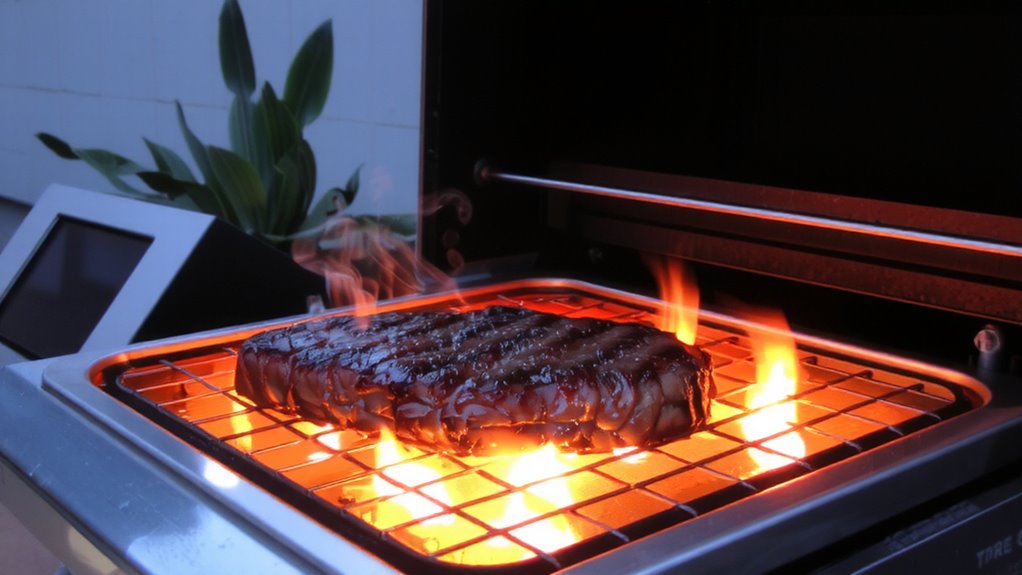
While traditional grills rely on heated air to cook food, infrared grills use a different method-one that transfers heat through electromagnetic radiation. You’re fundamentally cooking with intense, direct energy emitted from a hot surface, usually a ceramic or metal burner element. This method delivers rapid searing and excellent heat distribution, minimizing hot and cold spots across the cooking surface. Because the energy transfers directly to the food rather than heating the surrounding air, infrared grills offer superior energy efficiency-less fuel is wasted, and preheat times are considerably reduced. You’ll notice quicker readiness and more consistent results, especially with steaks or chops. However, precise temperature control can be trickier, and flare-ups may occur if grease hits the hot element. Still, for those prioritizing performance and efficiency in outdoor cooking, infrared technology presents a compelling upgrade worth considering.
Why Infrared Grills Cook Faster Than Gas
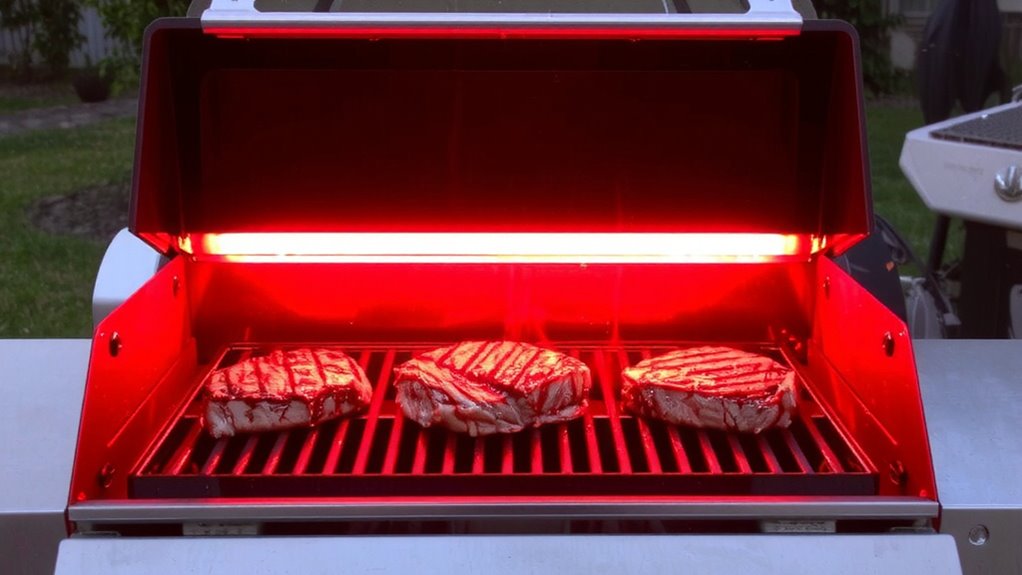
Heat transfer is the key reason infrared grills outpace conventional gas models when it comes to cooking speed. Instead of heating the air around food like traditional grills, infrared units use radiant heat that directly targets the surface, drastically reducing preheat time and cooking duration. This direct method boosts thermal efficiency, meaning less energy is wasted. You’ll notice meals sear and cook in minutes, not because the flame is larger, but because the heat transfer is more effective. The emitter plate absorbs gas energy and re-radiates it as intense infrared waves, which penetrate food faster than convective heat. While this method demands attention to avoid overcooking, it’s ideal when you want quick, high-heat results. Thermal efficiency also means you use less fuel over time, cutting costs. Overall, infrared grills excel when speed and performance matter, making them a smart pick for busy grillers who value precision and control.
How Infrared Grills Deliver Superior Searing
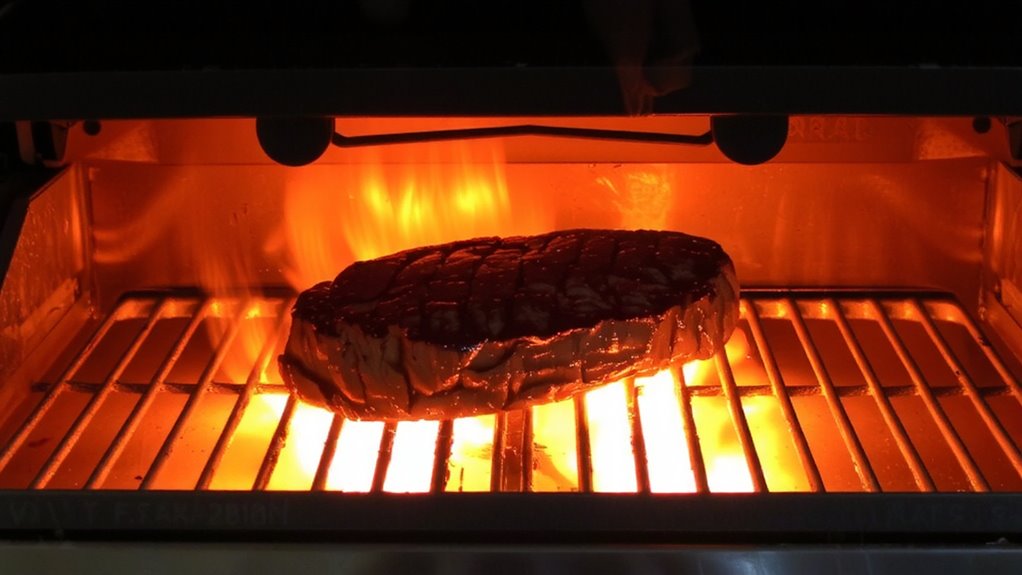
You get that perfect sear on steaks and chops not just from high heat, but from how quickly and evenly it’s delivered-something infrared grills handle better than most. The secret lies in their intense radiant energy, which transfers heat directly to food with minimal loss. With heat intensity reaching 700°F or more, infrared burners create an immediate crust, locking in juices and enhancing flavor. Unlike conventional grills that rely on convection, infrared systems reduce hot spots, boosting sear efficiency across the entire surface. You’ll notice results in less time-thick ribeyes develop that restaurant-quality char in under five minutes. Even searing delicate items like tuna steaks becomes predictable and consistent. This precision doesn’t just look impressive; it improves overall cooking control. While mastering the high output takes slight adjustment, the payoff in texture and taste is undeniable for serious outdoor cooks.
Do Infrared Grills Use Less Propane?
Most infrared grills do use less propane than conventional models, and the difference can add up over time-especially if you’re cooking frequently or for large groups. That’s because infrared technology delivers better fuel efficiency by transferring heat directly to the food through radiant energy, rather than heating the air inside the grill. This method means you reach cooking temperatures faster and maintain them with less fuel. Infrared grills also offer superior heat retention, thanks to their tightly sealed cooking chambers and dense cooking surfaces, which reduce heat loss. You’ll likely notice you’re refilling your propane tank less often compared to traditional gas grills. While initial setup and preheating times vary, the long-term savings on fuel make infrared a practical choice for regular use. Just keep in mind that ideal fuel efficiency depends on proper maintenance and correct usage.
Why Infrared Grills Are Hard to Control
Despite their fuel efficiency and rapid heating, infrared grills can be tricky to manage, especially if you’re used to the more forgiving nature of conventional gas models. You’ll notice the heat intensity is far more concentrated, which is great for searing but tough when you’re trying to maintain a steady cooking temperature. Infrared burners transfer heat directly via radiant energy, so small adjustments can lead to sudden temperature spikes. That means a slight turn of the knob might push your grill from 350°F to over 550°F in seconds, risking burnt food if you’re not paying close attention. Since there’s less air buffering the heat, you have less margin for error when roasting or slow-cooking. Managing flare-ups also becomes more critical, as the intense heat can quickly escalate them. You’ll need sharper reflexes and closer monitoring to succeed.
Are Infrared Grills Worth the Higher Price?
While infrared grills often carry a steeper price tag than traditional models, that added cost comes with performance benefits that might justify the investment-depending on your cooking style and priorities. You get faster preheating and stronger searing thanks to infrared efficiency, which transfers heat directly to food with less energy waste. The intense, even heat also means better heat retention, so your grill maintains high temps even in cold weather or when searing thick steaks. That consistency can elevate your results, especially if you frequently grill meats needing high-heat searing. Yes, the upfront cost is higher, and repairs can be pricier, but the long-term fuel savings and faster cook times add up. If you value precision and speed-and use your grill often-the upgrade could pay off. For casual cooks, though, the extra expense might not be worth it.
Best Uses for Infrared Grills (And When to Skip One)
Precision defines the infrared grill’s strength, and if you’re after restaurant-style sears or quick weeknight meals, it’s hard to beat. Its intense, even heat excels at direct cooking, making it ideal for steaks, chops, and burgers that need high heat and fast results. You’ll get that crispy exterior without overcooking the inside, thanks to rapid temperature response. But when it comes to delicate foods-like fish fillets, vegetables, or anything prone to drying-convection grills often perform better. Infrared units can scorch such items before they’re properly cooked through. Plus, they demand close attention; a moment’s distraction can lead to burnt spots. If you mostly grill sturdy meats and value speed and searing power, an infrared grill makes sense. But if your cooking leans toward gentle heat or indirect methods, you’re better off skipping one and sticking with traditional options.
On a final note
You’ll appreciate how infrared grills heat food directly with intense radiant energy, slashing cook times and boosting sear quality. They’re efficient with propane and great for steaks or chops, but their steep heat makes temperature control tricky. The higher cost may not pay off if you mostly grill low and slow. For quick, high-heat cooking, though, they’re effective-just expect a learning curve and precise prep needs.