Lowering Grill Height Gradually During Hot Smoking to Adjust Radiation Intensity
Lowering your grill height gradually during hot smoking lets you fine-tune radiant heat, enhancing bark formation while protecting the meat’s interior. As you reduce the grate distance, infrared energy intensifies, improving searing and fat rendering. Raising it early in the cook helps avoid smoke stagnation, then lowering it guarantees even exposure to clean, thin blue smoke. This method balances flavor and texture. You’ll see how precise adjustments impact results when you explore the science behind heat layering and smoke behavior.
Notable Insights
- Lowering the grill height gradually increases radiant heat exposure for better surface browning and bark formation.
- Adjusting the rack during cooking helps maintain optimal heat intensity as fuel levels change over time.
- Start with a higher rack position to avoid excessive charring during initial high-smoke phases.
- Gradual lowering compensates for decreasing fire intensity, ensuring consistent thermal energy delivery to the meat.
- Use mid-smoke height adjustments to balance radiant heat and convection for even, predictable cooking results.
Why Grill Height Matters in Hot Smoking
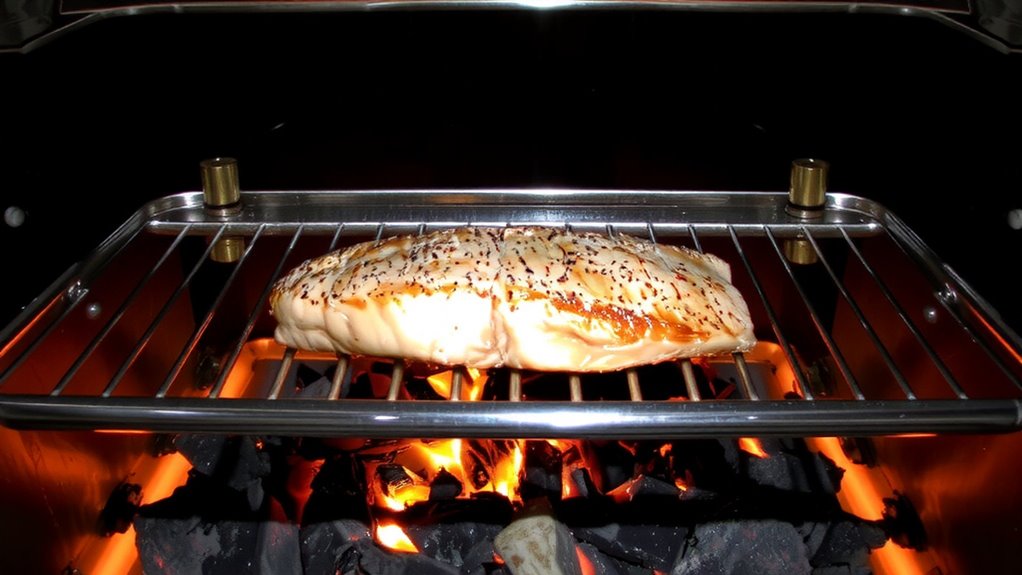
Ever wonder why your smoked brisket comes out perfectly on some days and dries out on others, even when you follow the same recipe? The answer often lies in grill placement. When you adjust the grill height, you’re changing how much radiant heat hits the meat-too close, and you risk charring; too far, and cooking slows unevenly. Proper grill height guarantees consistent heat exposure, helping render fat and build bark without drying out the interior. It also affects smoke circulation: if the rack’s too low, airflow gets restricted, leading to stagnant zones and uneven flavor. Raise it slightly, and smoke flows more freely, wrapping around the meat for fuller taste. Experienced pitmasters know that ideal height balances heat and airflow. It’s not just about time or temperature-placement shapes how energy and smoke interact with food. Mastering this gives you predictable, restaurant-quality results every time, not just on lucky days.
When to Adjust the Rack for Perfect Smoke
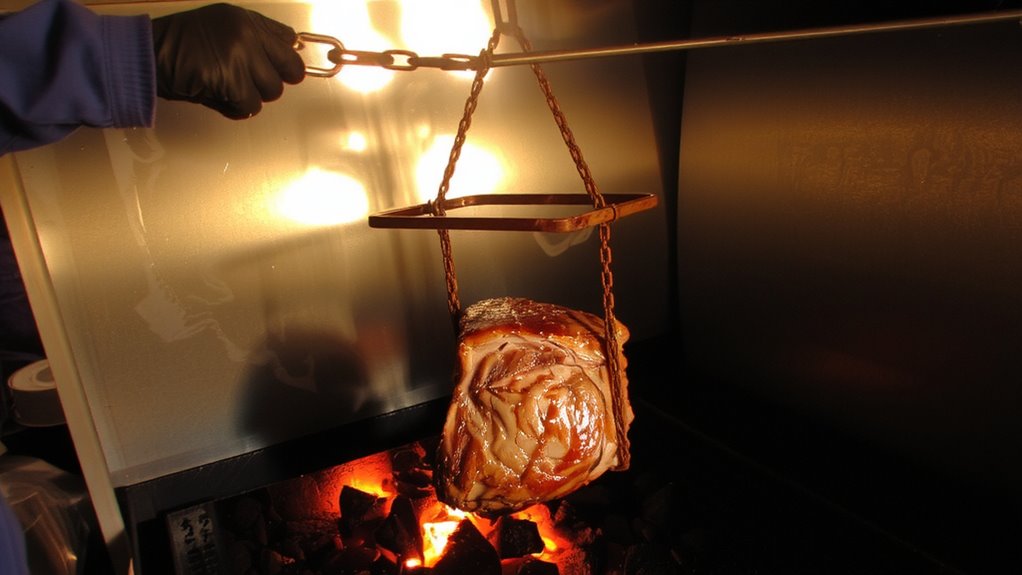
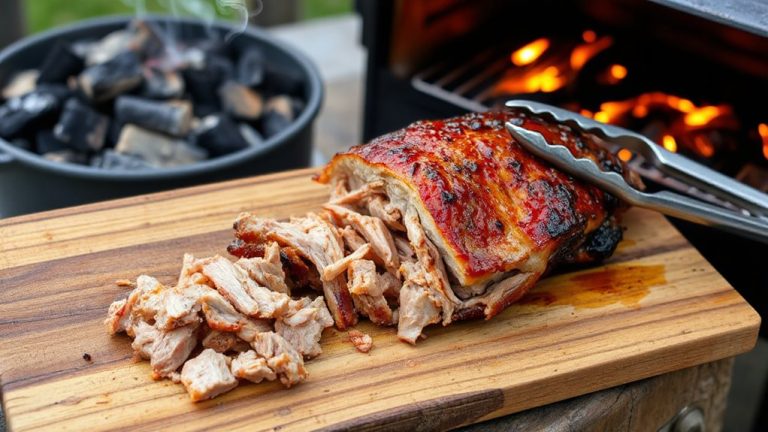
Why does your pork shoulder sometimes absorb smoke like a sponge and other times seem to resist flavor altogether? The answer often lies in your rack position and smoke density. If the smoke’s too thin or too thick, your meat won’t develop that ideal smoke ring or balanced taste. Early in the cook, when smoke density is high from fresh wood and active combustion, raising the rack slightly prevents over-exposure. As burning stabilizes, gradually lowering the rack keeps the meat in the perfect zone-close enough to benefit from clean-burning smoke, but not so close that it’s overwhelmed by acrid, heavy smoke. You’re aiming for thin blue smoke, not thick white billows. Adjusting rack position proactively guarantees consistent smoke absorption. It’s not just about heat-it’s about timing and smoke quality. Master this, and your brisket, pork, or ribs will thank you with deeper, cleaner flavor.
How Heat Changes as You Lower the Grate
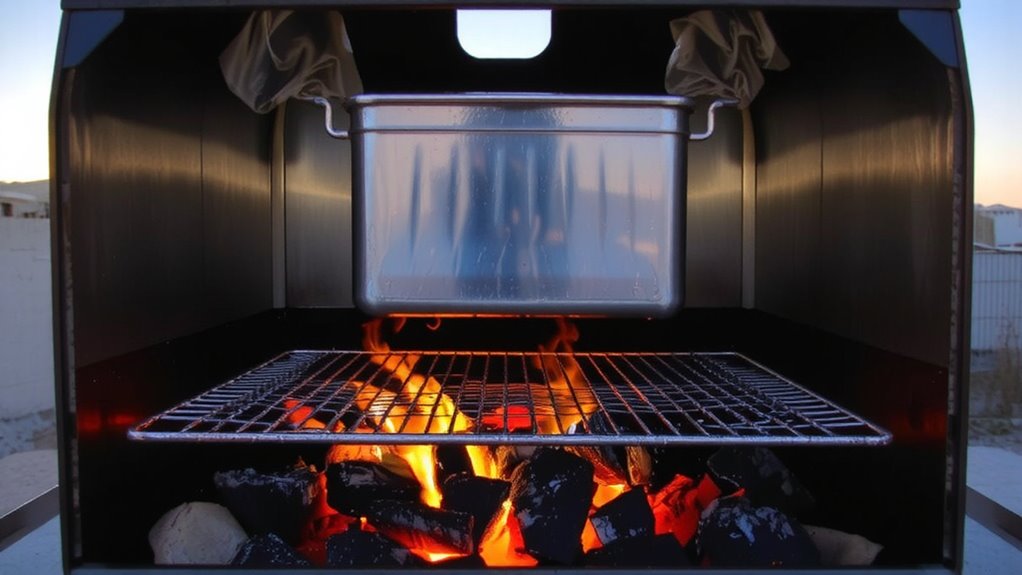
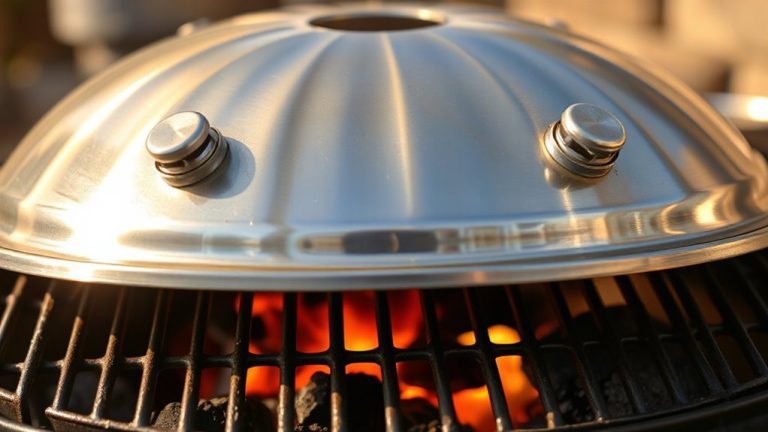
Moving the cooking grate closer to the heat source isn’t just about speeding up cook time-it reshapes how energy transfers to your meat. As you lower the grate, radiant efficiency increases markedly because infrared energy travels a shorter distance, delivering more direct heat to the surface. You’ll notice tighter heat distribution, especially over hot spots, which can help sear meats early in the smoke. However, this also means less forgiveness for delicate items like fish or thin cuts that might overcook. The proximity amplifies temperature variances across the grill, demanding careful monitoring. While higher grates rely more on convection, lower positions lean into radiation, making them ideal for bark development on brisket or ribs. Ultimately, adjusting grate height gives you finer control over cooking dynamics. Done right, it balances browning and penetration without drying out the interior. Radiant efficiency and heat distribution become powerful tools-once you understand their influence.
How to Safely Adjust Grill Height Mid-Smoke
| Step | Action | Purpose |
|---|---|---|
| 1 | Shut off burners or control airflow | Reduce active flame risk |
| 2 | Use lift handles with steady pressure | Maintain grill stability |
| 3 | Adjust height incrementally | Fine-tune radiation intensity |
| 4 | Recheck rack alignment | Guarantee consistent smoke circulation |
This method keeps your cook predictable, especially with temperature-sensitive meats. Proper technique protects both flavor and safety, giving you command over radiant heat without guesswork.
Mistakes That Ruin Temperature Control
You’ve just adjusted your grill height with care, shutting off burners, using steady pressure on the lift handles, and aligning the racks to keep heat and smoke moving evenly. But if you reopen the dampers too wide or leave the lid off too long, you’ll create fluctuating airflow, which destabilizes the chamber temperature. That inconsistency makes it harder to maintain a steady smoke, leading to unevenly cooked meat. An inconsistent fuel supply-whether from a weak propane tank, uneven charcoal distribution, or clogged burners-only worsens the problem. You might think minor adjustments are enough, but small imbalances compound quickly in precision cooking. Avoid relying solely on built-in thermometers; they’re often inaccurate. Use a reliable dual-probe setup to monitor both ambient and internal meat temps. Consistent combustion and controlled oxygen intake are key. Skip the guesswork: manage your airflow and fuel deliberately, or risk undermining your careful prep with avoidable thermal swings that ruin texture and flavor.
On a final note
You’ve seen how lowering the grill height during hot smoking fine-tunes radiant heat exposure, giving you tighter control over cooking intensity. It’s a practical move that boosts consistency, especially with delicate meats. Just make sure adjustments are slow and tools are heat-rated. Done right, this technique improves crust development and moisture retention without flare-ups. It’s not a fix-all, but paired with steady airflow and temp monitoring, it elevates your results markedly.