Why Lavender Works as a Subtle Herb in Gourmet Smoked Poultry Rubs
You’re using culinary lavender to elevate your smoked poultry because its citrusy, woodsy notes cut through richness and add aromatic depth. When balanced-just ½ tsp per cup of rub-it enhances smokiness without overpowering. Paired with rosemary, garlic, or citrus zest, it creates a refined, layered flavor. Use only culinary-grade, finely ground lavender to avoid soapiness. Let the rubbed bird rest overnight, and you’ll discover how this floral herb transforms simple poultry into something distinctly gourmet.
Notable Insights
- Lavender’s citrusy, woodsy notes add complexity without overpowering smoked poultry when used sparingly.
- Its floral sweetness balances rich, fatty skin and enhances smoky flavors during slow smoking.
- Culinary-grade lavender contains linalool, which imparts a soothing aroma and cuts through richness.
- When blended with thyme, rosemary, and citrus, it creates a balanced, gourmet herb profile.
- Proper dosage (½ tsp per cup of rub) and fine grinding prevent soapy notes and ensure even flavor.
Why Lavender Elevates Smoked Poultry
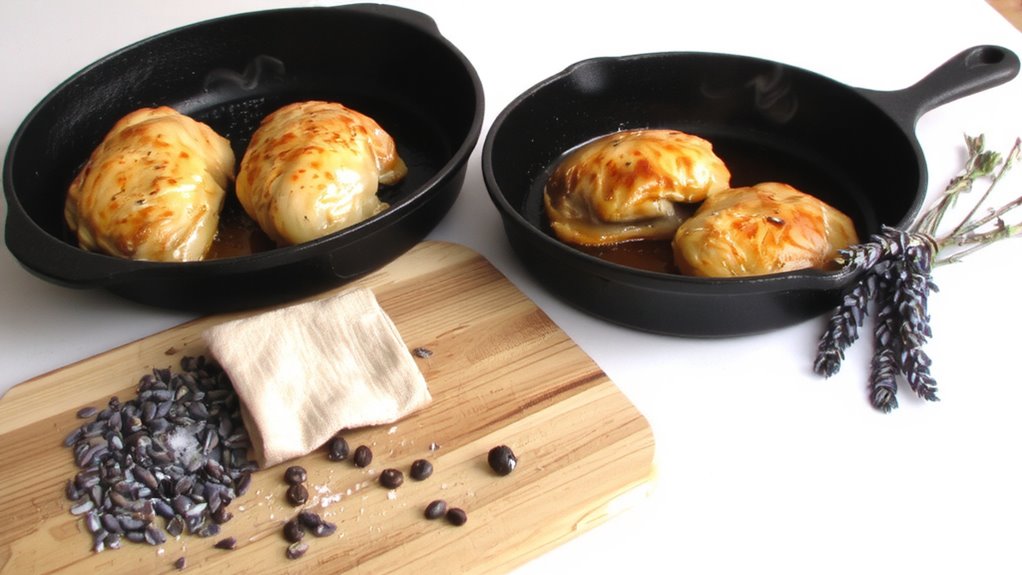
While you might hesitate to pair a flower with smoked poultry, culinary lavender actually plays a key role in elevating the flavor profile when used correctly. When you use dried lavender buds in a small amount-just a pinch per pound-culinary lavender can add a citrusy, woodsy depth that complements smokiness without overwhelming. It always adds a delicate floral note that, when balanced with thyme, rosemary, or sage, elevates smoked poultry into gourmet territory. Blended into herbs de Provence, it brings complexity and a natural and soothing aroma enhanced by linalool during smoking. Though often associated with lavender-infused skincare, its real magic in cooking lies in cutting richness and adding brightness. Just be precise-a heavy hand ruins the balance. Used wisely, lavender can add distinction to your rub, transforming familiar flavors into something refined and memorable.
How Lavender Enhances Smoky, Savory Flavors
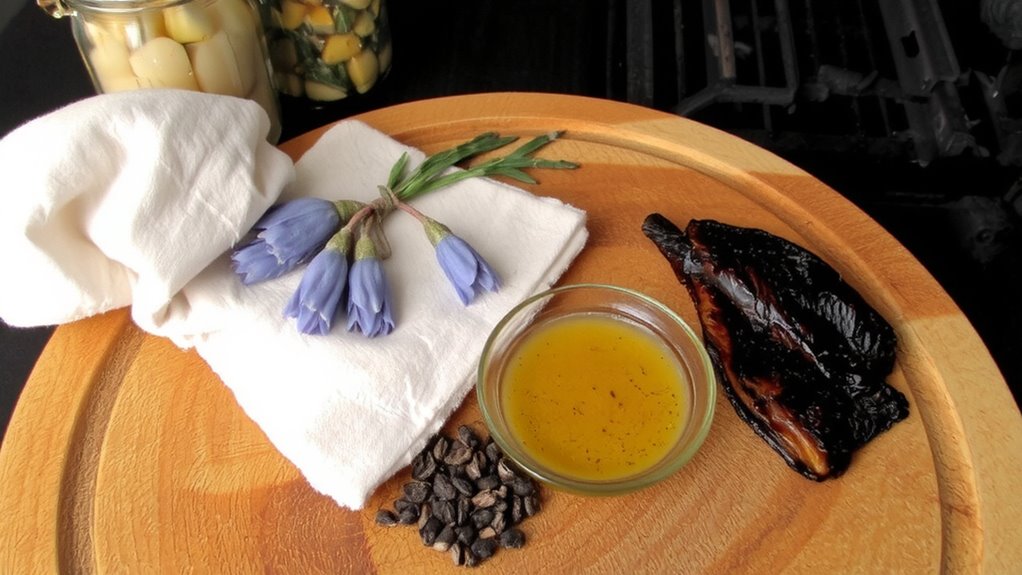
Since you’re aiming to build depth in your smoked poultry rubs, consider how lavender’s aromatic complexity sharpens smoky, savory notes instead of masking them. Lavender enhances smoky, savory flavors by introducing a subtle floral sweetness that balances rich, fatty poultry skin without overpowering it. When you use culinary-grade dried lavender-just ¼ to ½ tsp per cup of rub-you avoid soapy off-notes while letting volatile essential oils meld with smoke compounds like guaiacol during slow smoking. This synergy creates a more layered, gourmet flavor profile. In blends inspired by Herbes de Provence, lavender’s earthy brightness harmonizes with umami-rich elements, elevating your smoked poultry rubs with a refined, aromatic complexity. It’s not just about adding fragrance-it’s about precision. That subtle floral lift cuts through heaviness, making each bite more dynamic and balanced, perfect for discerning palates seeking sophistication in outdoor cooking.
Pairing Lavender With Rosemary, Garlic, and Citrus
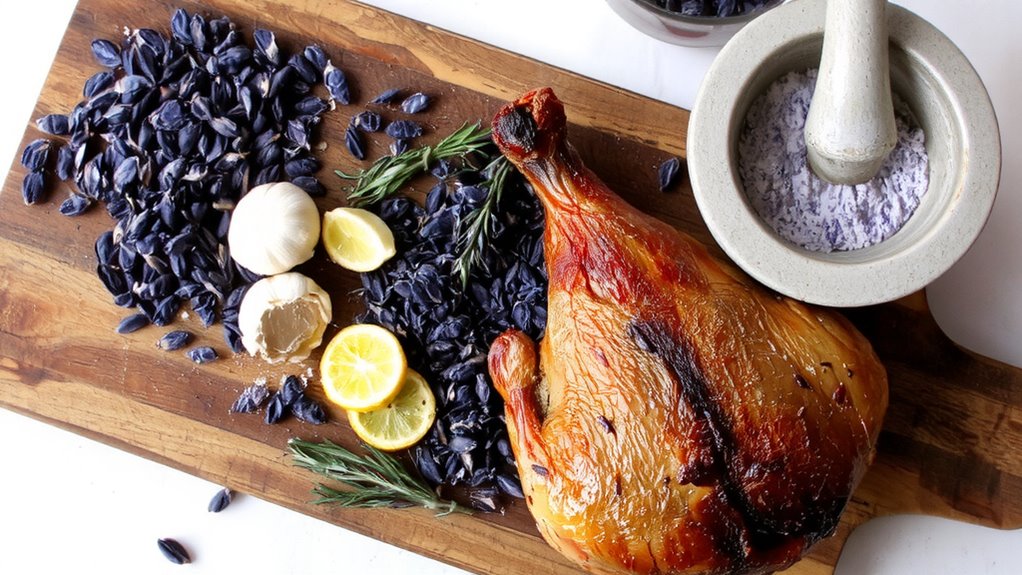
Lavender doesn’t work in isolation, and you’ll get the best results when pairing it thoughtfully with complementary herbs and aromatics. In gourmet smoked poultry rubs, lavender balances beautifully with rosemary’s piney depth, creating an aromatic foundation that’s both earthy and bright. You’ll notice that garlic adds savory complexity, grounding lavender’s floral note without overpowering delicate meat. When citrus-like lemon or orange zest-joins the mix, it enhances the citrusy kick already present in lavender, mellowing its intensity. Together, these ingredients mirror the classic Herbes de Provence blend, making them ideal for seasoned rubs. For culinary uses, stick to culinary-grade lavender and use just ½ to 1 teaspoon per cup of rub. This balance guarantees the floral note uplifts, not overwhelms, your final dish.
Why Lavender Can Taste Soapy (And How to Prevent It)
A small amount of the right lavender goes a long way-too much, or the wrong type, and your rub might end up tasting more like laundry detergent than gourmet seasoning. The soapy flavor you’re worried about usually comes from using non-culinary-grade lavender, which has high camphor content and harsh essential oils. That’s why you should only use culinary-grade lavender-it’s grown specifically for cooking and offers a more balanced aromatic profile. When used in excess, even good lavender can make your rub taste soapy, so stick to ½ to 1 teaspoon per cup of spice mix. Finely grinding lavender guarantees it blends evenly, avoiding concentrated bursts of flavor. And remember, pairing it with complementary flavors like citrus or garlic doesn’t just elevate the dish-it masks any lingering perfumed notes. Lavender in cooking should enhance, not overpower.
How Lavender Balances Rich, Smoky Flavors
You’ve got to respect how a well-balanced rub can transform smoked poultry from good to memorable, and that’s where lavender steps in without stealing the show. Its floral sweetness softens intense smoky flavors, preventing your poultry rubs from turning harsh or flat. The citrusy notes and woodsiness in lavender add aromatic complexity, harmonizing with the smoke rather than clashing. When crushed-just ½ to 1 teaspoon per cup of herb blend-its essential oils release a subtle perfume during cooking, cutting through richness and enhancing depth. Paired with rosemary and thyme, lavender rounds out the blend, lifting the overall profile. You’re not tasting lavender outright; you’re feeling its presence in the balance, the way it refreshes the palate and refines the savory notes. That’s how it earns its spot: quietly elevating your smoked poultry with precision and grace.
How to Make a Lavender Poultry Rub
What makes a poultry rub truly stand out on the smoker? The secret lies in a well-balanced blend where floral notes enhance, not overpower. Start by using only culinary lavender-like Island Lavender’s Culinary Lavender-to guarantee clean, aromatic flavor. Combine 2 tbsp kosher salt, 1 tbsp black pepper, 1 tbsp finely crushed rosemary, 1 tbsp dried thyme, and ½ to 1 tsp finely crushed dried lavender buds. Make sure to grind the buds in a mortar or spice grinder to avoid bitter, soapy hints. Add 1 tsp garlic powder, ½ tsp onion powder, and 1 tsp dried lemon zest to build savory depth. This gourmet poultry rub works best when each ingredient is evenly distributed, letting the thyme, rosemary, and citrus notes support the delicate lavender. Proper proportions guarantee a rub that’s complex, fragrant, and perfectly suited for slow-smoked dishes.
Best Practices for Applying Lavender Rubs to Poultry
Getting the most from your homemade lavender poultry rub hinges on technique as much as ingredients. For effective rub application, always pat the poultry skin dry-this boosts adhesion and guarantees deeper flavor penetration. Use only culinary-grade lavender, grinding it into finely crushed lavender to prevent bitter, overpowering notes. Mix it into your poultry rub using no more than ½ to 1 teaspoon per cup, balancing it with complementary herbs like rosemary, thyme, and lemon zest for a well-rounded herb combination. This creates a balanced aromatic rub that enhances, not dominates. For best results, grind the lavender buds with a mortar and pestle or spice grinder before blending. After rub application, allow the resting rubbed poultry to chill in the refrigerator for at least 30 minutes; overnight is ideal for maximum flavor development.
On a final note
You’ll find lavender enhances smoked poultry when used thoughtfully, cutting through richness with its floral precision. It’s not a dominant player-properly dosed, it lifts smoky, savory notes without soaping the dish. Paired with rosemary, garlic, or citrus, it adds aromatic complexity. Applied as a balanced rub, lavender integrates seamlessly into the crust, especially on chicken or turkey. Done right, it elevates your BBQ from familiar to fine, proving even delicate herbs have a place at the smoker.