Mastering the Art of Smoking: Techniques for Perfectly Cooked Fish
Start with fresh, fatty fish like salmon or mackerel-they hold moisture and absorb smoke better. Always brine first to lock in flavor and keep the flesh tender, using a mix of salt, sugar, and cold water for 30 minutes to 8 hours. Pair mild fish with alder or applewood, richer fish with cherry or hickory. Smoke between 175°F and 200°F for even cooking, using a digital thermometer to hit 145°F in the thickest part. A clean flake test confirms doneness. You’ll find the full breakdown of each step just ahead.
Notable Insights
- Choose fresh, fatty fish like salmon or mackerel for better smoke absorption and moisture retention.
- Brine fish for 30 minutes to 8 hours using salt, sugar, and water to enhance flavor and texture.
- Pair mild fish with alder or applewood; use cherry or hickory for heartier varieties like salmon.
- Maintain a smoking temperature between 175°F and 200°F for even cooking and optimal smoke penetration.
- Check doneness at 145°F internally and confirm with a clean flake using a fork.
Choose the Best Fish for Smoking
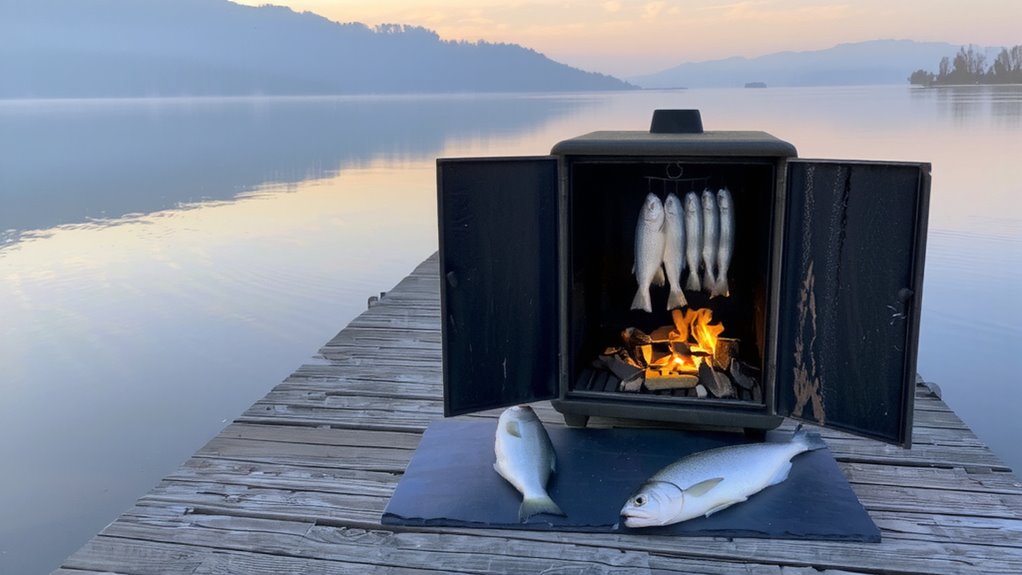
Freshness matters most when picking a fish for the smoker-look for clear eyes, firm flesh, and a clean, ocean-like scent. Your fish selection directly shapes the final flavor profile, so choose wisely. Fatty species like salmon, mackerel, and bluefish absorb smoke better and stay moist during the long cook. Lean fish, such as cod or halibut, can dry out unless carefully monitored. Wild-caught varieties often offer a deeper, more complex taste compared to farmed, though both work with proper handling. Consider the fish’s size and thickness-uniform cuts smoke evenly. Whole fish impart a traditional appeal, but fillets are simpler for beginners. You’re not just preparing a meal; you’re shaping texture and taste through careful fish selection. A well-chosen fish lays the foundation for a balanced, smoky flavor profile that defines great outdoor cooking. For optimal results, pair your fish selection with the right equipment, such as a best smoker for fish.
Brine for Flavor and Moisture
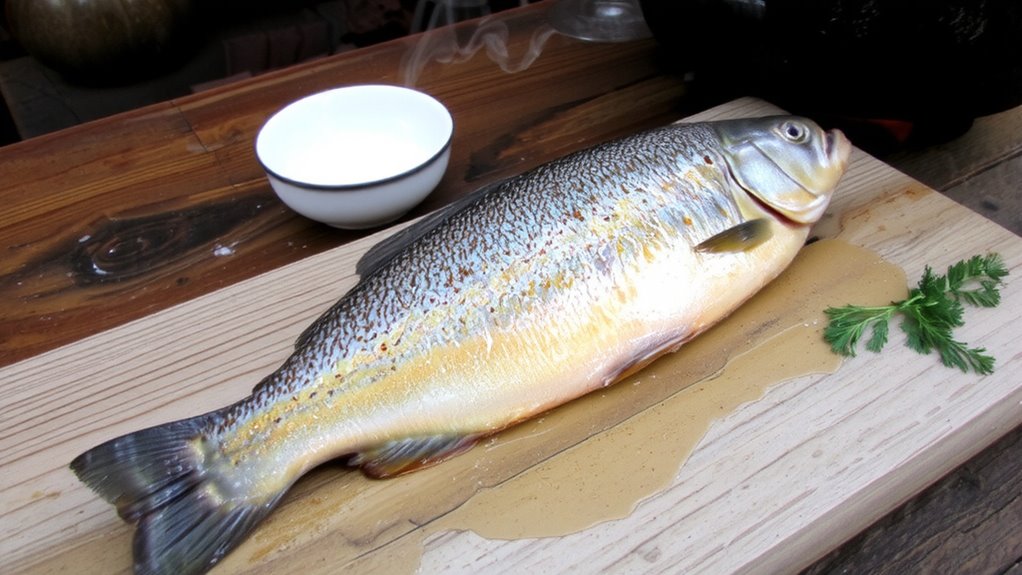
You’ve picked your fish with care, knowing that its quality sets the stage for everything that follows, and now it’s time to prepare it for the smoker in a way that locks in moisture and builds flavor from the inside out. Brining isn’t just optional-it’s essential. A well-balanced brine, typically with a 5% to 10% sugar ratio, enhances browning and tempers saltiness without overwhelming the fish’s natural taste. You’ll want to dissolve kosher salt and sugar in cold water, adding herbs or spices if desired. The brine duration depends on thickness: thin fillets need just 30 minutes, while steaks or whole fish may brine up to 8 hours. Over-brining risks excessive saltiness and mushy texture, so timing matters. This step guarantees your smoked fish stays moist during the long, low cook, delivering a clean, rich flavor that plain seasoning can’t match. Pairing your brined fish with a well-chosen best prime rib rubs can elevate the accompanying dishes on your smoking menu.
Pair Wood With Your Fish Type
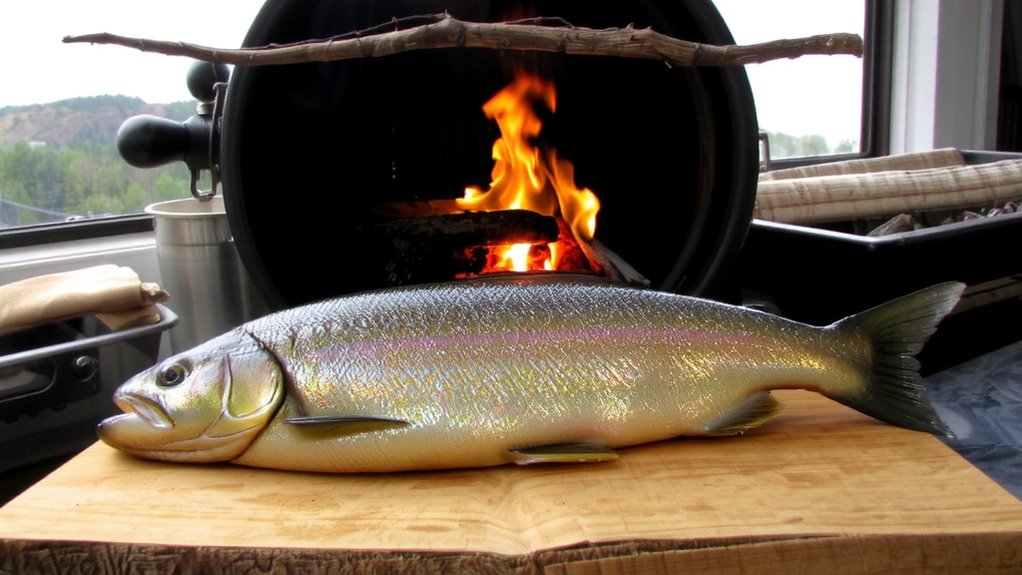
While some woods can overpower delicate fish, choosing the right type elevates both aroma and taste without masking the meat’s natural character. Wood pairing is key-mild fish like trout or cod respond best to light smoke intensity from alder or applewood, which add subtle sweetness without dominating. For heartier species such as salmon or mackerel, cherry or hickory work well, offering richer flavor and moderate smoke intensity that complements oily flesh. Avoid strong woods like mesquite with delicate fillets; their aggressive burn can ruin balance. You’ll find that combining wood pairing with the fish’s fat content guarantees better results-fatty fish absorb smoke more readily, so even medium-intensity woods deliver depth without bitterness. Always consider how smoke intensity builds over time; a light touch often leaves a more polished finish. Mastering this balance improves consistency and flavor clarity in every batch. For best results, match your wood choice to your protein-just as best wood chips for smoking chicken enhance poultry, the right wood elevates fish smoking too.
Smoke at the Right Temperature
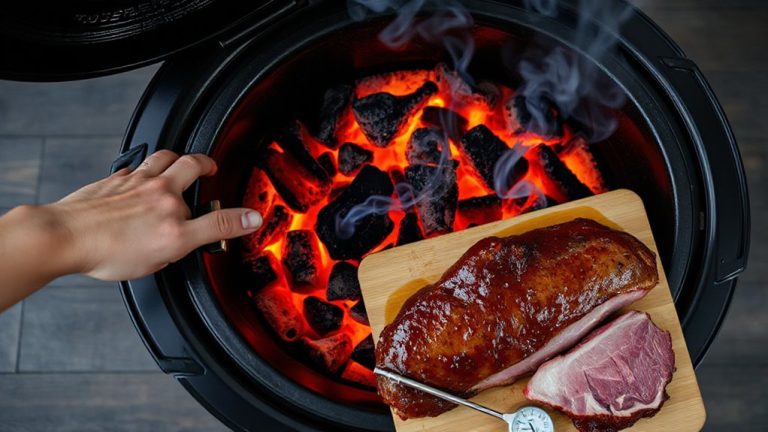
Temperature control is the backbone of successful smoked fish-too high and the exterior dries out before the interior cooks, too low and the fish lingers in the danger zone, risking spoilage. You need steady heat consistency, ideally between 175°F and 200°F, to guarantee even cooking while drawing out moisture slowly. This low-and-slow approach lets smoke penetrate without overcooking delicate flesh. Digital smokers often excel here, maintaining precise temperature control with minimal input. Offset smokers can work, but they demand vigilance-fluctuations degrade texture and flavor. Charcoal users should rely on a trusty thermometer and dampers to regulate airflow. Electric and pellet models deliver superior heat consistency, especially in variable weather. Whatever your rig, stability trumps complexity. Consistent performance beats gadgetry when it comes to smoked fish, where precision shapes quality. Master temperature, and you master the smoke.
Test for Perfect Doneness
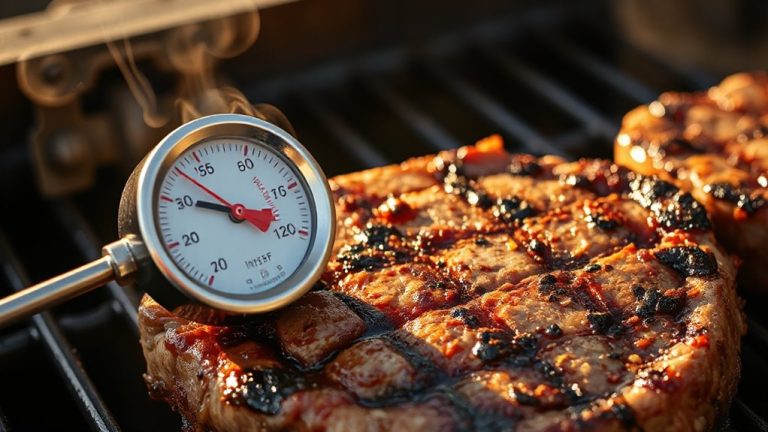
Getting the heat right sets the stage, but knowing when your fish is perfectly smoked seals the deal. You want to pull the fish off just as it reaches the ideal internal temperature-typically 145°F for safety and best texture. Use a reliable meat thermometer inserted into the thickest part, avoiding bones for accuracy. Alongside this, perform the flake test: gently press a fork into the flesh. If it flakes easily but still holds together, you’ve hit the sweet spot. Don’t rely solely on appearance or cook time-variables like thickness and airflow can alter results. The internal temperature gives you precision, while the flake test confirms mouthfeel and doneness. Combining both methods guarantees a moist, tender result every time. Mastering these checks means consistently delivering quality fish-firm yet delicate, rich in smoky flavor, and never overcooked.
On a final note
You’ve got the tools to smoke fish like a pro. Choosing the right species, like salmon or mackerel, guarantees solid texture and rich flavor. Brining locks in moisture and deepens taste, while matching wood-alder for mildness, hickory for boldness-enhances complexity. Maintain a steady 200–225°F for even cooking, and check doneness with a thermometer: 145°F is ideal. These steps consistently deliver moist, smoky results perfect for any outdoor feast.