A Beginner’s Guide to Understanding and Managing Fire Levels When Smoking Meat
You’ll need to start your fire right by aiming for 225–250°F, using dry hardwoods like oak or hickory for steady heat and rich flavor. Manage airflow with intake and exhaust dampers-too little oxygen causes smoldering, while too much spikes temperatures. Watch for thin, blue smoke, a sign of clean combustion. Know where heat builds in your smoker to avoid hot spots. Adjust fuel and vents early and often-you’ll learn how small changes shape better results over time.
Notable Insights
- Start with a controlled fire to reach 225–250°F, avoiding spikes that disrupt smoke quality and cooking consistency.
- Choose hardwoods like oak or hickory for long burns and strong flavor, or fruitwoods for milder, sweeter smoke.
- Manage airflow with dampers to maintain clean, blue smoke and prevent sooty, bitter flavors from incomplete combustion.
- Understand heat distribution in your smoker, as hot spots near the firebox can cause uneven cooking.
- Fix common fire issues by adjusting airflow, using dry wood, and monitoring smoke color to ensure efficient burning.
Start the Fire Right: Temperature Basics for Smoking
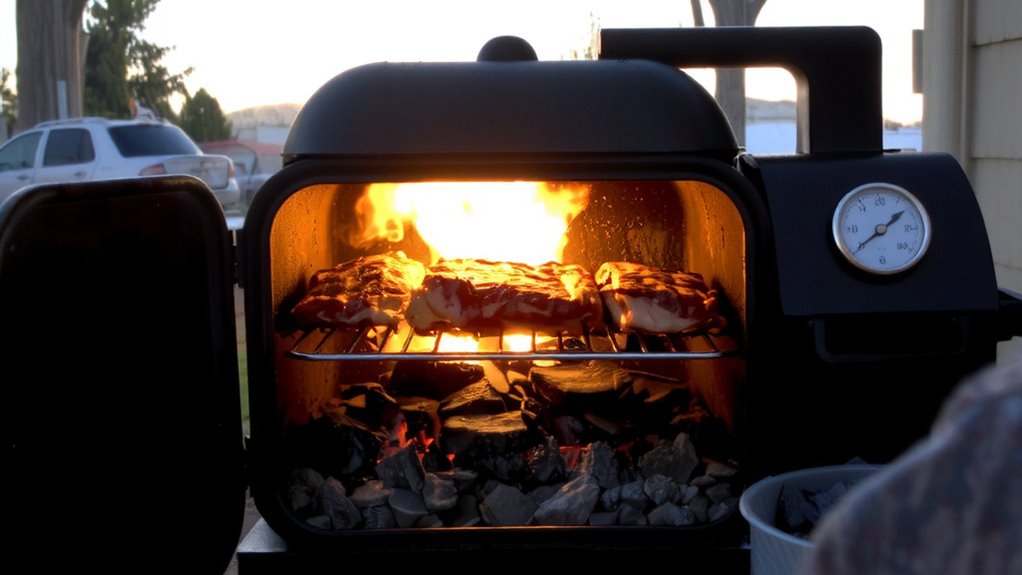
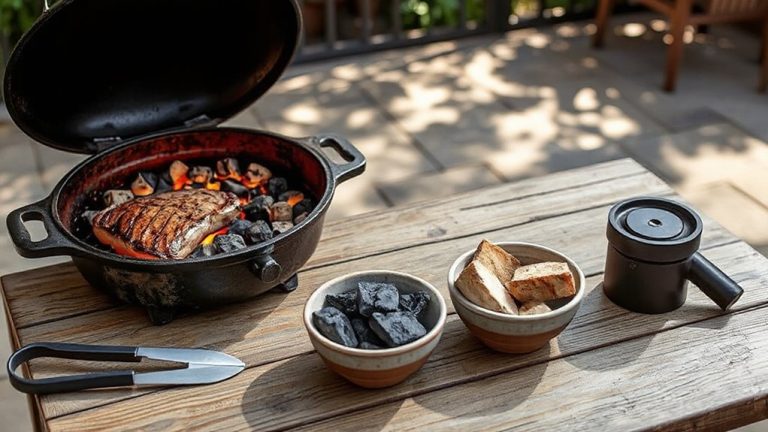
While getting the fire started might seem straightforward, doing it right sets the foundation for everything that follows in the smoking process. You need controlled fire ignition to establish a stable thermal environment, not just quick fuel ignition that risks overheating. A proper start means gradually building heat with sufficient airflow, ensuring coals or wood catch evenly. Rushing leads to flare-ups or stalled temperatures, undermining smoke consistency. You’re not just lighting a fire-you’re creating conditions for low-and-slow cooking that tenderizes tough cuts. Mastery begins here: monitor the initial rise, aim for 225–250°F, and avoid peak spikes. Success hinges on patience during startup; a well-lit fire adapts smoothly to adjustments later. Poor ignition practices cause volatile swings, making temperature regulation harder. Get this step right, and you’ll maintain better control throughout the smoke. It’s foundational-it impacts flavor, texture, and overall cook quality every time. Choosing the right equipment, such as a reliable charcoal grill smoker, can greatly enhance your ability to maintain consistent temperatures from the start.
Choose the Best Fuel for Consistent Smoke
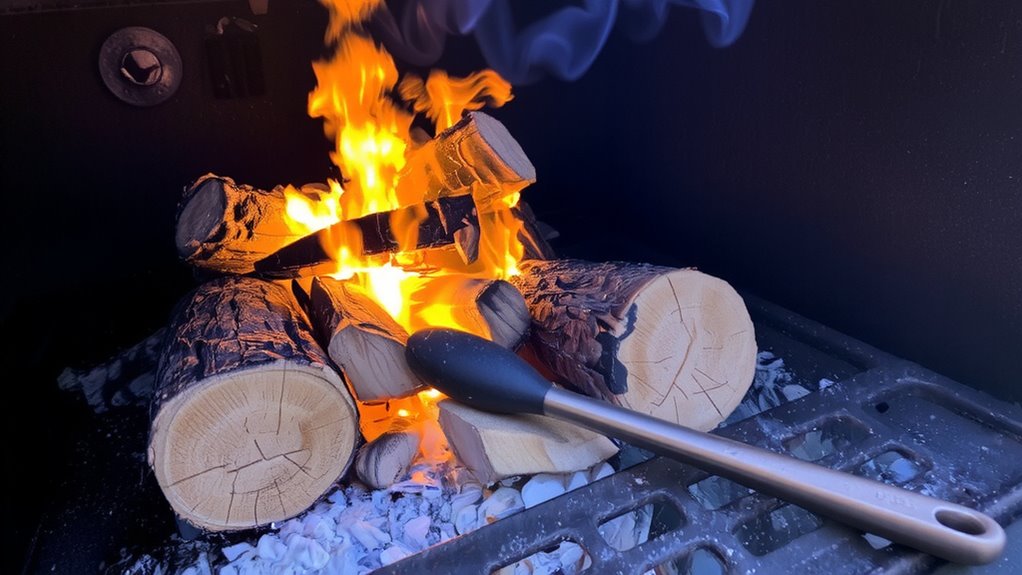
When selecting fuel for smoking, you’re not just choosing what to burn-you’re shaping the flavor, consistency, and control of your entire cook. Smart wood selection impacts how steadily your fire burns and how clean the smoke is. Hardwoods with high fuel density, like oak or hickory, deliver long, even heat and rich flavor-perfect for multi-hour smokes. Softer woods, like apple or cherry, burn faster but add subtle sweetness, ideal for poultry or pork. Mixing woods gives you control over taste and burn time. For those seeking bold flavor and reliable performance, consider the Best Hickory Picks based on burn quality and smoke output.
| Wood Type | Fuel Density | Smoke Flavor |
|---|---|---|
| Hickory | High | Strong, smoky |
| Oak | High | Robust, earthy |
| Cherry | Medium | Mild, sweet |
| Pecan | Medium-High | Nutty, delicate |
Match wood type to your cook length and flavor goal-consistency starts here.
Control Fire With Airflow Management
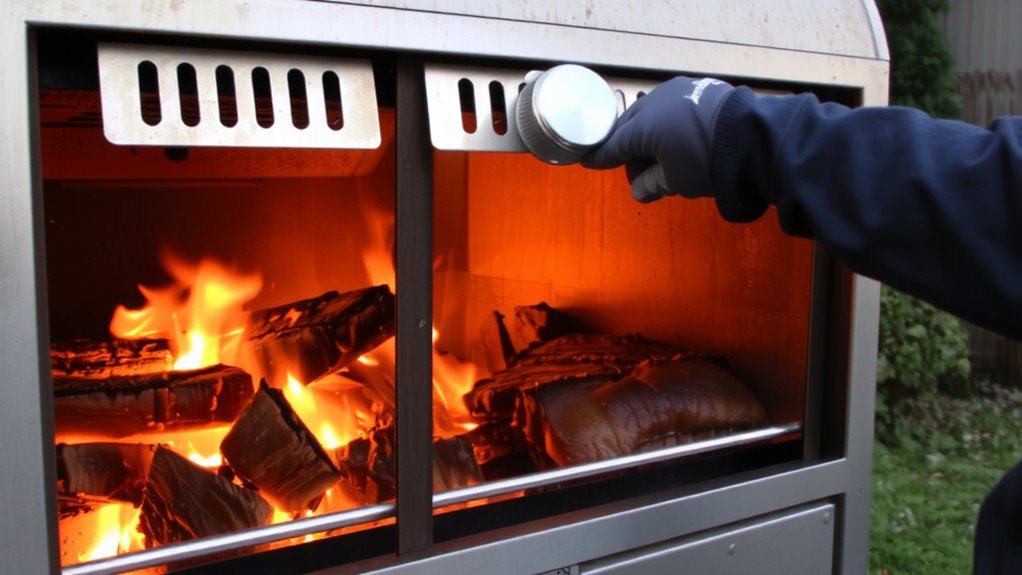
You’ve picked your wood based on burn rate and flavor profile, but even the best fuel won’t deliver consistent results if the airflow in your smoker isn’t properly managed. Airflow dynamics directly influence how evenly your fire burns and how stable your temps stay. Too little oxygen, and combustion efficiency drops-leading to smoldering, soot, and bitter smoke. Open it up too much, and you’ll burn through fuel too fast while risking temperature spikes. Most smokers let you tweak intake and exhaust dampers, giving you control. You’ll want just enough airflow to sustain a clean burn with thin blue smoke-ideally, with visible heat shimmer but no roaring flames. Monitoring airflow isn’t just about starting strong; it’s about maintaining balance over hours. Mastering this means better temperature regulation, cleaner smoke, and tastier meat. It’s one of the most impactful skills you can develop in outdoor cooking.
Where Heat Lives in Your Smoker
Heat doesn’t distribute evenly in most smokers-far from it. You’ll notice hot spots near the firebox and cooler zones toward the opposite end, especially in offset models. This uneven heat distribution means placement matters: meats closer to the fire zones cook faster and get more smoke flavor, while those farther away slow-roast gently. Vertical smokers aren’t immune, either; their stacked racks often experience temperature layering, with the bottom hotter than the top. Understanding where heat lives helps you position food wisely. Most units lack perfect circulation, so relying on a single thermometer reading can mislead. Instead, use multiple probes at different racks or positions to map actual conditions. Fire zones-the area directly above or near the burning fuel-typically run 50°F to 100°F hotter than the rest. Recognizing these patterns improves consistency, letting you adjust placement rather than constantly tweaking the fire. For consistent results, choosing the best smoker for exceptional BBQ can make a significant difference in heat management and flavor development.
Fix Fire Problems When Smoking Meat
A smoker’s fire rarely runs perfectly from the start, and even with a clear map of where heat gathers inside your chamber, flare-ups, thin blue smoke turning to thick white plumes, or sudden temperature crashes can still derail a cook. When that happens, fire troubleshooting becomes essential. If flames surge, you’ve likely got too much oxygen-ease up on the vents. Thick, lazy smoke means incomplete combustion; add more air or dry wood, because clean-burning fuel is key. For smoke troubleshooting, remember: thin, blue-tinted smoke is ideal, signaling efficient burning and clean flavor. Temperature swings often stem from poor airflow or damp fuel. Check your wood-it should be seasoned, not soggy. Adjust dampers gradually. Reacting calmly and methodically fixes most issues. Mastering fire troubleshooting and smoke troubleshooting isn’t about avoiding problems-it’s about understanding your smoker’s rhythm and responding with precision.
On a final note
You’ve now got the basics to manage fire levels effectively while smoking meat. Controlling temperature, choosing the right fuel, and mastering airflow directly impact your results. Understanding heat distribution in your smoker helps avoid hot spots and guarantees even cooking. When problems arise, quick adjustments keep things on track. With practice, these fundamentals become second nature, giving you consistent, flavorful barbecue every time.