Choosing the Right Charcoal Briquettes Based on Your Cooking Style
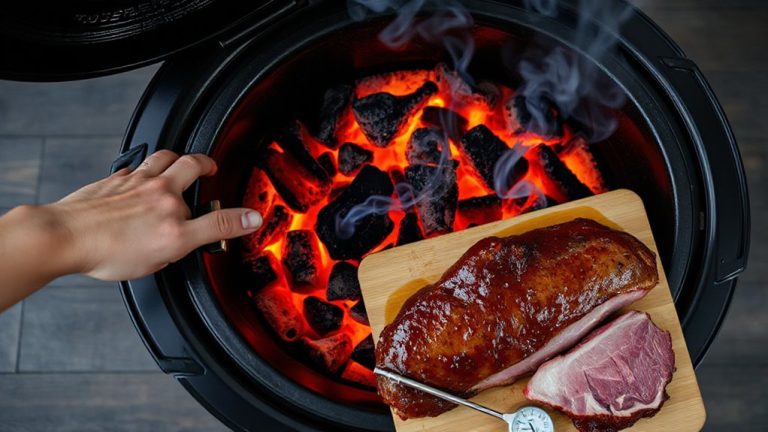
You’ll get better results when you match your charcoal to how you cook. If you’re smoking pork shoulder for hours, go with extended-burn or hardwood blend briquettes-they deliver steady heat and rich flavor. For quick searing, fast-lighting briquettes hit 500°F fast and clean. Prefer less mess and better airflow? Low-ash options help maintain consistent temps and reduce cleanup. Avoid lighter fluid by choosing natural briquettes with clean ingredients. Mixing lump charcoal with briquettes can boost flavor and control when you know how to balance them-there’s more to get right the more complex your cook becomes.
Notable Insights
- Match briquette type to cooking method: standard for consistent low-and-slow smoking, lump for high-heat searing.
- Choose extended-burn briquettes for long cooks like pork shoulder to maintain stable temperatures over 6–8 hours.
- Opt for hardwood blend briquettes to enhance flavor during medium-length smokes with better smoke quality.
- Use fast-lighting briquettes when quick searing is needed, reaching 500°F–600°F in under 20 minutes.
- Select low-ash, all-natural briquettes for cleaner burns, improved airflow, and easier cleanup in closed smokers.
What Kind of Charcoal Briquettes Are You Using?
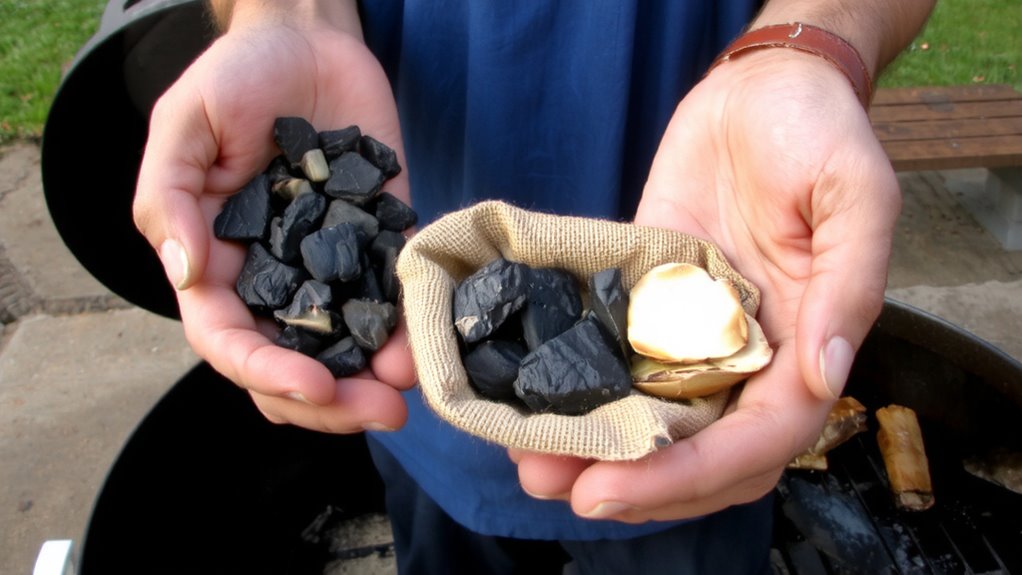
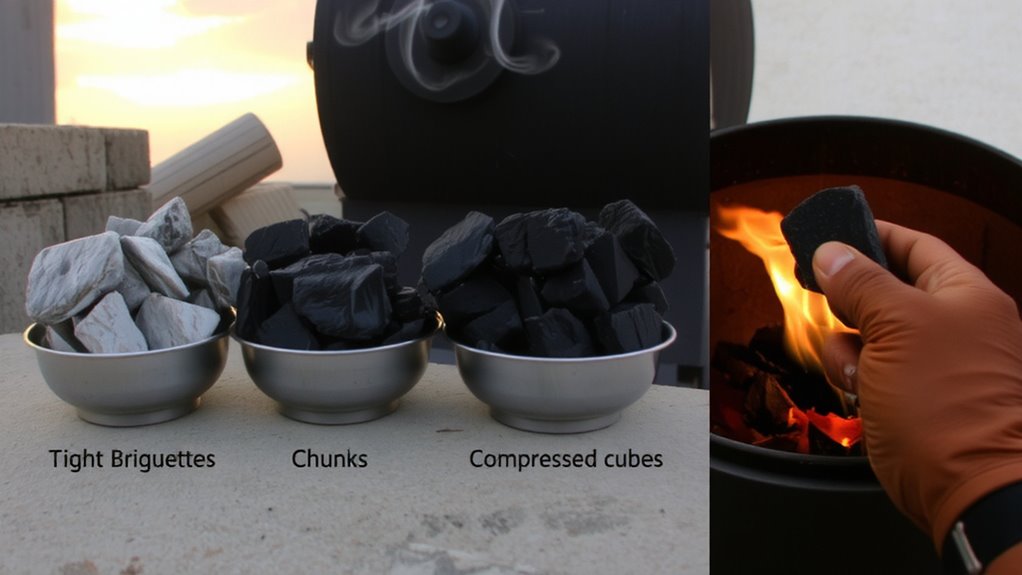
While you might assume all charcoal briquettes are the same, the truth is they vary considerably in composition and performance, directly affecting your grilling results. You’re likely using either standard briquettes or lump charcoal, each offering distinct advantages. Standard briquettes, made from compressed charcoal dust and additives, deliver stable heat consistency, ideal for steady grilling sessions. They burn longer and more predictably, making temperature control easier. However, their additives can subtly alter flavor profiles, sometimes introducing a chemical note many purists dislike. In contrast, lump charcoal-pure charred wood-lights faster and reaches higher temperatures, enhancing natural smokiness. It offers cleaner flavor profiles and responds quicker to airflow adjustments, though heat consistency can be trickier. Your choice ultimately depends on whether you prioritize control or authenticity. For reliable, even burns, standard briquettes work well; for richer taste and responsiveness, lump charcoal wins. Top picks for performance and flavor come from carefully selected best charcoal for smoking options that balance burn time, heat output, and smoke quality.
Why Burn Time Matters for Low and Slow Smoking
Since low and slow smoking demands consistent heat over several hours, the burn time of your charcoal briquettes becomes a critical factor in maintaining stable cooking conditions. You need steady temps for proper moisture retention and deep flavor infusion. Inconsistent burn times lead to temp swings, resulting in dry meat and underdeveloped smoke profiles. High-quality briquettes burn longer and more evenly, reducing the need for frequent refueling and helping you maintain control. For budget-conscious pitmasters, finding the right balance between performance and Best Charcoal Deals can make a big difference in both flavor and long-term savings.
| Briquette Type | Avg. Burn Time (hrs) | Best For |
|---|---|---|
| Standard | 3–4 | Short smokes |
| Extended-burn | 6–8 | Pork shoulder |
| Hardwood blend | 5–7 | Flavor infusion |
| All-natural | 4–6 | Moisture retention |
Choose extended-burn or hardwood blends for ideal results-your brisket will thank you.
Fast-Lighting Briquettes for High-Heat Grilling
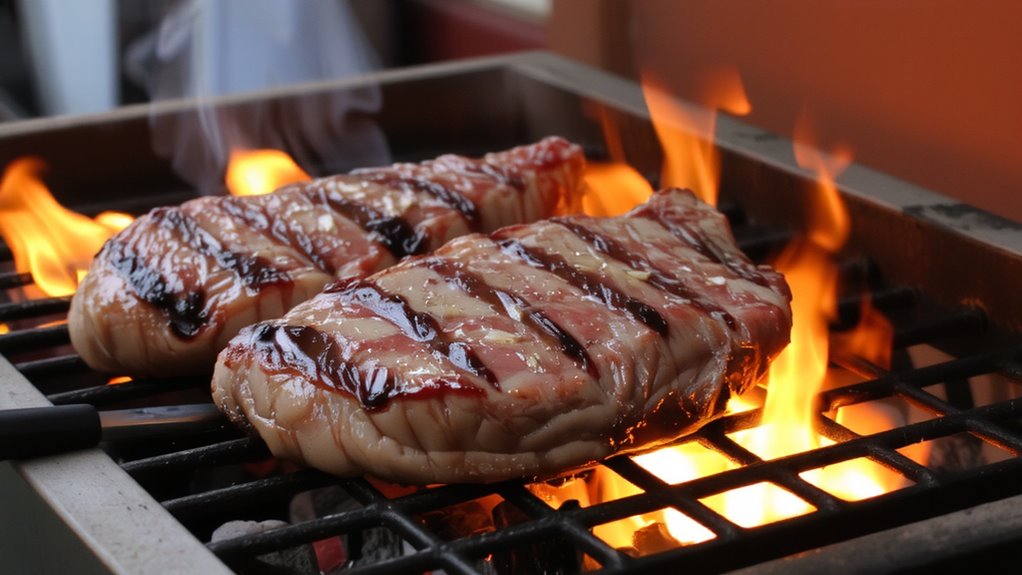
When you’re aiming for searing temperatures to lock in juices on thick steaks or achieve a crisp crust on grilled vegetables, fast-lighting briquettes offer a practical advantage by reaching high heat quickly and predictably. Their enhanced ignition speed means you’re often cooking within 15 to 20 minutes of lighting, ideal when time’s tight or guests arrive hungry. Engineered with accelerants and consistent density, these briquettes deliver stable heat intensity, usually peaking between 500°F and 600°F-perfect for searing. While purists argue they impart a slight chemical taste, most modern formulations burn cleanly enough to avoid noticeable off-flavors. They’re less suited for long smokes, but for fast, high-heat grilling, their performance is hard to beat. Just remember: keep the starter fluid minimal, if used at all, and allow the coals to ash over fully. With proper technique, you’ll maximize both flavor and efficiency.
Low-Ash Briquettes for Cleaner Burns
Low-ash briquettes are a smart choice if you value a cleaner grill and easier cleanup after cooking. These briquettes produce less residue during combustion, meaning you’ll spend less time scraping ash from the bottom of your grill. A low ash output also improves airflow, supporting a more consistent and efficient burn. You’ll notice fewer flare-ups and better heat control, especially during longer cooks like roasting or smoking. If you use a kettle or offset smoker, this trait is even more beneficial, as accumulated ash can obstruct vents and disrupt temperature stability. The clean burn of low-ash briquettes helps maintain steady conditions, reducing the need for constant monitoring. While they may cost slightly more, the trade-off in convenience and performance is often worth it. For cooks who prioritize efficiency and minimal maintenance, low ash charcoal offers clear advantages in both function and long-term grill care.
Cleaner Taste: Briquettes That Don’t Need Lighter Fluid
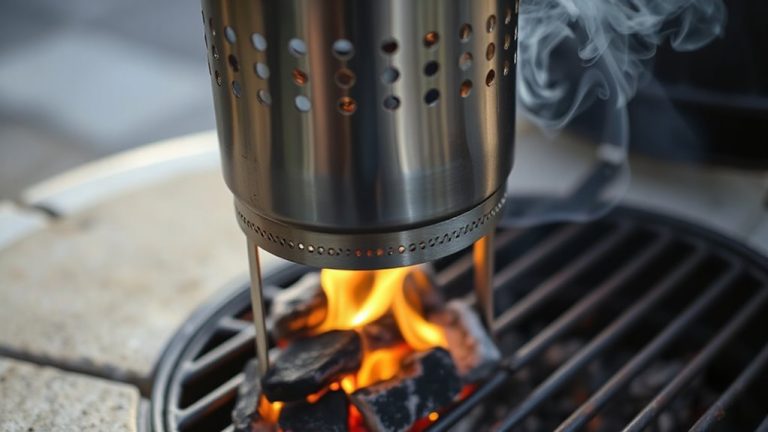
You get a noticeably cleaner flavor from your food when you use briquettes designed to ignite without lighter fluid. These self-igniting briquettes rely on natural ignition materials like wood-based accelerants, which eliminate the need for petroleum-based lighter fluid. That means no chemical residues tainting your meat or veggies during grilling. Flavor purity becomes easier to achieve, especially with delicate items like fish or chicken, where off-notes stand out. Traditional lighter fluid can leave behind a sharp, artificial aftertaste, masking the natural smokiness you’re after. High-quality fluid-free briquettes burn more consistently and produce less acrid smoke during startup. You’ll notice cleaner flames and a more neutral aroma rising from the grill. For backyard cooks prioritizing authenticity and clean combustion, skipping lighter fluid is a small change with meaningful impact. It’s a practical step toward truer flavor purity and better control over your grilling environment.
Combining Briquettes and Lump Charcoal: When It Works
Though they’re often treated as separate choices, mixing charcoal briquettes and lump charcoal can deliver a balanced burn when you’re after both steady heat and quick ignition. You’ll find charcoal blending works best when you layer briquettes for consistent temperature and toss in lump for faster lighting and natural wood flavor. It’s a practical compromise-briquettes hold heat longer, while lump burns hotter and responds quicker to airflow changes. For flavor pairing, try blending hickory or oak lump with hardwood-infused briquettes to deepen the smoke profile without overwhelming the meat. This combo shines during long cooks where temperature control matters, like briskets or ribs. Just don’t overdo the lump-it can spike the heat and shorten your cook time. With thoughtful charcoal blending, you get predictability from briquettes and aromatic complexity from lump, giving you more control and richer results.
What Ingredients Reveal About Briquette Performance
The makeup of what’s inside a briquette tells you far more than just marketing labels ever could-ingredients directly shape burn time, heat consistency, and smoke quality. You’ll notice better performance when manufacturers use sustainable, clean-burning wood sources, as ingredient sourcing affects flavor and emissions. Low-quality fillers or artificial binders can create uneven heat and unwanted odors. High briquette density typically means longer burns and steady temperatures, ideal for slow smoking. But if the density comes from compacted waste material, heat output drops and ash increases. Premium blends balance natural lignite or wood charcoal with minimal additives, delivering reliability across grilling styles. You’re better off choosing brands transparent about sourcing and composition-look for those emphasizing hardwood content and consistent density. That way, you get predictable results whether searing steaks or maintaining a low smoke. Performance isn’t luck; it’s built into the briquette.
On a final note
You’ve seen how charcoal briquettes vary in burn time, ash output, and ignition speed, each affecting your cooking results. For low and slow smoking, long-lasting, consistent briquettes win. High-heat grilling demands fast-lighting ones. Low-ash types keep your grill cleaner, while natural-start briquettes enhance flavor. Mixing with lump charcoal can offer more control. Ultimately, matching briquette traits to your method improves performance, flavor, and efficiency every time you fire up the grill.