Tips for Maintaining a High-Quality Gas Grill: Cleaning, Upkeep & Maintenance
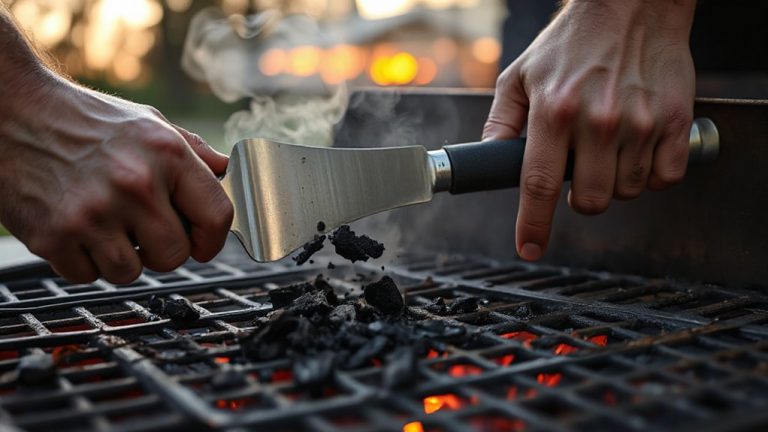
Clean your grill grates after every use with a stainless steel brush to remove char and support seasoning, just like cast iron. Inspect burners monthly for clogs or cracks, and check gas lines with soapy water to catch leaks early. Clean or replace flavor plates every three months to prevent flare-ups and maintain heat distribution. Deep clean the interior twice a season and always use a weather-resistant cover. You’ll keep peak performance longer-and discover even more ways to protect your investment over time.
Notable Insights
- Clean grill grates after each use to ensure proper seasoning and optimal searing performance.
- Inspect burners monthly for clogs, cracks, or misalignment to maintain even heat and reliable ignition.
- Check gas lines monthly with a soapy water solution to detect and address leaks promptly.
- Clean or replace flavor plates every three months to prevent flare-ups and ensure consistent heat distribution.
- Deep clean the grill interior twice per season and use a weather-resistant cover for long-term protection.
Clean Gas Grill Grates After Every Use
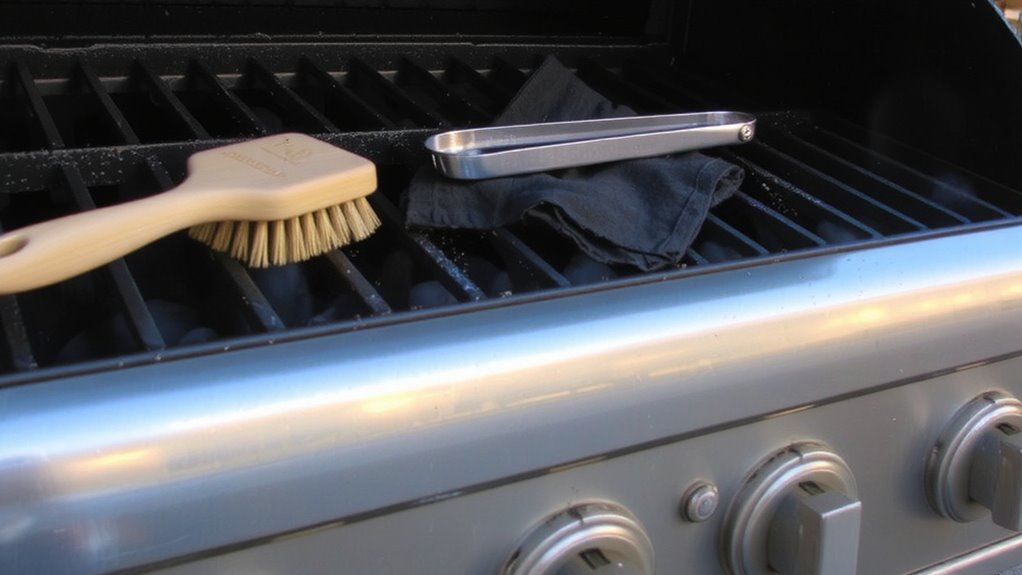
You should always clean your gas grill grates after each use-it’s one of the most effective habits for maintaining performance and extending the life of your grill. After cooking, allow a brief period of post use cooling; this makes residue easier to remove without damaging the metal. Once warm but not scorching, scrape off charred particles with a stainless steel brush. Doing so prevents buildup that can interfere with heat distribution and flavor. Over time, consistent cleaning supports proper grill grate seasoning, much like cast iron, creating a natural non-stick surface that enhances searing and reduces corrosion. You’ll notice improved food release and better grill marks when the surface is well-maintained. Neglect leads to uneven cooking and difficult restoration later. Even high-grade materials degrade without care. Proper cleaning isn’t just about appearance-it directly affects functionality, efficiency, and the quality of your results on every cook. For reliable performance and longevity, choose one of the best grill brushes recommended for effective and safe cleaning.
Inspect Burners Monthly for Clogs and Damage
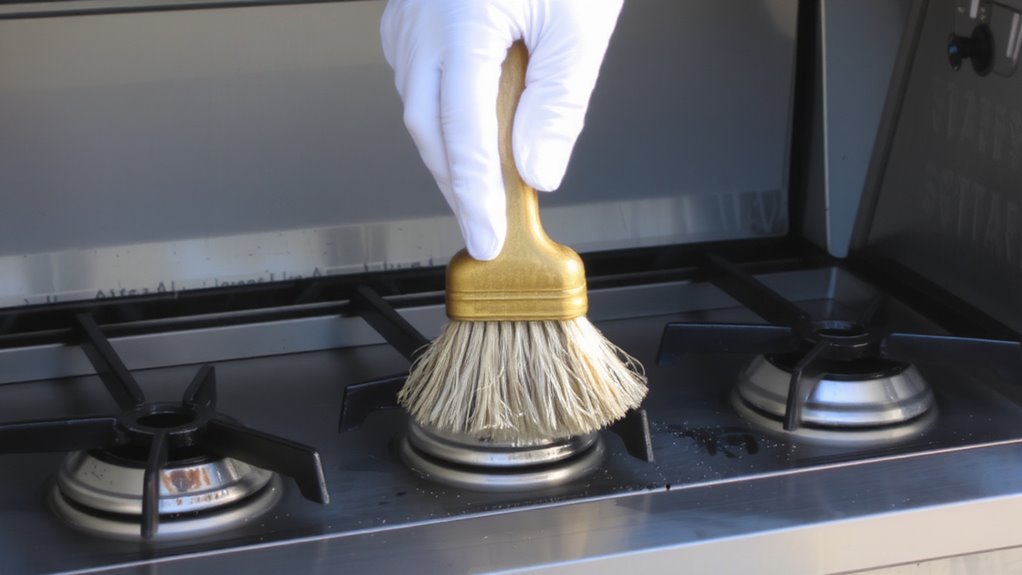
Regularly inspecting your grill’s burners each month isn’t just routine - it’s essential for consistent performance and safety. You’ll want to check for clogs caused by grease buildup or spider nests, which can disrupt gas flow and create uneven flames. Damaged burners, like those with cracks or rust holes, won’t heat evenly and can compromise cooking results. Make sure burner alignment is correct; misaligned tubes may cause gas to escape or prevent proper ignition reliability. Visually examine each burner and turn on the grill briefly to see if all ports ignite uniformly. Ignoring small issues now can lead to bigger problems later, such as prolonged preheat times or flare-ups. Proper burner function directly impacts temperature control and heat distribution. Staying on top of this monthly check keeps your grill efficient, extends its lifespan, and guarantees every BBQ session starts reliably. Cleaning the grill thoroughly after use helps prevent buildup that can affect burner performance, so using the right grill cleaning tools makes a significant difference.
Check Gas Lines for Leaks Every Month
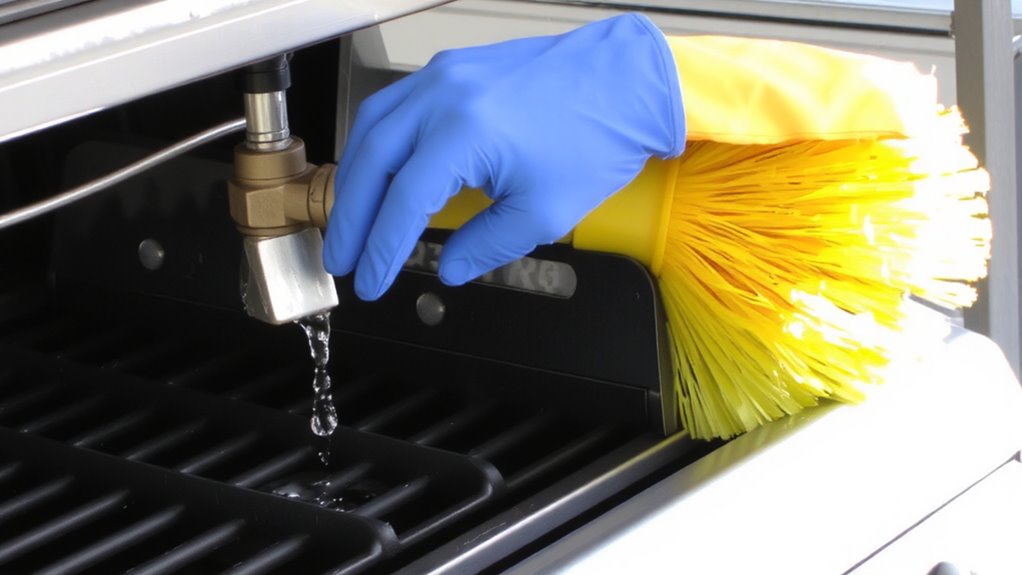
Once a month, it’s wise to inspect your gas lines for leaks-this simple check could prevent dangerous situations while guaranteeing your grill runs efficiently. You can use a soapy water solution to test: apply it to the hose and connections, then turn on the gas. If bubbles form, there’s a leak. Immediate attention is essential, as compromised hose integrity can disrupt gas pressure and lead to inconsistent flames or even hazards. Over time, exposure to heat and weather weakens the hose, making regular evaluation necessary. Even minor cracks or soft spots reduce performance and safety. Always shut off the propane tank before inspecting, and replace frayed or damaged hoses promptly. Maintaining proper gas pressure isn’t just about grilling effectiveness-it guarantees reliable ignition and even cooking. A well-maintained line supports peak function, extending your grill’s lifespan. Neglecting this step risks both performance and safety, undermining your outdoor cooking experience.
Clean or Replace Flavor Plates Every 3 Months
With gas lines in good working order, attention should turn to one of the grill’s most hardworking components-the flavor plates. These shields sit just above the burners and play a vital role in managing plate heat distribution while protecting burn equipments from grease and debris. Over time, built-up grease and corrosion can hinder performance, especially with common flavor plate materials like stainless steel or ceramic-coated metal. Stainless holds up well but needs regular cleaning; ceramic coatings offer excellent heat retention but chip over time. You should clean them monthly and fully inspect every three months. If you notice warped surfaces, thin spots, or uneven heat patterns, it’s time to replace them. Properly maintained flavor plates guarantee consistent cooking results and extend your grill’s life. Replacement isn’t costly and pays off in better searing, fewer flare-ups, and longer burner life. Using the right grill cleaning tools can significantly improve the efficiency and thoroughness of your flavor plate maintenance.
Deep Clean the Grill Interior Twice a Season
You might not think about what’s lurking beneath the grates when your grill’s firing well, but a thorough interior cleanup twice a season makes a tangible difference in both performance and longevity. Grease buildup and carbon deposits can interfere with heat distribution and increase flare-up risks, so applying effective grill degreasing techniques is essential-use a citrus-based or enzymatic cleaner to dissolve stubborn residue without damaging surfaces. During this deep clean, perform a detailed interior component inspection: check burners for clogs, verify the integrity of heat tents, and examine the grease tray and firebox for corrosion or warping. These steps not only preserve efficiency but also prevent premature failure of critical parts. Consistent maintenance like this reflects smart stewardship of your grill, ensuring reliable results through seasons of outdoor cooking.
Use a Quality Cover to Protect Your Grill
A clean grill still faces threats from the elements, which is why protection matters just as much as maintenance. A quality cover offers essential weather resistance and UV protection, shielding your investment from rain, snow, and sun damage. Without it, metal components corrode faster, and prolonged UV exposure degrades knobs, hoses, and finishes. Not all covers are equal-look for durable, breathable materials like multi-layer polyester with PVC backing for peak performance.
| Feature | Benefit | Why It Matters |
|---|---|---|
| Weather resistance | Blocks moisture and snow | Prevents rust and electrical issues |
| UV protection | Reduces fading and cracking | Preserves appearance and material integrity |
| Ventilation | Allows air circulation | Minimizes mold and trapped condensation |
| Secure fit | Stays in place during wind | Guarantees consistent protection |
Choose a cover designed for your grill’s make and model-it’s the smart final step in seasonal care.
Schedule a Pro Tune-Up Once a Year
Occasionally, even the most diligent DIY maintenance isn’t enough to catch every potential issue before it affects performance. That’s why you should schedule a pro tune-up once a year-ideally before peak grilling season. A certified technician doesn’t just clean hard-to-reach areas; they perform precise grill calibration to guarantee consistent heat distribution across the cooking surface. Uneven temperatures can ruin searing and slow down cook times, but proper calibration fixes that. They’ll also conduct thorough ignition testing, checking for weak sparks or delayed starts that could signal failing components. These diagnostics help prevent flare-ups or cold spots that DIY checks might miss. Over time, gas lines, valves, and burners degrade, and only trained eyes spot early wear. Think of it like servicing a car: routine professional care extends lifespan and maintains efficiency. A yearly tune-up keeps your grill running safely, evenly, and reliably-so every BBQ delivers top performance.
On a final note
You’ll keep your gas grill running efficiently by sticking to a smart maintenance routine. Cleaning grates after each use prevents buildup, while monthly burner and gas line checks guarantee safety and performance. Replacing flavor plates regularly improves heat distribution and reduces flare-ups. A deep clean twice per season, plus a reliable cover, preserves internal components. Yearly professional tune-ups catch hidden issues. These steps aren’t just chores-they’re investments in better BBQ, consistent results, and extended grill life.