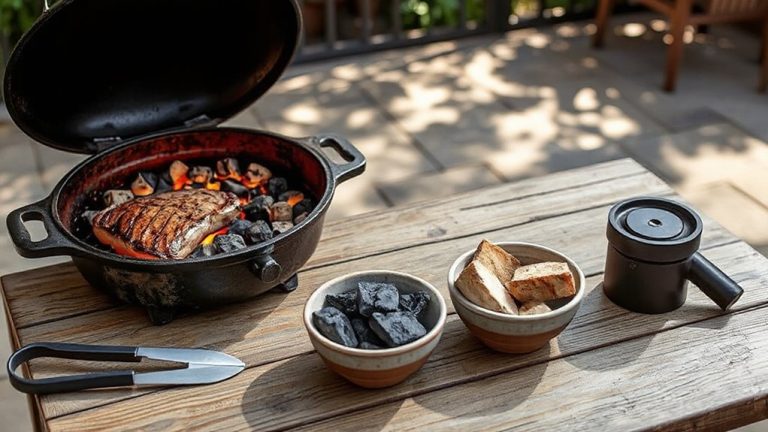
Understanding the Role of Moisture Control in Smoking Meats on a Vertical Smoker
You’re battling humidity every time you fire up your vertical smoker, where trapped steam can make or break your brisket. Tight seals and restricted airflow hold in moisture, risking a soggy bark if vents aren’t adjusted. Too little humidity, though, and your meat dries out before it renders. Managing drip pans, spritzing lightly, and fine-tuning airflow keeps texture and flavor balanced-hardwood smoke adds depth, but only when moisture levels let it stick. There’s a smarter way to master the balance.
Notable Insights
- Proper moisture control prevents dryness while avoiding sogginess that hinders bark formation.
- Hardwood smoldering generates steam, influencing humidity and smoke flavor intensity in vertical smokers.
- Balanced airflow through vent adjustment regulates internal humidity and prevents steam buildup.
- A water or drip pan adds moisture, but placement affects evaporation and steam levels.
- Spritzing maintains surface moisture and tackiness, promoting bark development without over-saturating the meat.
Why Moisture Control Is Crucial in Vertical Smokers
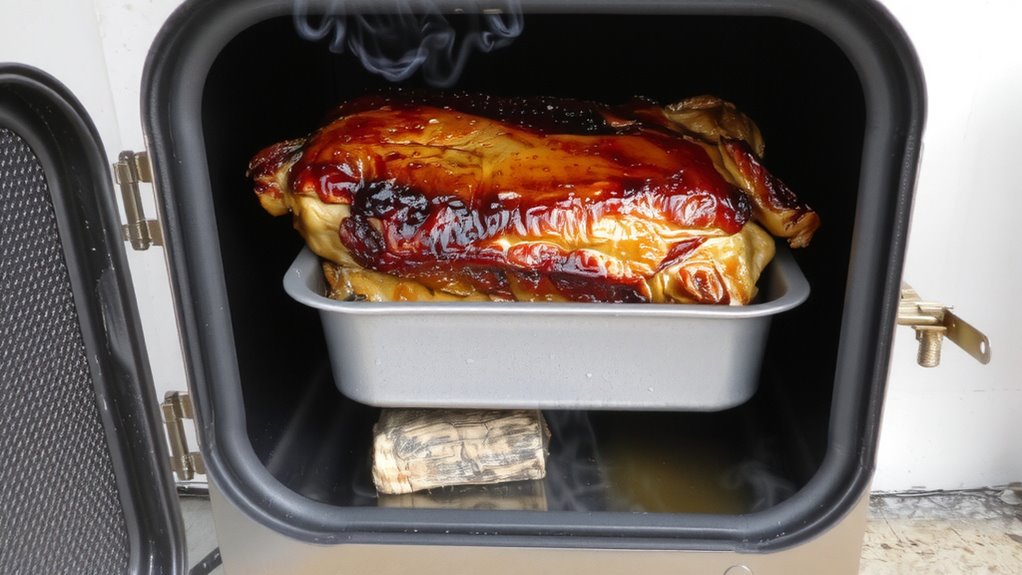
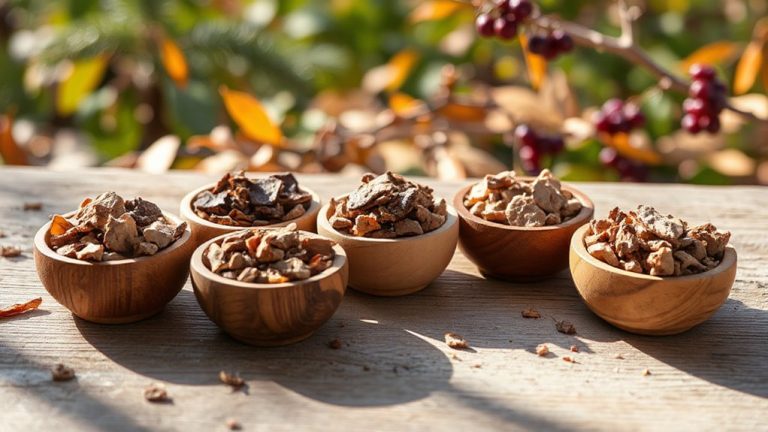
While you might focus on smoke and temperature when firing up your vertical smoker, managing moisture is just as critical to achieving tender, flavorful barbecue. You see, too little moisture leads to dry, tough meat, while too much can dilute smoke flavor and hinder bark formation. Your wood selection directly impacts this balance-hardwoods like hickory or oak burn steadily and produce consistent steam when they smolder, whereas wetter woods can introduce excess moisture. Ambient temperature plays a role, too; on colder days, your smoker works harder to maintain heat, which affects evaporation rates and steam retention. That means you’ll need to adjust vents and water pans more carefully. Effective moisture control guarantees meat absorbs smoke efficiently and retains juiciness throughout the long cook. It’s not just about heat-it’s about creating a stable, humid-enough environment where flavor and texture develop in harmony.
How Vertical Smoker Design Traps or Releases Steam
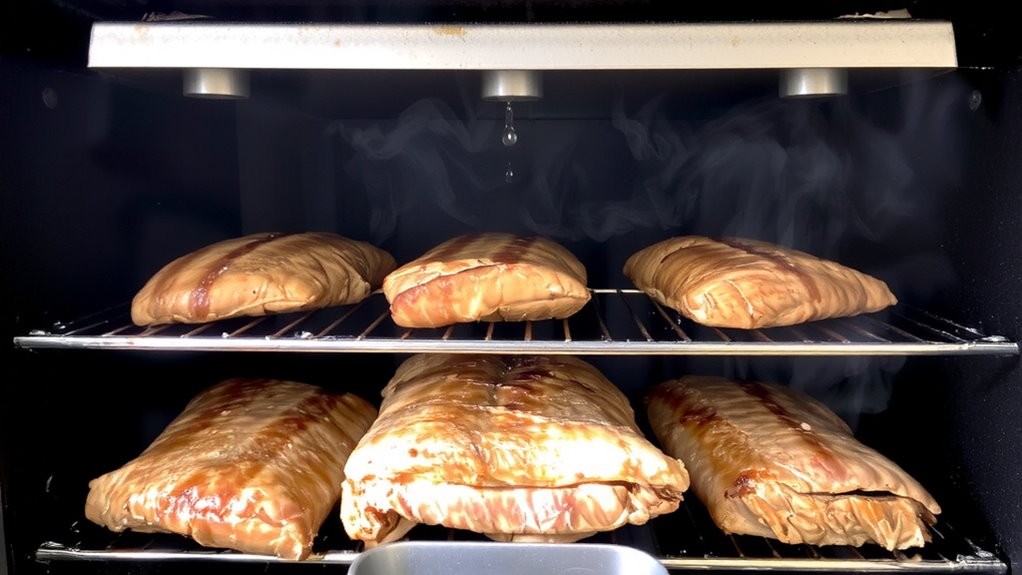
| Design Feature | Traps Steam? | Releases Steam? |
|---|---|---|
| Tight chimney draft | Yes | No |
| Poor insulation | No | Yes |
| Sealed cooking chamber | Yes | No |
Control your steam by adjusting the chimney and checking insulation. A well-built vertical smoker balances airflow and retention-giving you steady conditions for better results every time. Choosing the right model can significantly impact moisture management, and understanding vertical pellet smoker design is key to consistent smoking performance.
How Steam Affects Bark and Tenderness
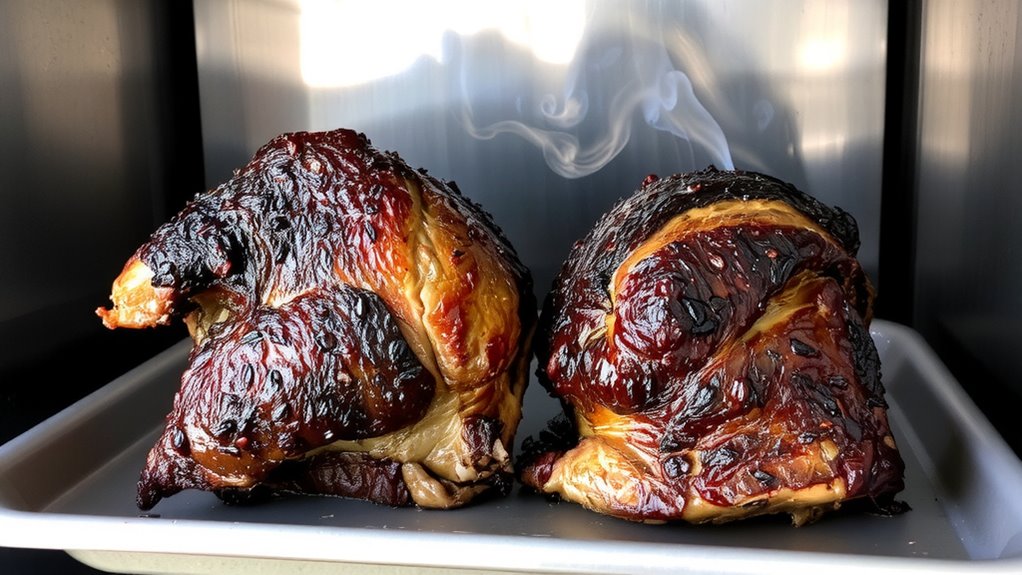
Since moisture plays a crucial role in how bark forms and meat tenderizes, you’ll want to understand how steam influences both during the smoke. Too much steam softens the developing bark, preventing that crisp, flavorful crust you’re after. When humidity stays high, especially in a vertical smoker’s tight chamber, collagen breaks down well-great for tenderness-but can leave bark slick instead of textured. Your chosen wood type affects this balance; dense hardwoods like hickory or oak add robust flavor but also increase smoke density, which, combined with excess moisture, may coat the meat too heavily. A moderate smoke density allows flavor to adhere without smothering the surface. You’ll notice better bark formation when steam is managed-not eliminated-so the meat’s surface stays tacky. Control comes indirectly through fuel choice and water pan use, letting you fine-tune texture while preserving the deep, slow tenderizing steam supports. Using high-quality charcoal ensures consistent heat and less moisture variance, supporting stable smoking conditions.
How Airflow Controls Humidity in Vertical Smokers
You can manage steam’s impact on bark and tenderness by adjusting how your smoker handles moisture, but the real key lies in controlling airflow. Proper vent placement dictates both oxygen flow and humidity levels-open vents let moist air escape, yielding a firm bark, while restricted vents trap steam, softening texture. Your fuel type also affects this balance; wood burns cleaner and drier than charcoal, subtly altering internal humidity. Consistent airflow prevents stagnation, ensuring smoke moves efficiently and flavors adhere evenly. To optimize control, consider these variables:
| Feature | Charcoal Smoker | Wood-Fired Smoker |
|---|---|---|
| Vent Placement | Bottom intake, top exhaust | Side or bottom intake, top damper |
| Fuel Type | High, steady heat, more moisture | Hotter, drier burn |
| Airflow Control | Precise with dual vents | Requires frequent adjustment |
Mastering these elements gives you reliable, repeatable results. Choosing the right charcoal grill smokers can significantly enhance your ability to maintain consistent airflow and temperature.
How Drip Pan Position Changes Moisture Levels
When positioned directly beneath the meat, a drip pan captures rendered fats and juices, effectively raising the humidity inside the smoker as those liquids evaporate under heat. Your drip pan height plays a vital role in moisture control-placing it too close to the heat source can cause rapid evaporation and excessive steam, while setting it too high reduces its ability to catch drippings. This balance affects both flavor and texture, since sustained moisture helps form a better bark. However, improper positioning can worsen grease buildup, creating flare-ups or uneven smoke distribution. Over time, accumulated grease also increases cleaning difficulty and fire risk. You’ll want a compromise: high enough to prevent flare-ups, yet low enough to catch most drippings and contribute to steady humidity. A well-placed drip pan gives you consistent results and easier maintenance.
Should You Spritz in a Vertical Smoker?
Why do so many pitmasters reach for a spray bottle halfway through a smoke? Because you’re aiming to balance moisture and bark development in your vertical smoker. Spritzing helps prevent the outer layer from drying too soon, especially during long cooks. A light misting every 45 to 60 minutes-your spritz frequency-can make a difference without disrupting smoker temps. You’re not just adding moisture; you’re enabling subtle flavor infusion by using mixtures like apple juice, vinegar, or beer. These liquids gently caramelize, enhancing complexity. But be cautious-over-spritzing cools the meat and delays bark formation. In a vertical smoker, where heat rises and airflow is tight, misting too often traps steam. That’s okay if you’re managing dryness, but counterproductive if bark is your goal. Use a fine-nozzle sprayer and time your touches wisely. Done right, spritzing improves texture and taste.
Fixing Soggy Bark or Dry Meat
Though achieving the perfect balance between a crisp bark and juicy interior can be tricky, correcting issues like soggy bark or dry meat is often possible with timely adjustments. If your bark feels soggy, it’s likely due to too much moisture exposure-either from over-spritzing or a lack of airflow. Open the vents slightly to increase circulation and help dry the surface. For dry meat, the problem usually stems from extended cook times or inadequate moisture retention. Consider using brine injection before smoking; it boosts internal juiciness by adding seasoned liquid directly into the meat. Pair this with thorough meat marination to enhance flavor and texture. Marinating overnight allows deeper penetration, though even a few hours help. Brine injection works especially well for lean cuts like brisket or turkey breast. Ultimately, combining smart moisture control with proven prep techniques gives you more consistent, professional-quality results on your vertical smoker.
On a final note
You’ll find moisture control makes or breaks your results in a vertical smoker. Its tall design traps steam, which can soften bark or dry out meat if unchecked. Proper airflow regulates humidity, while drip pan placement fine-tunes moisture exposure. Spritzing helps, but isn’t always needed. Mastering these variables means better bark, juicier meat, and more consistent, predictable outcomes on every cook.