Fruit Wood Smoking Guide: Matching Apple, Cherry, and Peach to Specific Proteins
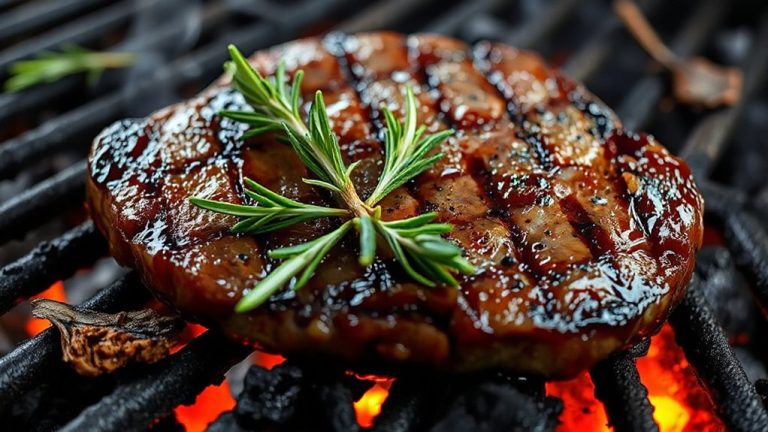
You’ll get the best results by matching fruit woods to proteins that won’t overpower their subtle flavors. Use apple wood for chicken, pork, and fish-it burns cleanly and adds a mild sweetness without masking natural juices. Cherry works well with beef and duck, enhancing crust and color while adding just a hint of fruitiness. Peach wood gives poultry a soft, aromatic smoke that lets spices shine. Blend them carefully-milder as the base-and avoid wet wood to prevent bitterness. You’ll find even more nuanced pairings and timing tips just ahead.
Notable Insights
- Apple wood’s mild, sweet smoke enhances poultry, pork, and fish without overpowering delicate flavors.
- Cherry wood adds a slightly sweet aroma and rich color, ideal for beef brisket, duck, and smoked sausages.
- Peach wood offers a soft, fruity smoke perfect for chicken thighs and whole birds at low temperatures.
- Blend apple and cherry wood in a 70/30 ratio to layer mild sweetness while maintaining flavor balance.
- Use only dry, seasoned fruit wood to avoid bitter smoke and ensure clean, consistent combustion.
What Makes Fruit Woods Great for BBQ?
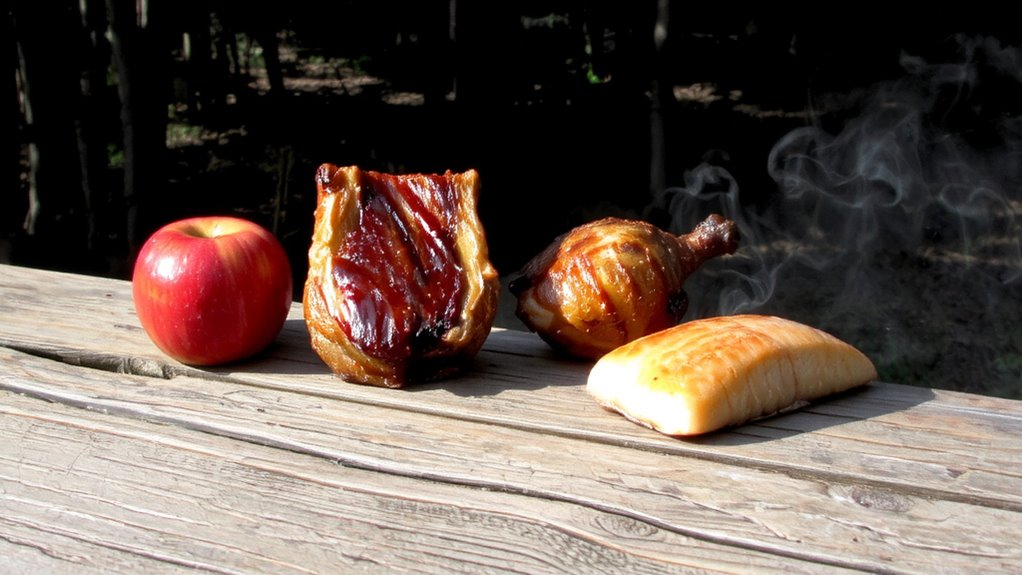
While you might think any wood will do for smoking, fruit woods like cherry, apple, and peach stand out because they burn cleanly and deliver a mild, sweet smoke that won’t overwhelm your meat. Their smoke flavor enhances rather than masks, making them ideal for poultry, pork, and even fish. You’ll appreciate how their moderate wood density guarantees a steady, predictable burn-no sudden flare-ups or inconsistent heat. This balance means better temperature control and fewer adjustments during long smokes. Unlike denser hardwoods that can dominate with heavy, bitter notes, fruit woods provide a nuanced touch that complements tender proteins. They also produce less ash, simplifying cleanup. Though they don’t last as long as oak or hickory, their efficiency in smoke flavor and ease of use make them a smart choice. For consistent results and crowd-pleasing taste, you can’t go wrong starting with fruit woods. A top-quality selection ensures optimal flavor, so consider your best smoking wood picks carefully based on the type of meat and desired smoke intensity.
Apple Wood: Best Meats to Smoke
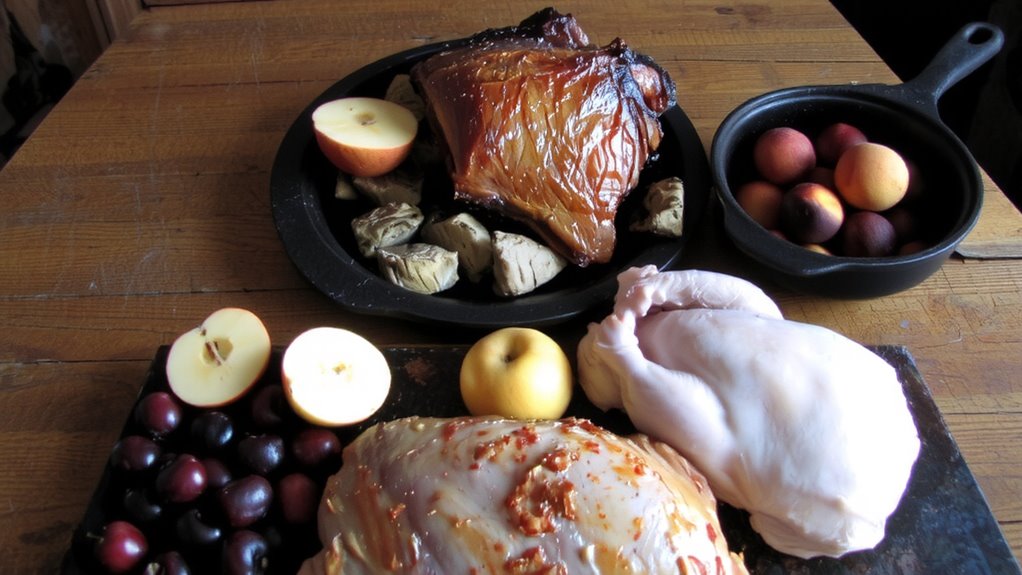
What makes apple wood such a go-to choice for backyard smokers? It’s all about balance. You get a mild apple flavor that enhances, not overpowers, your meat, thanks to its low smoke intensity. That makes it perfect for proteins that demand subtlety. You’ll notice how cleanly it burns and how evenly it smokes, giving you more control during long sessions. A top pick among best wood chips for smoking ensures consistent flavor and performance. Here’s a quick guide to your best bets:
| Meat | Smoke Intensity | Apple Flavor Result |
|---|---|---|
| Pork Tenderloin | Low | Sweet, delicate finish |
| Chicken | Low to Medium | Light, fruity richness |
| Turkey | Medium | Warm, aromatic depth |
| Salmon | Low | Silky, smoky-sweet note |
These pairings highlight how apple wood elevates tender meats without dominating. You’re not just adding smoke-you’re enhancing nuance. For best results, use dry, seasoned wood chunks or chips and monitor your temps. With apple wood, precision meets flavor.
Cherry Wood: Ideal Pairings for Beef and Duck
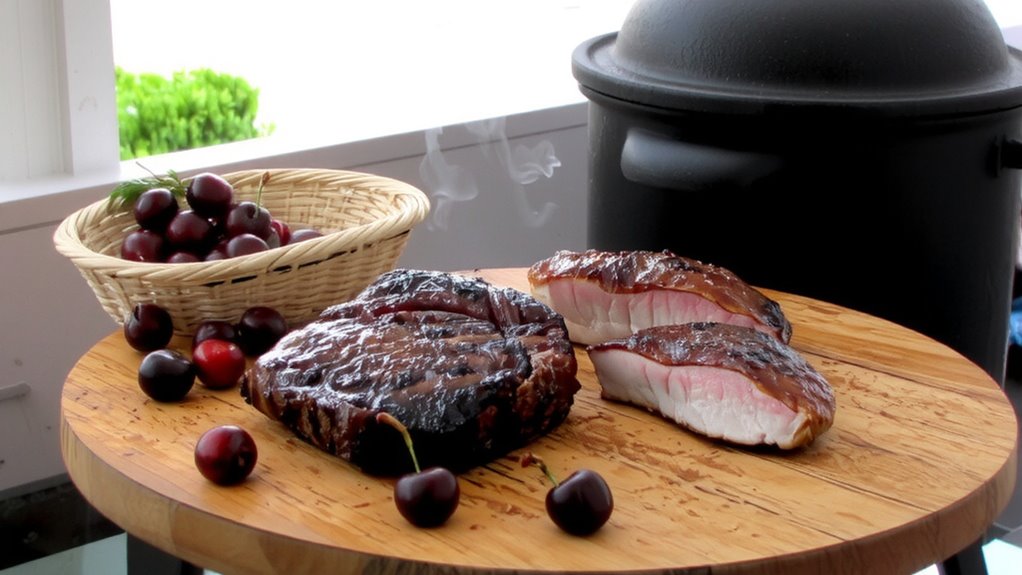
If you’re aiming for a richer smoke profile than apple but still want something refined, cherry wood’s deep red hue and slightly sweet aroma deliver just that-especially with beef and duck. The cherry smoke intensity is medium, balancing well without overwhelming, making it ideal for meats needing depth but not harshness. With beef, particularly brisket or tri-tip, it enhances the crust while complementing the natural savoriness. For duck, the mild sweetness cuts through richness, and the smoke works in harmony with duck fat rendering, promoting even browning and a delicate glaze. You’ll notice the skin crisps beautifully while absorbing a subtle fruitwood nuance. Cherry wood burns cleanly and consistently, simplifying temperature control. Unlike stronger hardwoods, it won’t dominate, letting the protein’s flavor lead. It’s a smart choice when you want complexity with restraint-perfect for cooks who value balance in their smoked dishes. Best wood chips for smoking chicken include fruitwoods like cherry, which are favored for their mild, sweet smoke that enhances poultry without overpowering it.
Peach Wood: Smoky-Sweet Chicken Secrets
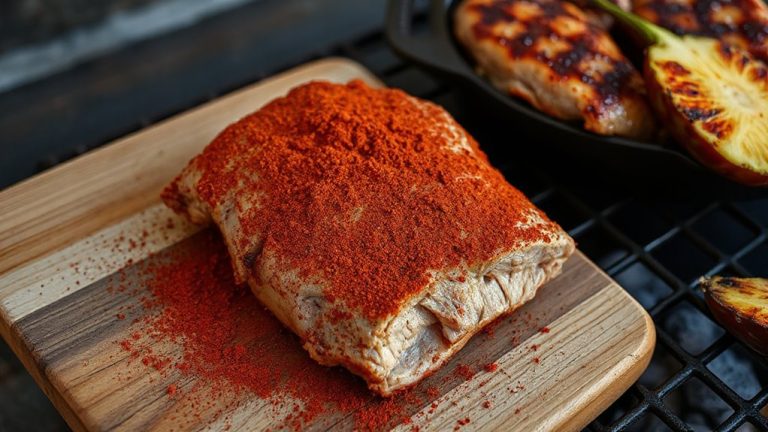
Though it doesn’t get as much attention as hickory or mesquite, peach wood brings a delicate balance of sweetness and smoke that works exceptionally well with poultry, especially chicken. You’ll find that peach wood imparts a subtle fruit-forward aroma, enhancing the natural poultry sweetness without overpowering it. Burns cleanly and consistently, producing a light, fragrant smoke ideal for long, low smoking sessions. It pairs particularly well with chicken thighs and whole birds, allowing spices and rubs to shine while adding a soft, smoky depth. Compared to stronger woods, peach wood won’t dominate the flavor profile-perfect when you want nuance over intensity. For best results, use properly seasoned chunks or chips in a smoker between 225°F and 250°F. You’ll notice the smoke integrates smoothly, elevating the meat’s richness while preserving moisture. This reliable performance makes peach wood a smart, underused choice for achieving balanced, flavorful results with poultry.
How to Mix Fruit Woods for Better Smoke
When you’re aiming for a more complex smoke profile, blending fruit woods can elevate your barbecue beyond what any single wood can achieve on its own. Smoke blending lets you fine-tune aroma and taste, creating a more balanced, nuanced finish. Try pairing apple and cherry: apple offers mild sweetness while cherry adds depth and a hint of tartness, resulting in excellent flavor layering on pork or poultry. For a bolder twist, mix peach with apple-this combo delivers a delicate richness without overwhelming delicate meats. Avoid overpowering your food; use stronger fruit woods sparingly. A 70/30 or 60/40 ratio often works best, with milder wood as the base. Consistent smoke temperature and wood moisture also influence results. With practice, you’ll learn how each blend performs across proteins, helping you craft a signature taste that stands out in both aroma and complexity. Smoke blending isn’t just technique-it’s craft.
Common Fruit Wood Smoking Mistakes
While fruit woods are prized for their mild, sweet smoke that enhances rather than overwhelms, using them incorrectly can undermine even the most carefully prepared BBQ. You might think more smoke means more flavor, but to overuse smoke is a common misstep-fruit woods burn best when used sparingly, letting the meat’s natural taste shine. Too much can result in a bitter, acrid finish, especially with delicate proteins like poultry or pork. Another frequent error? Burning wet wood. It creates excessive white smoke, carries less heat, and introduces off-flavors from unburned compounds. Always season your wood for at least six months until moisture drops below 20%. Green or damp logs hinder clean combustion and disrupt temperature control. Stick to dry, aged fruit wood chunks or splits for consistent, aromatic results. A little goes a long way-precision beats volume every time.
When to Use Fruit Wood Instead of Other Woods
If you’re aiming for a smoke profile that’s subtle yet distinct, fruit woods are your go-to choice over stronger options like hickory or mesquite, especially when working with lighter meats such as chicken, turkey, or pork. Their mild wood intensity complements rather than overwhelms delicate flavors. When to blend fruitwoods with stronger varieties? Consider mixing apple or cherry with hickory in a 3:1 ratio to balance sweetness and depth without bitterness. Peach wood offers a floral nuance ideal for lean cuts or seafood, where heavy smoke would dominate. Opt for fruit woods when preserving natural juices and nuanced seasoning is key-think pork chops, ribs, or whole birds. Unlike dense hardwoods that demand precise airflow control, fruit woods burn cleaner and cooler, making temperature management easier. Their consistent combustion enhances flavor clarity, especially in smokers with limited venting. For backyard BBQ where refinement matters, fruit woods deliver complexity without harshness-perfect when flavor finesse trumps bold aggression.
On a final note
You’ll find fruit woods ideal for adding subtle, sweet smoke to a range of proteins without overpowering them. Apple works beautifully with poultry and pork, cherry deepens flavor in beef and duck, and peach shines with chicken. Blending these woods can enhance complexity, but avoid overuse-mild heat and careful smoke management are key. Compared to stronger hardwoods, fruit woods offer a balanced, refined profile perfect for delicate, well-executed BBQ.