How Fresh Rosemary Outperforms Dried in High-Heat Grilling Applications
You’ll get better results with fresh rosemary on the grill because its high moisture content protects essential oils from burning. Unlike dried, it releases aromatic compounds like cineole and pinene gradually, avoiding the bitter, camphorous notes that emerge when dried rosemary chars. Fresh sprigs add piney, citrus-tinged smoke, while rehydrated or oil-bloomed dried versions still risk harshness. For clean, balanced flavor under high heat, fresh is clearly superior-there’s more to uncover about optimizing herb use on the grill.
Notable Insights
- Fresh rosemary’s high moisture content protects essential oils from burning during high-heat grilling.
- Its intact resin glands release aromatic compounds like cineole and alpha-pinene gradually, enhancing flavor without bitterness.
- Whole fresh sprigs can be used as skewers or smoke sources, adding piney, citrus notes without charring.
- Dried rosemary lacks moisture, leading to rapid burning and acrid smoke when exposed to direct heat.
- Fresh rosemary preserves delicate top notes when added late, while dried versions turn harsh above 175°C.
Why Fresh Rosemary Works Best On The Grill
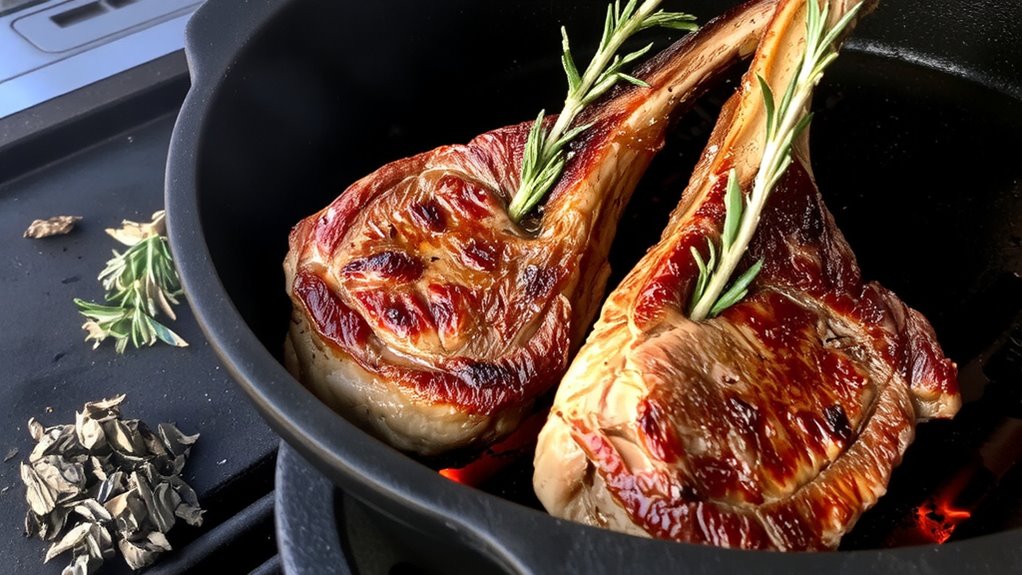
While dried herbs might be convenient, fresh rosemary simply performs better on the grill thanks to its higher moisture content and intact essential oils. That 70–75% water content buffers the volatile oils during high-heat grilling, slowing evaporation and preventing bitterness. Fresh rosemary works by releasing aromatic volatile compounds-like cineole and alpha-pinene-gradually, delivering a brighter flavor profile than dried. Its flexible stems and intact resin glands allow it to char slightly without turning harsh, unlike dried pieces that scorch above 350°F, releasing unpleasant phenolics. You can even use whole sprigs as natural skewers, letting the essential oils infuse meats and veggies slowly. Adding fresh herbs near the end preserves citrus-tinged top notes ideal for balance. Dried versions lose these subtleties through oxidation, their concentrated oils turning woody and medicinal. Fresh rosemary’s performance under heat makes it the clear choice.
Can You Use Dried Rosemary On The Grill? (And How To Try)
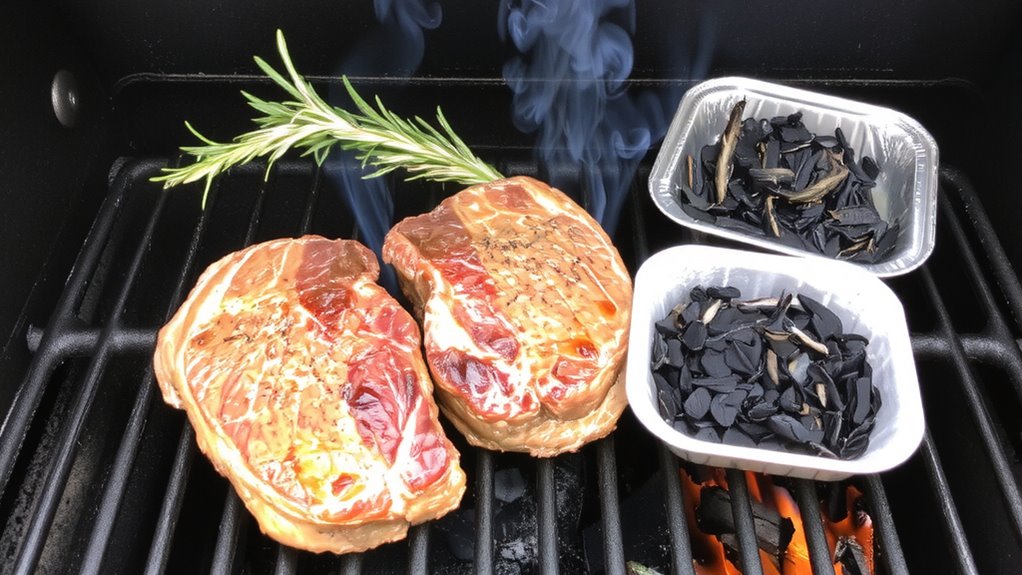
Charred bits of dried rosemary won’t do your steak any favors-unless you know how to handle them. So, can you use dried rosemary on the grill? Yes, but with care. To use dried rosemary safely, soak it in oil or liquid for at least 20 minutes to create rehydrated dried rosemary-this helps prevent burning. Add it during the last 5–10 minutes of grilling to avoid releasing bitter phenolic compounds at temps above 175°C. Use only ½ tsp per pound of grilled meat to avoid overwhelming camphor and 1,8-cineole notes. Crush dried rosemary between your palms before use to release essential oils without prolonging cook time. Opt for whole-leaf dried rosemary over powdered dried rosemary, as the latter burns too quickly. With these steps, you can use dried rosemary effectively-even if fresh still reigns supreme.
How Heat Changes Fresh Vs. Dried Rosemary
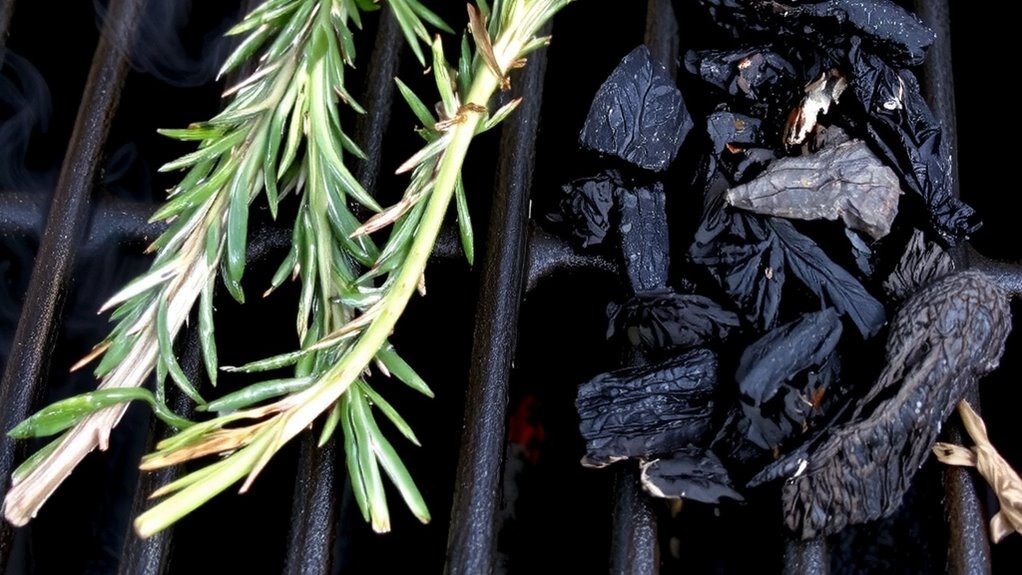
You’ve seen how dried rosemary can work on the grill-with enough prep and timing-but now let’s look at what actually happens when heat hits each form. Fresh rosemary, with its 70–75% water content, protects its essential oils, allowing volatile oils like alpha-pinene and 1,8-cineole to release gradually during high-heat grilling. This slow vaporization preserves bright, citrus-tinged aromas and avoids harshness. In contrast, dried rosemary’s low moisture and high surface area cause it to char quickly, degrading key compounds like camphor and 1,8-cineole above 175°C. The result? Bitter, medicinal off-flavors and acrid smoke. Grilled fresh sprigs deliver a balanced pine-like fragrance and visual appeal, while dried rosemary often produces uneven flavor and harsh phenolic notes. The heat changes are clear: fresh performs better under intense flame.
How To Grill With Fresh Rosemary
A sprig of fresh rosemary does more than just add flavor-it’s a precision tool for enhancing grilled dishes when used strategically. When grilling with rosemary, you’re leveraging its high water content-77.4g per 100g-to slowly release volatile oils like cineole and alpha-pinene, which thrive in high-heat grilling without turning bitter. For even flavor, use 1 tbsp of finely chopped fresh rosemary per pound of meat-this maximizes dispersion and avoids the woody texture common in dried. Whole sprigs can go directly on the grill or coals, adding a piney, citrus-tinged smoke that elevates lamb or vegetables. Try soaked fresh rosemary stems as natural grill skewers; they resist burning and infuse food throughout. Unlike dried versions, fresh herbs vs dried retain aromatic brightness when added in the last 5–10 minutes, preserving compounds that degrade above 175°C.
Stop Dried Rosemary From Burning And Turning Bitter
When working with dried rosemary on the grill, recognizing its limitations under high heat is key-exposed to temperatures above 175°C, its concentrated terpenes rapidly degrade, producing bitter, medicinal flavors that overpower even well-prepared meats. Adding dried rosemary directly to flames causes bitterness, as the intense fire scorches the dry ingredients, especially when crushed or ground dried. You should never store dried herbs long-term in warm areas, since heat accelerates oxidation. Instead, bloom dried rosemary in warm oil for at least 10 minutes before grilling-this rehydrates it gently and mellows harsh compounds. In spice blends, limit dried rosemary to ½ tsp per pound of meat, always pairing it with oil to protect it from direct heat. While dried rosemary can work in controlled applications, fresh rosemary outperforms it for high-heat grilling. Consider substituting dried with fresh when possible to avoid off-flavors.
On a final note
You’ll get better results with fresh rosemary on the grill-it withstands high heat longer and releases oils more effectively. Dried rosemary burns easily, turning bitter and acrid. Fresh sprigs impart a brighter, more nuanced flavor, especially when placed directly on coals or alongside meats. While dried works in a pinch, it demands careful handling. For consistent, aromatic performance under intense heat, fresh rosemary is superior and worth the slight extra effort.