Using a Campfire Dutch Oven to Roast Root Vegetables Evenly
Choose firm, evenly sized root vegetables like carrots, potatoes, and beets, cutting them into 1-inch chunks for consistent cooking. Use a Dutch oven over glowing embers, not flames, with coals scattered under and atop the lid for steady heat. Toss veggies in oil and smoked paprika, layering denser cuts below. Stir halfway and check for fork-tender results. You’ll soon see how small tweaks master campfire roasting.
Notable Insights
- Choose firm, uniformly sized root vegetables to ensure even cooking in the Dutch oven’s steady heat.
- Cut veggies into 1- to 1.5-inch pieces for consistent texture and balanced doneness over the campfire.
- Use glowing embers, not flames, placing coals under and atop the Dutch oven for even heat distribution.
- Layer dense vegetables like potatoes at the bottom and delicate ones on top for ideal roasting.
- Check and stir veggies halfway, using a fork test to confirm tenderness and adjust heat as needed.
Pick the Best Root Veggies for Dutch Oven Roasting
Root vegetables thrive in the steady, radiant heat of a Dutch oven, making them ideal candidates for campfire roasting. Your root selection directly impacts cooking consistency and final texture. Opt for firm, medium-sized carrots, potatoes, turnips, and beets-these hold up well under prolonged heat. Smaller roots may overcook, while oversized ones often cook unevenly due to their veggie density. Uniform density across pieces guarantees even heat penetration, so avoid wilted or pithy specimens. Denser roots like sweet potatoes take longer to roast than less dense ones like parsnips, so plan accordingly. You’ll want to balance variety with compatibility in cook time. Selecting quality roots not only improves flavor but also reduces waste. A well-chosen mix, matched to your Dutch oven’s thermal capacity, delivers reliable, satisfying results straight from the coals.
Chop Veggies for Even Campfire Cooking
A sharp knife and steady hand make all the difference when prepping vegetables for the Dutch oven. You’ll want to cut your root veggies into evenly sized pieces-about 1 to 1.5 inches-for best veggie uniformity. Uniform chunks cook at the same rate, preventing some from turning mushy while others stay tough. This consistency isn’t just about appearance; it supports even heat circulation throughout the pot, especially important when cooking over fluctuating campfire temperatures. Dense vegetables like potatoes, carrots, and parsnips benefit most from precise chopping, as their varying thicknesses can disrupt heat transfer. Irregular cuts create hot spots and uneven roasting, undermining the Dutch oven’s performance. Tossing the pieces gently guarantees they’ll sear and steam properly without clumping. Taking time here improves texture and flavor absorption, letting spices and natural sugars work evenly. Proper prep turns simple ingredients into a reliably delicious campfire meal.
Build the Right Campfire Heat
How well your vegetables roast depends heavily on the heat you build-so what kind of fire delivers the steady, radiant warmth a Dutch oven needs? You’ll want a bed of hot, glowing coals rather than open flames. Build your fire to the side or let it burn down to embers, giving you better heat control. Direct flames scorch the pot’s exterior, leading to uneven cooking. For ideal fire placement, center your Dutch oven over the coals, then scatter more embers across the lid-this creates even top and bottom heat. Maintain consistent temperature by adding a few coals at a time, avoiding sudden spikes. A two-zone setup lets you adjust quickly if things get too hot. Proper heat control isn’t just about intensity; it’s about stability. With smart fire placement and careful monitoring, you’ll achieve the slow, even roast root vegetables need to caramelize without burning. A double tinder bed fire style is particularly effective for generating a long-lasting, even coal bed ideal for Dutch oven cooking.
Season & Layer for Smoky Sweetness
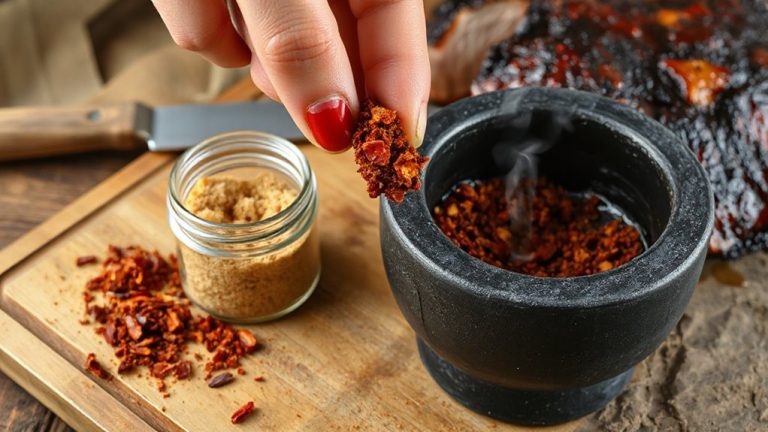
Once you’ve got your bed of glowing embers set up, attention shifts to what happens inside the Dutch oven-seasoning and layering make all the difference when aiming for that rich, smoky sweetness root vegetables are capable of delivering. Toss chunks of carrot, parsnip, and sweet potato in olive oil, rosemary, and a pinch of smoked paprika to amplify the wood smoke already curling into the pot. Layer them thoughtfully: denser vegetables on the bottom, where heat penetrulates strongest, more delicate pieces tucked on top. A sprinkle of brown sugar encourages browning without overwhelming. The enclosed environment traps moisture and smoke, building depth. As heat circulates, the edges develop a caramel char-subtle, not scorched-adding complexity. This balance of seasoning and structure guarantees each piece absorbs flavor evenly, transforming humble roots into something deeply aromatic and satisfying, proof that outdoor cooking rewards patience and precision.
Check Doneness & Stir for Even Roasting
Why risk uneven results when a simple check can make the difference between tender perfection and disappointment? About halfway through cooking, lift the lid and peek-look for timing cues like soft edges and rich color. Use tongs or a spatula to stir the veggies, rotating pieces from the outer edges toward the center. This heat rotation compensates for hot spots in your campfire coals, ensuring each chunk roasts evenly. Root vegetables vary in density, so stirring helps uniform doneness without overcooking softer bits. Don’t guess-test with a fork; it should slide in smoothly. Stirring also lets you redistribute moisture and trapped steam, maintaining texture. While timing gives a general guide, actual doneness depends on your fire’s intensity and veggie size. A quick assessment and mid-cook stir greatly boost reliability, turning raw guesswork into a predictable, satisfying outcome.
Fix Soggy or Burnt Dutch Oven Veggies
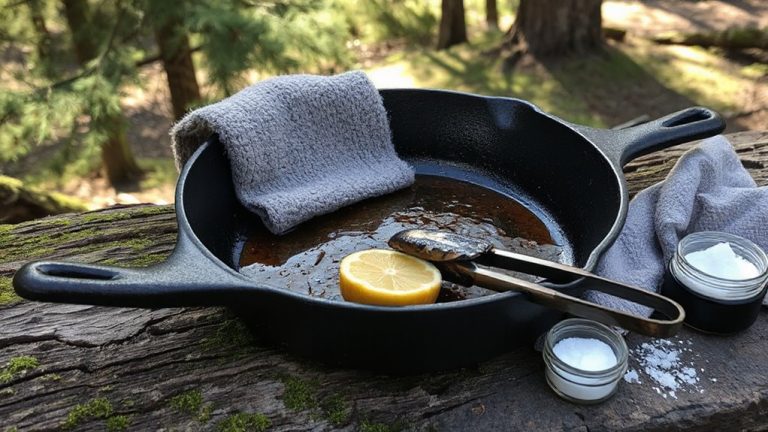
If you’ve ever lifted the lid to find mushy or charred root vegetables despite careful prep, you’re not alone-moisture management and heat control are the two biggest challenges when cooking in a Dutch oven over a campfire. Poor Dutch oven lid management often traps too much steam, leading to soggy veggies; leaving it uncovered too long risks scorching. You’ll want to regulate lid use-keep it on during initial roasting, then lift it periodically to let steam escape. Also, check your fire-uneven coals cause hot spots. A well-maintained cast iron seasoning layer prevents sticking and promotes even heat distribution, helping avoid burnt patches. If food’s browning too fast, lift the oven from direct flame. For future batches, use a trivet to elevate veggies slightly. A well-chosen best trivets for every kitchen can make a significant difference in heat circulation and prevent direct contact with hot coals. Adjusting these factors makes a noticeable difference in texture and consistency.
On a final note
You’ve got the tools and techniques to roast root vegetables evenly in a Dutch oven over a campfire. Proper veggie prep, consistent heat control, and strategic layering guarantee reliable results. While minor issues like sogginess or charring may occur, they’re easily fixed with airflow adjustments or stirring. This method outperforms open-flame cooking, delivering rich, smoky sweetness with even doneness-ideal for outdoor meals where flavor and consistency matter most.